Adaptive reuse at hotel julian chicago as a strategic asset play
In the dense fabric of downtown Chicago, hotel julian chicago illustrates how adaptive reuse can become a precise asset strategy rather than a nostalgic gesture. The former Atlantic Bank building, designed by Benjamin Marshall, has shifted from financial institution to lifestyle hotel while retaining its urban gravitas and structural discipline. For architects, asset managers, and investors, this chicago hotel demonstrates how a listed bank building can be repositioned without sacrificing operational efficiency.
The project team, led by Oxford Capital Group and Quadrum Global, treated the building envelope as a fixed parameter and the interior as a flexible hospitality platform. This approach allowed 218 rooms to be inserted with coherent rooms facilities while respecting existing window bays, column grids, and the vertical rhythm typical of early united states commercial towers. The result is a hotel that reads as a chicago united heritage asset from the street yet performs as a contemporary hotel in terms of circulation, back of house, and FF&E lifecycle.
Location remains a decisive factor in underwriting, and here the address on Michigan Avenue, facing millennium park, is central to the investment thesis. Guests step out towards cloud gate, the chicago river, and the Loop, while operators benefit from strong corporate and leisure demand in the district chicago core. For design teams, this location also justifies higher specification in each room, from air conditioning performance to flat screen integration, because the ADR potential of hotels chicago in this micro market supports elevated capex.
By aligning preservation, FF&E strategy, and market positioning, hotel julian proves that historic hotels in the united states can compete directly with new build hotels. The building becomes a long term urban asset, not a static monument, and the stay experience remains firmly anchored in the contemporary city.
From atlantic bank to hotel julian chicago: structure, envelope, and vertical extensions
The transformation from Atlantic Bank to hotel julian chicago hinged on a rigorous reading of the existing structure. The original bank building, conceived by Benjamin Marshall, offered generous floor to ceiling heights and robust framing, which are ideal conditions for hospitality conversion. Rather than erasing these advantages, the design and construction teams used them to calibrate room typologies, public areas, and technical shafts.
A five storey glass volume was added above the historic cornice, creating a contemporary crown that signals the hotel within the chicago skyline. This vertical extension had to negotiate wind loads, structural transfers, and heritage constraints while maintaining the integrity of the original bank building façade. For architects and bureaux d’études, the project is a case study in how to graft new construction onto early twentieth century shells in dense city contexts across the united states.
Within the existing envelope, the layout of each room and the aggregation of rooms into efficient floors were driven by both structural bays and views towards millennium park. King rooms, corner rooms, and compact rooms were all aligned with façade modules to avoid awkward junctions and to optimise rooms facilities. This strategy also ensured that air conditioning distribution, vertical risers, and acoustic separations could be coordinated without invasive interventions into protected elements.
The resulting chicago hotel balances heritage masonry with transparent contemporary surfaces, allowing the building to sit comfortably among other hotels chicago on Michigan Avenue. For asset managers, the additional glass levels increase GFA and revenue potential, while the preserved lower façades maintain the cultural value of a Benjamin Marshall landmark. Hotel julian thus demonstrates how a historic chicago river district building can be vertically intensified without losing its architectural identity.
Guest rooms, FF&E, and technical integration in a constrained chicago envelope
Inside hotel julian chicago, the guest rooms reveal how FF&E and technical systems can be choreographed within a tight structural grid. High ceilings inherited from the Atlantic Bank building allow designers to integrate air conditioning, sprinklers, and lighting without oppressive bulkheads. This vertical generosity also supports a more residential proportion for each room, which is critical in a competitive downtown chicago market.
FF&E packages were specified to balance durability, maintenance, and brand narrative, with a focus on clean lines and compact storage solutions. Each king room and double room incorporates integrated headboards, task lighting, and casegoods that frame the flat screen while concealing cabling and data. For operators managing multiple hotels chicago, such standardisation across rooms facilities reduces long term capex volatility and simplifies procurement for suppliers.
Bathroom layouts respond to the existing column grid and façade openings, ensuring that wet areas align vertically through the building. This strategy reduces structural interventions in the bank building fabric and allows for efficient stacking of services, which is particularly relevant in heritage projects across the united states. Materials were selected for both aesthetic continuity with the chicago hotel narrative and for ease of replacement during soft renovations.
Acoustic performance is a key concern in any city hotel, especially along Michigan Avenue and near the chicago river. At hotel julian, glazing specifications, door assemblies, and wall build ups were tuned to mitigate street noise while preserving views towards millennium park and cloud gate. The result is a stay experience that feels calm and controlled, even within the energetic district chicago context, and that supports both business and leisure guests seeking a refined urban room.
Public spaces, restaurant programming, and the urban interface on michigan avenue
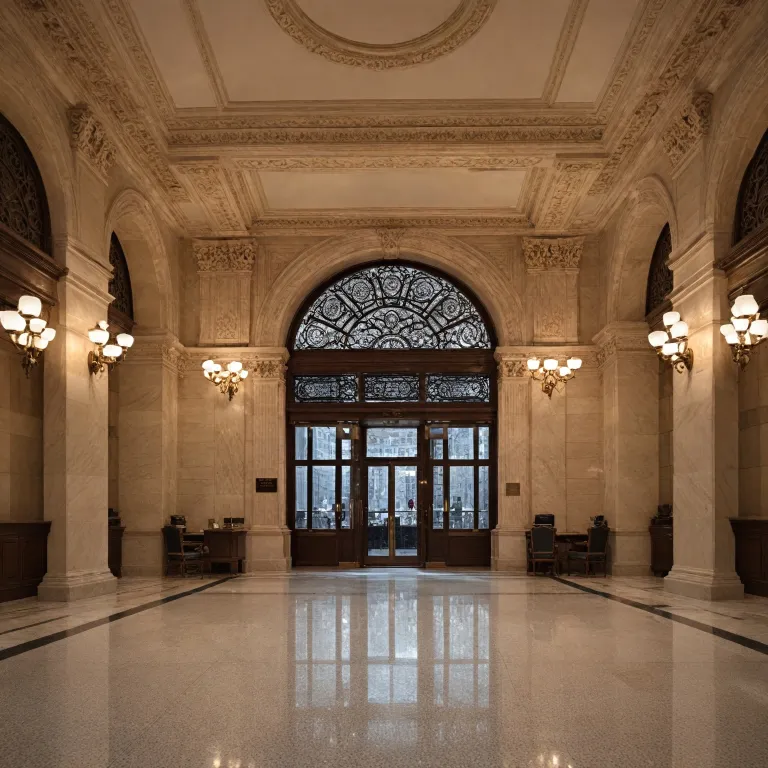
At street level, hotel julian chicago uses its public spaces to mediate between the historic bank building and the contemporary city. The lobby and restaurant are arranged to maximise transparency towards Michigan Avenue, drawing in both hotel guests and local residents. This approach transforms the ground floor from a closed financial hall into an active urban living room within downtown chicago.
The in house steakhouse restaurant, About Last Knife, occupies a strategic position facing millennium park and the flow of pedestrians heading towards cloud gate. Its design language references the building’s banking heritage while aligning with the expectations of a modern chicago hotel audience. For investors and asset managers, such a restaurant concept enhances F&B revenue while reinforcing the hotel’s identity among competing hotels chicago in the district chicago corridor.
Public areas also accommodate flexible seating, co working corners, and informal meeting spots, recognising that many guests combine business and leisure during their stay. The integration of a flat screen media wall, curated art, and robust Wi Fi infrastructure ensures that the lobby functions as both social hub and workspace. These choices respond to broader trends in the united states hospitality market, where the boundary between room, lobby, and restaurant is increasingly porous.
Operationally, the ground floor layout separates guest flows from service circulation, protecting the guest experience while maintaining efficient back of house routes. Direct access to Michigan Avenue and proximity to the chicago river, the Loop, and millennium park support strong walk in demand and cross selling with nearby attractions. In this way, hotel julian leverages its location and building typology to create a public realm interface that strengthens both brand equity and asset value.
Comparative lens: hotel julian, arlo chicago, and the evolving downtown chicago micro market
Within the competitive landscape of downtown chicago, hotel julian chicago sits alongside properties such as arlo chicago, each interpreting the urban context differently. Both hotels operate within walking distance of millennium park, cloud gate, and the chicago river, yet their building typologies and FF&E strategies diverge. For designers and asset managers, comparing hotel julian and arlo chicago clarifies how heritage shells and newer structures can coexist within the same city block.
Hotel julian occupies the historic Atlantic Bank building, while arlo chicago typically aligns with a more contemporary tower profile. This contrast affects room planning, public space volumes, and the expression of air conditioning and services within each room. In hotel julian, the legacy of Benjamin Marshall and the bank building fabric drives a narrative of adaptive reuse, whereas arlo chicago leans into a more overtly lifestyle oriented positioning among hotels chicago.
Both hotels benefit from proximity to transport links towards the airport and wider united states network, reinforcing downtown chicago as a gateway location. For families, the child friendly appeal of being near millennium park and cultural institutions adds another layer of demand. In both singular hotel and plural hotels formats, operators must calibrate rooms facilities, technology such as flat screen systems, and F&B offerings to match this diverse guest mix.
For professionals interested in resort and urban synergies, projects like the Fullerton Ocean Hotels case study on redefining luxury resort design and FF&E integration offer useful parallels. Lessons about integrated FF&E, guest flow, and brand storytelling translate directly to chicago hotel assets like hotel julian and arlo chicago. Across the united states, such comparative analysis helps investors and designers refine their strategies for both individual hotel and multi asset hotels portfolios.
Operational performance, guest expectations, and future renovation cycles at hotel julian
As hotel julian chicago matures in the market, its long term value will depend on how renovation cycles respect the original bank building while updating guest expectations. The combination of a prime location near millennium park and a strong architectural identity by Benjamin Marshall gives the asset resilience within the chicago hotel landscape. However, FF&E, technology, and sustainability standards will continue to evolve across the united states, requiring proactive planning from owners and directions techniques.
Guest expectations now extend beyond a comfortable king bed and reliable air conditioning to include seamless digital interfaces, high quality flat screen systems, and flexible work surfaces in each room. For child friendly stays, families expect interconnected rooms, robust rooms facilities, and safe access to attractions such as cloud gate and the chicago riverfront. These requirements must be integrated without compromising the structural logic of the Atlantic Bank building or the visual coherence of the hotel’s interiors.
Future soft renovations will likely focus on FF&E refreshes, lighting upgrades, and enhancements to the restaurant and lobby experience. Hard renovations may address building systems, façade performance, and further optimisation of back of house areas, particularly as energy regulations tighten in chicago and other cities across the united states. In all scenarios, the goal is to maintain hotel julian as a reference point among hotels chicago for sensitive adaptive reuse.
Originally built in 1912 as the Atlantic Bank Building, it was designed by Benjamin Marshall and has been transformed into Hotel Julian while preserving many original architectural elements. This historical depth, combined with a strategic position on Michigan Avenue in the district chicago core, ensures that the hotel remains relevant for both investors and guests. By aligning heritage, operations, and design, hotel julian chicago continues to show how a single building can anchor a broader urban hospitality strategy.
Key quantitative insights on hotel julian chicago and its redevelopment
- Total investment in the redevelopment of the Atlantic Bank building into hotel julian reached approximately 75 million USD, underlining the scale of capital committed to adaptive reuse in downtown chicago.
- The hotel offers 218 guest rooms, allowing a balanced mix of king rooms and other configurations that optimise the building’s footprint while maintaining generous rooms facilities.
- The property’s address at 168 N Michigan Avenue positions it within a short walking distance of millennium park, cloud gate, and the chicago river, reinforcing its status as a prime chicago hotel asset.
- The redevelopment was led by Oxford Capital Group and Quadrum Global, with architectural input from Hirsch Associates and interior design by Gettys Group, demonstrating a collaborative model for complex heritage hotels projects in the united states.
Questions architects and hospitality professionals often ask about hotel julian chicago
What is the history of the building housing Hotel Julian?
Originally built in 1912 as the Atlantic Bank Building, it was designed by Benjamin Marshall and has been transformed into Hotel Julian while preserving many original architectural elements. This heritage context shapes every design and FF&E decision, from façade restoration to room layouts, and positions the property as a benchmark among hotels chicago for sensitive adaptive reuse.
What amenities does Hotel Julian offer?
Hotel Julian offers modern amenities including high ceilings, contemporary furnishings, and an in-house steakhouse restaurant named About Last Knife. These features complement in room air conditioning, integrated flat screen systems, and well considered rooms facilities, aligning the guest stay with expectations for an upscale chicago hotel in the united states market.
Where is Hotel Julian located?
Hotel Julian is located at 168 N Michigan Ave, Chicago, IL 60601, steps away from Millennium Park and the Loop. This location places guests within easy reach of cloud gate, the chicago river, and key cultural venues, reinforcing the property’s strategic position among downtown chicago hotels.
How does Hotel Julian balance historic preservation with modern design?
The project retains the original Atlantic Bank building façade and structural grid while inserting contemporary rooms, public spaces, and a glass topped extension. This balance allows hotel julian chicago to honour Benjamin Marshall’s architecture and still meet current standards for comfort, technology, and operational efficiency expected in leading hotels chicago.
Why is Hotel Julian relevant for architects, designers, and investors?
Hotel julian demonstrates how a historic bank building in the district chicago core can be repositioned as a high performing hotel asset. Its combination of location near millennium park, carefully planned rooms facilities, and a strong architectural narrative offers a replicable model for similar projects across chicago and the wider united states hospitality market.