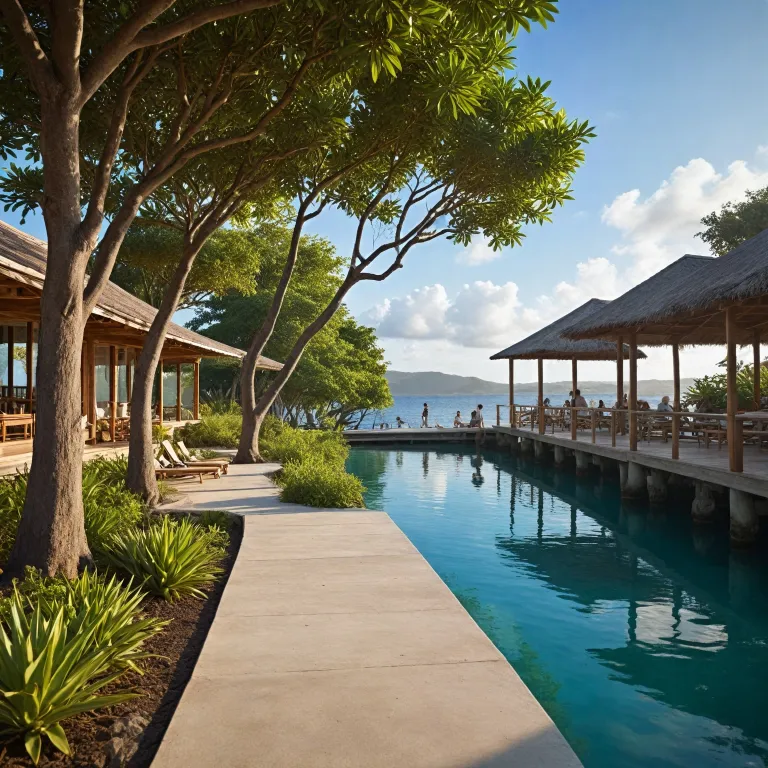
Resort development in saint vincent as a design laboratory for resilient tourism
St Vincent tourism resort development is reshaping how architects and designers read the Caribbean landscape. The Government of St. Vincent and the Grenadines positions each resort development as both an economic engine and a testing ground for resilient coastal planning. For hospitality professionals, this shift turns every project into a live case study in risk, room stock strategy, and long term asset value.
The current wave of tourism projects spans Mount Wynne, Peter’s Hope, Palm Island, and Cumberland Bay, with international brands such as Sandals Resorts International and Marriott International anchoring the pipeline. These projects will expand the national room stock by more than a third, forcing design teams to balance density, guest privacy, and authentic engagement with the islands. In parallel, the minister tourism portfolio now links hotel development directly to community employment, construction standards, and long range infrastructure planning.
For architects, the question is no longer whether a resort will be built, but how its architecture can mediate between fragile beaches and growing tourism demand. The La Soufrière eruption has made volcanic risk, evacuation routes, and civil aviation access part of the early design brief. This is where tourism civil stakeholders, from planners to aviation sustainable specialists, must coordinate with design teams to align airlift capacity, resort phasing, and emergency logistics.
Asset managers and investors read these development project opportunities through a different lens, focusing on build cost per room, projected average daily rate, and resilience of the resort development to climate and seismic shocks. Their expectations push FF&E suppliers and bureaux d’études to specify materials and systems that can withstand salt, humidity, and storm surge without sacrificing tactile luxury. In this context, St Vincent tourism resort development becomes a benchmark for future Caribbean islands projects.
Embedding development culture and local identity in room and FF&E strategies
St Vincent tourism resort development is also redefining what development culture means in a small island state. Instead of importing generic Caribbean imagery, design teams are mining the vernacular architecture of Saint Vincent and the Grenadines for spatial cues, material palettes, and craft narratives. This approach allows each resort to speak of a specific place rather than a vague collection of islands.
At Mount Wynne, the planned Beaches Resort by Sandals Resorts International must reconcile a large family oriented room stock with a coastline of sensitive beaches and forested slopes. The project room typologies therefore need to step down the terrain, using split level clusters and low rise volumes to preserve views while reducing visual massing. Similar questions arise at Peter’s Hope, where Marriott’s Autograph Collection project will rely on FF&E that references local timber, volcanic stone, and artisanal textiles without slipping into pastiche.
For suppliers, this development project wave demands new sourcing models that privilege regional production across the wider Caribbean. Furniture, lighting, and textiles can be commissioned from workshops in Saint Vincent, the Grenadines, and neighbouring islands such as Antigua or the Virgin Islands, strengthening tourism value chains. This regional lens also helps mitigate logistics risk, especially during peak tourism periods in february when international freight routes are congested.
Designers must also anticipate how guests will move between room, beach, and public spaces during longer trips. Circulation, shading, and acoustic strategies should support both high occupancy family seasons and quieter shoulder periods, ensuring that resort development remains profitable without overbuilding. When development culture is framed as a dialogue between local artisans, international operators, and technical consultants, Saint Vincent tourism projects can set a new standard for context driven luxury.
Sustainable development, aviation, and tourism civil coordination for island access
No matter how refined the architecture, St Vincent tourism resort development depends on reliable, sustainable access to the islands. Civil aviation infrastructure, maritime terminals, and inter island ferries shape the real experience of trips as much as any lobby or room. For design and technical directors, this means that aviation sustainable strategies are now part of the hospitality brief.
Tourism civil authorities are working with international carriers and regional airlines to align flight schedules with resort development phasing. As room stock grows, airlift must scale without undermining sustainable development commitments or overwhelming beaches and small communities. This coordination is particularly visible around peak february travel, when demand from North American and European markets spikes across the Caribbean.
Architects and planners therefore need to model guest flows from aircraft door to resort room, integrating wayfinding, transfer lounges, and baggage handling into the overall hospitality narrative. In Saint Vincent, this includes considering how visitors may combine stays across Saint Vincent, the Grenadines, and other islands such as Antigua, the Virgin Islands, or Turks Caicos. Multi stop trips require flexible check in systems, luggage storage, and transport hubs that feel like extensions of the resort rather than generic terminals.
For asset managers, aviation sustainable initiatives such as more efficient aircraft, optimized routes, and carbon offset programs influence the long term positioning of each development project. Resorts that align with these tourism civil strategies can market themselves as responsible gateways to the wider Caribbean, not isolated enclaves. This is where St Vincent tourism resort development intersects with regional hotel development in destinations like the Cayman Islands, the Dominican Republic, and Punta Cana, creating a network of properties that share both guests and environmental commitments.
Benchmarking against regional resort development in antigua, turks caicos, and beyond
To understand the stakes of St Vincent tourism resort development, professionals inevitably compare it with more mature markets. Destinations such as Antigua, Turks Caicos, the Cayman Islands, the Virgin Islands, and the Dominican Republic offer decades of resort development lessons. Their successes and missteps provide a critical reference for architects, designers, and investors working in Saint Vincent and the Grenadines.
In Turks Caicos, high end beaches resort properties have demonstrated how careful density control and strict coastal setbacks can protect beaches while sustaining premium rates. However, they also show the risks of over concentrating room stock in a single corridor, which can strain infrastructure and tourism civil services. Antigua and Punta Cana illustrate another model, where large all inclusive projects will anchor entire coastlines, demanding robust transport, water, and waste systems.
For Saint Vincent, the challenge is to absorb these insights without replicating the same patterns of overdevelopment. The current development project pipeline, led by Sandals Resorts International and Marriott International, remains modest compared with the largest Caribbean clusters. Yet the design decisions taken now around room typologies, public realm, and FF&E durability will lock in operational realities for decades.
Investors and asset managers therefore scrutinize every project room configuration, from family suites to villas, to ensure flexibility as markets evolve. They also monitor regional news and performance data to calibrate pricing, positioning, and capital expenditure cycles. For design teams, this benchmarking process reinforces the need to integrate sustainable development principles, robust construction, and adaptable interiors that can respond to shifting tourism flows across the islands.
Green building, hotel development, and FF&E resilience on volcanic and coastal sites
St Vincent tourism resort development unfolds on terrain shaped by both volcano and ocean, demanding a rigorous approach to resilience. Architects must design for seismic activity, heavy rainfall, and coastal erosion while still delivering the effortless comfort guests expect from international brands. This duality places structural engineering, landscape design, and FF&E specification at the heart of risk management.
Technical directors increasingly turn to green building frameworks to guide decisions on energy, water, and materials. Resources such as the impact of green building certifications on hotel architecture and design provide useful benchmarks for Caribbean projects. In Saint Vincent, these principles translate into elevated structures above storm surge levels, shaded walkways that reduce cooling loads, and durable finishes that can be quickly restored after extreme weather.
FF&E suppliers must respond with collections engineered for high humidity, salt exposure, and intense UV radiation, without compromising tactile quality. For resort development on exposed beaches, this means specifying marine grade metals, high performance outdoor fabrics, and joinery that resists swelling and warping. Public areas and each project room need layouts that allow for phased refurbishment, minimizing downtime and protecting revenue.
Across the Caribbean, from Antigua to the Cayman Islands and Punta Cana, hotel development teams are converging on similar resilience strategies. Saint Vincent and the Grenadines can leverage these regional insights while tailoring details to its own volcanic topography and microclimates. As sustainable development expectations rise among guests and regulators, St Vincent tourism resort development will be judged as much on lifecycle performance as on opening day aesthetics.
Governance, community impact, and the future of st vincent tourism resort development
The governance framework around St Vincent tourism resort development is as important as the design language. The Government of St. Vincent and the Grenadines has positioned tourism as a pillar of economic recovery after the La Soufrière eruption, with clear objectives for job creation and community benefits. “The projects are expected to create over 2,000 jobs and significantly boost the local economy through increased tourism and related activities.”
For the minister tourism and associated agencies, each development project must therefore align with social as well as financial metrics. Training programs for local staff, support for small businesses, and integration of cultural experiences into resort programming all shape the long term legitimacy of tourism. When residents see tangible benefits from hotel development, resistance to new projects tends to soften, and development culture becomes more collaborative.
International operators such as Sandals Resorts International and Marriott International bring global standards, marketing reach, and operational expertise to Saint Vincent and the Grenadines. Their presence also raises expectations for transparency, environmental stewardship, and stakeholder engagement across the islands. Regular news updates, public consultations, and clear communication about construction timelines and environmental safeguards help maintain trust.
Looking ahead, aviation sustainable policies, tourism civil planning, and regional partnerships with destinations like the Virgin Islands, Turks Caicos, Antigua, the Cayman Islands, and Punta Cana will shape demand patterns. As february and other peak months continue to drive high occupancy, careful management of room stock and beaches capacity will be essential. If these elements remain aligned, St Vincent tourism resort development can evolve into a reference model for integrated, design led, and community anchored Caribbean tourism projects.
Key statistics shaping st vincent tourism resort development
- Increase in visitor arrivals in the first half of the latest reported period versus the previous one : 17.3 % (Caribbean Tourism Organization).
- Increase in U.S. visitor arrivals in the first half of the latest reported period versus the previous one : 58.7 % (Caribbean Tourism Organization).
- Projected increase in hotel room stock by the upcoming completion phase of current projects : 34.5 % (St. Vincent and the Grenadines Tourism Authority).
Questions architects and investors ask about st vincent tourism resort development
What are the major resort developments in St. Vincent and the Grenadines ?
Major developments include the Beaches Resort at Mount Wynne, Peter’s Hope Resort under Marriott’s Autograph Collection, Palm Island Development, and Cumberland Bay Resort.
How will these developments impact the local economy ?
The projects are expected to create over 2,000 jobs and significantly boost the local economy through increased tourism and related activities.
When are the new resorts expected to open ?
The new resorts are projected to open between 2026 and 2027, with phased developments leading up to full operations.
How should design teams address environmental resilience in these projects ?
Design teams should prioritize elevated structures, robust coastal protection, efficient energy and water systems, and FF&E specified for high humidity, salt exposure, and seismic risk, ensuring that sustainable development and operational continuity remain central.
What role do international brands play in shaping design and FF&E standards ?
International brands such as Sandals Resorts International and Marriott International set performance benchmarks for guest experience, durability, and sustainability, influencing everything from room layouts to material selection and lifecycle maintenance strategies.