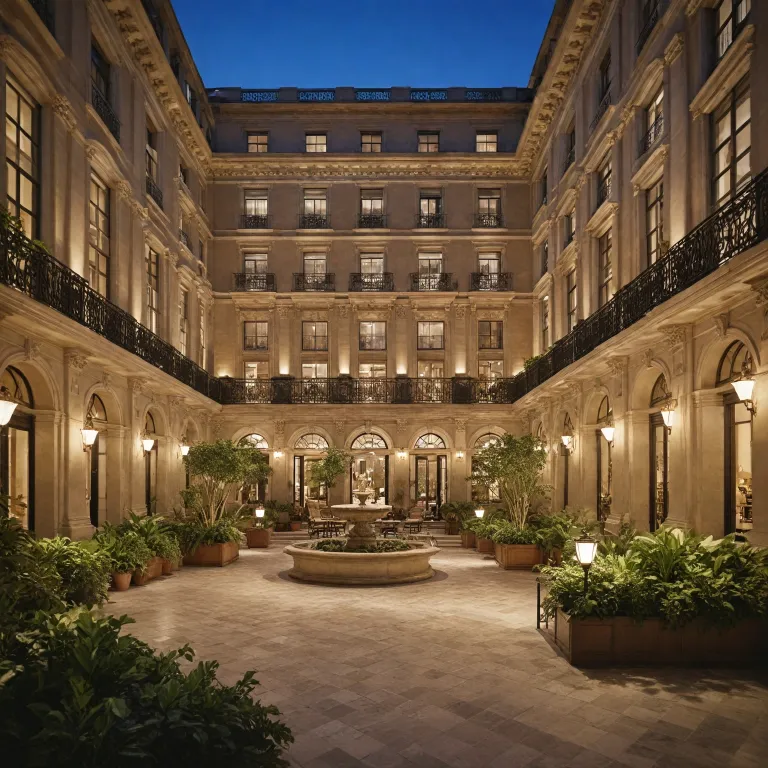
From grand hotel to urban fabric: reframing the Washington Marriott Wardman Park Hotel legacy
The Washington Marriott Wardman Park Hotel once stood as a vast urban resort in the Woodley Park neighborhood, anchoring a discreet yet powerful hospitality presence in the city. For architects and asset managers, this former hotel in Washington illustrates how a large scale property can move from iconic status to obsolescence when business fundamentals and spatial adaptability diverge. The site’s transformation forces design teams and investors to reassess how a star hotel, however established, must anticipate structural shifts in the national and international markets.
Originally developed by Harry Wardman, the complex evolved into the flagship Washington Marriott Wardman Park Hotel with 1,152 rooms and extensive event facilities. As a business hotel in the United States capital, it relied heavily on conventions, national associations, and international delegations, which shaped the room typologies, back of house flows, and FF&E strategies. When the pandemic hit the United States, the collapse of group demand exposed how vulnerable large hotels in Washington can be when their facilities and rooms are calibrated almost exclusively for high volume events.
For design directors and technical teams, the closure of this hotel Washington case study highlights the risk of over indexing on a single business model. The property’s location in Woodley Park, minutes walk from the National Zoo and the city’s diplomatic core, could not offset the structural mismatch between its oversized facilities and the new demand patterns. As reviews and business metrics deteriorated, the Washington Marriott Wardman Park Hotel shifted from a resilient asset to a redevelopment candidate, despite its air conditioned comfort, swimming pool amenities, and historically strong good reviews from loyal guests.
Adaptive reuse versus demolition: what the Wardman Park decision teaches large scale hotel projects
The decision to demolish the Washington Marriott Wardman Park Hotel rather than pursue adaptive reuse remains a pivotal lesson for hospitality investors. With 195,000 square feet of event facilities and 95,000 square feet of exhibit space, the property embodied a convention era logic that no longer aligned with post pandemic demand in Washington. For asset managers, the Washington Marriott Wardman Park Hotel demonstrates how sheer scale can become a liability when flexibility, mixed use programming, and diversified revenue streams are absent.
Carmel Partners, which acquired the property, opted to replace the former hotel with residential towers, effectively erasing the operational identity of the Washington Marriott Wardman Park Hotel as a business and meetings hub. This choice contrasts with other projects where historic hotels have been repositioned, such as the adaptive transformation of a former bank into a contemporary urban benchmark detailed in this analysis of a historic bank building turned contemporary hotel. In Washington, however, the Wardman Park site’s structural grid, slab heights, and circulation cores limited efficient conversion of rooms into residential or hybrid hospitality products.
For design offices and FF&E suppliers, the Washington Marriott Wardman Park Hotel story underlines the importance of planning for reversible layouts and modular room configurations. When a hotel in Washington or other United States cities is conceived with future conversion in mind, extra beds, flat screen placements, and air conditioned ducting can be reconfigured without full demolition. The Wardman Park outcome signals that future park hotel and marriott wardman style developments must embed adaptive reuse logic from the first sketch, or risk becoming stranded assets when business cycles shift.
Guestroom typologies, FF&E cycles, and the limits of scale at Wardman Tower
Within the Washington Marriott Wardman Park Hotel complex, Wardman Tower represented the most architecturally distinctive component, yet it could not offset the systemic challenges of the broader property. The tower’s rooms and suites, while historically significant, were embedded in an operational ecosystem dominated by mass convention business and large scale facilities. For hospitality designers, this juxtaposition between characterful Wardman Tower spaces and the anonymous bulk of the main wings illustrates how fragmented design narratives can dilute perceived value in a competitive city market.
FF&E strategies at the Washington Marriott Wardman Park Hotel had to support high occupancy, frequent extra beds, and intensive wear from large groups, which often pushed specifications toward durability over distinctiveness. Over time, this emphasis on robustness meant that room interiors, flat screen integrations, and air conditioned comfort felt increasingly generic compared with newer hotels Washington guests could choose. When reviews shifted from fabulous reviews to more neutral good reviews, the Washington hotel brand equity no longer compensated for the dated feel of the provided room environments.
For future projects in Washington United and other United States capitals, the Wardman Park experience suggests that large room counts must be balanced with layered typologies and differentiated FF&E narratives. Designers should consider how each room, suite, and connecting unit can flex between business, leisure, and extended stay uses without full refurbishment. Case studies of adaptive boutique luxury, such as the transformation of a Beaux Arts property into a contemporary hospitality benchmark described in this article on a Beaux Arts adaptive boutique hotel, show how granular design thinking can sustain relevance longer than sheer scale.
Public spaces, swimming pool amenities, and the changing expectations of urban guests
The Washington Marriott Wardman Park Hotel was conceived as a self contained park hotel, with extensive public spaces, landscaped grounds, and a prominent swimming pool that once differentiated it from more compact downtown hotels. Over time, however, guests in Washington began to prioritize walkable urban experiences, curated F&B concepts, and integrated wellness over traditional resort style facilities. This shift in expectations meant that the Washington Marriott Wardman Park Hotel’s generous but conventional amenities no longer translated into pricing power or consistently fabulous reviews.
From a design perspective, the distribution of public spaces across the property diluted energy and made it difficult to create a cohesive narrative that resonated with contemporary city travelers. The swimming pool, while attractive in marketing visuals, occupied valuable park side real estate that could have supported mixed use pavilions, co working lounges, or hybrid event studios for business and leisure guests. As new hotels Washington wide introduced more compact yet experience rich lobbies, the Wardman Park configuration began to feel like an echo of a past era rather than a forward looking Washington hotel model.
For future developments in Woodley Park and similar urban districts in the United States, designers should treat every square metre of facilities as a storytelling asset. Air conditioned volumes, circulation routes, and even back of house zones can be reimagined to support flexible programming that responds to evolving reviews and guest behaviors. The Washington Marriott Wardman Park Hotel reminds technical directors and investors that public space design must anticipate not only current demand but also the next cycle of urban hospitality expectations.
Financial resilience, business models, and the dollar value of flexibility in large hotels
The financial collapse of the Washington Marriott Wardman Park Hotel during the pandemic underscored how fragile even prominent national properties can be when revenue streams are concentrated. Heavy reliance on convention business meant that the hotel’s dollar performance was tightly coupled to a single demand segment, leaving little buffer when events vanished. For asset managers evaluating hotels in Washington and other United States cities, the Wardman Park case quantifies the dollar cost of inflexible facilities and monolithic business models.
In practical terms, the Washington Marriott Wardman Park Hotel’s vast ballrooms, exhibit halls, and pre function areas generated high fixed costs that could not be offset by transient room demand alone. Even with air conditioned comfort, flat screen equipped rooms, and historically good reviews, the property’s operating leverage became unsustainable once group business evaporated. The subsequent sale and demolition effectively reset the dollar value of the land, prioritizing residential yield over any attempt to reposition the existing hotel Washington structure.
For future park hotel and marriott wardman inspired developments, financial resilience must be embedded in the architectural brief from the outset. Mixed use stacking, convertible meeting spaces, and room layouts that can support both short stay guests and longer term residents can protect the asset’s dollar performance across cycles. Comparative analyses with other adaptive projects, such as the urban boutique blueprint outlined in this study of a new blueprint for urban boutique hospitality, show that flexibility often yields better long term reviews, stronger guest loyalty, and more resilient cash flows.
Designing future proof hospitality on historic sites in Washington and beyond
With the Washington Marriott Wardman Park Hotel now replaced by residential towers, the site’s story becomes a cautionary reference for architects and investors working on historic or large scale hospitality projects. The transformation of this hotel in Washington into a non hotel use highlights how planning authorities, developers, and design teams must align early on long term scenarios. For Woodley Park and other established districts in the United States, the challenge is to respect historic layers while ensuring that new projects can adapt to shifting patterns of travel, work, and urban living.
Future developments on comparable sites should treat the Washington Marriott Wardman Park Hotel as a benchmark for what happens when flexibility is under specified in the initial brief. Room modules, structural grids, and MEP systems must be designed so that provided room layouts, extra beds, and flat screen placements can evolve without full strip outs. Air conditioned cores and vertical circulation should anticipate potential transitions between hotel, serviced apartments, and pure residential, allowing the property to remain viable even if business models change.
For design offices, directions techniques, and FF&E suppliers, the Washington Marriott Wardman Park Hotel narrative reinforces the need for integrated thinking that bridges architecture, operations, and capital markets. Hotels Washington wide, from boutique properties to large park hotel complexes, will face similar pressures as guest expectations, reviews, and regulatory frameworks evolve. By internalizing the lessons of this former Washington hotel, the industry can craft more resilient, human centric environments that honor history while remaining agile in the face of uncertainty.
Key quantitative insights from the Washington Marriott Wardman Park Hotel
- The Washington Marriott Wardman Park Hotel operated for more than a century between its opening and final closure.
- Before closing, the property offered 1,152 rooms, positioning it among the largest hotels in Washington, D.C.
- The complex contained approximately 195,000 square feet of event space, including ballrooms and meeting rooms.
- Exhibit facilities accounted for around 95,000 square feet within the overall convention program.
- The site has since been redeveloped into residential towers, marking a full functional shift from hospitality to housing.
Frequently asked questions about the Washington Marriott Wardman Park Hotel
When did the Washington Marriott Wardman Park Hotel close ?
The Washington Marriott Wardman Park Hotel closed during the pandemic period, when financial difficulties linked to the collapse of convention and group demand made continued operation unviable. The closure marked the end of its role as a major convention hotel in Washington, D.C. For many industry professionals, this moment signaled a turning point in how large scale urban hotels are evaluated in the United States.
What is the current status of the former hotel site ?
The main wing of the former Washington Marriott Wardman Park Hotel has been demolished, and the site has been redeveloped into residential towers. This shift from hotel to housing reflects a strategic decision by the new owner to align the property with current market needs in Washington. For architects and planners, the project illustrates how historic hospitality sites can be reinserted into the city fabric with a completely different program.
How many rooms did the hotel have before closing ?
Before its closure, the Washington Marriott Wardman Park Hotel offered 1,152 rooms, including a mix of standard rooms and suites. This scale positioned it as a key convention and group property within the Washington market. The large inventory also contributed to the complexity of any potential adaptive reuse scenario once business conditions deteriorated.
Why was demolition chosen instead of adaptive reuse for the hotel ?
Demolition was selected because the existing structural grid, circulation, and mechanical systems of the Washington Marriott Wardman Park Hotel made efficient conversion to residential or hybrid hospitality formats challenging. The cost and complexity of reconfiguring thousands of rooms and extensive facilities outweighed the benefits of preserving the structure. As a result, the developer opted for new construction that could better meet contemporary residential standards and expectations.
What lessons does the Wardman Park story offer for future hospitality projects ?
The Wardman Park story emphasizes the importance of designing hotels with long term flexibility, mixed use potential, and diversified revenue streams. Large properties in Washington and other United States cities must anticipate shifts in travel behavior, work patterns, and regulatory frameworks. By embedding adaptability into architecture, FF&E, and building systems, future projects can avoid becoming stranded assets when market conditions change.