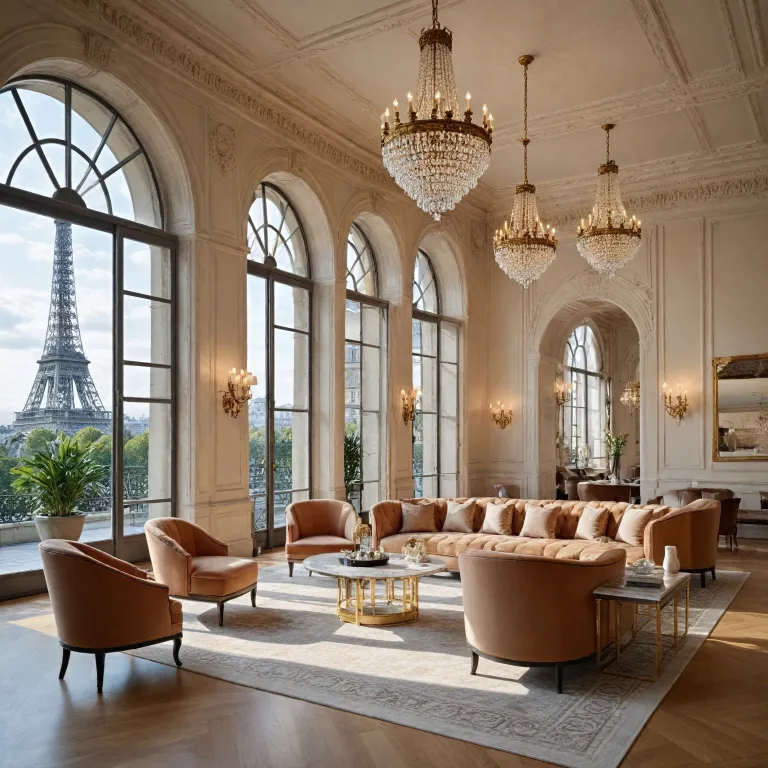
Paris hospitality news and the architectural shift toward sustainable luxury
Paris hospitality news currently revolves around a powerful convergence of performance data, sustainability commitments and elevated guest expectations. For architects and designers, the city has become a living laboratory where every hotel project must balance heritage façades with contemporary comfort, while investors and asset managers track returns with forensic precision. CoStar data showing record December occupancy and RevPAR confirms that the paris hotel market rewards properties that align architecture, operations and guest experience exceptionally well.
This performance context reframes how each luxury hotel in Paris approaches its next renovation cycle, from the grand palace near place Vendôme to the intimate boutique address on the Left Bank. The Four Seasons Hotel George V, honored for its sustainable supply chain, illustrates how a luxury property can embed responsible purchasing into the architectural brief, influencing FF&E specifications, back of house layouts and storage flows. When a hotel currently operates with a responsible purchasing charter, the design narrative must integrate lifecycle thinking, from stone sourcing to textile recycling.
Paris hospitality news also highlights how award winning gastronomy reshapes spatial planning within hotels resorts and stand alone venues. Plénitude at Cheval Blanc Paris, recognized for the Art of Hospitality, demonstrates how a michelin starred restaurant with a starred chef can become the conceptual heart of a property, dictating circulation, acoustic strategies and lighting design. For design teams, this means kitchens, chef’s tables and private dining rooms require the same architectural attention as suites with postcard views of the Seine.
Across the city, this shift is redefining what a sense place means in a dense urban fabric, where every square metre must justify its cost and carbon footprint. Paris hospitality news therefore becomes a strategic tool for directions techniques, FF&E suppliers and bureaux d’études, guiding long term investment choices and technical standards. In this environment, the most resilient hotel projects are those that translate data and awards into built form, material choices and operational efficiency.
Designing a sense of place collection in historic parisian hotels
Within the paris hospitality news landscape, one of the deepest shifts concerns how designers interpret heritage to create a contemporary sense place. Rather than replicating clichés of the french capital, leading studios curate a place collection of narratives drawn from the building’s history, the quartier’s crafts and the hotel brand’s DNA. This approach allows a single hotel to offer three distinct atmospheres across lobby, rooms and F&B, while maintaining a coherent identity for guests and investors.
In practice, this sense of place collection often starts with light, which is both a technical and emotional driver in parisian architecture. Designers work with skilled artisans to restore original windows, refine glazing performance and integrate discreet LED layers that respect mouldings and cornices. When a hotel currently operates within a protected building, the challenge is to introduce contemporary lighting control and energy efficiency without compromising listed features or long term maintenance.
FF&E strategies follow the same logic, with bespoke pieces drawing inspiration from local ateliers and french decorative arts. A headboard may reinterpret Haussmannian façades, while a rug echoes the geometry of nearby place Dauphine, creating subtle connections between interior and city. For asset managers, this place collection approach supports pricing power and booking performance, as guests perceive authentic luxury rather than generic international styling.
Paris hospitality news increasingly reports on hotels that use three distinct design layers to structure guest experience. The first layer addresses architectural bones, the second focuses on tactile FF&E, and the third curates art, books and objects that can be refreshed over time. This tiered strategy allows hotels resorts and independent properties to evolve with market trends while preserving a strong sense place anchored in paris.
FF&E, skilled artisans and the economics of paris luxury renovation
Behind every headline in paris hospitality news about a reopened palace or boutique hotel lies a complex FF&E and artisan ecosystem. For investors and asset managers, the real story is how skilled artisans, procurement strategies and lead times impact both CAPEX and long term asset value. In Paris, where craftsmanship is integral to the luxury narrative, the selection of ateliers becomes as strategic as the choice of architect or brand operator.
FF&E packages in a luxury hotel are no longer limited to furniture and fabrics ; they now integrate custom lighting, joinery, art and technology interfaces. When a hotel currently operates at high occupancy with strong ADR, phasing renovation by floor or wing is essential to protect revenue, which requires modular FF&E solutions and precise logistics. Skilled artisans must coordinate with bureaux d’études to ensure that bespoke pieces meet fire, acoustic and sustainability standards without diluting the design intent.
Paris hospitality news also reflects growing scrutiny on supply chains, especially after the recognition of Four Seasons Hotel George V for its sustainable purchasing charter. This award signals to the market that a luxury hotel can align its FF&E sourcing with environmental and social criteria while maintaining a refined aesthetic. For FF&E suppliers, this means documenting provenance, recyclability and maintenance cycles, turning every chair, luminaire and textile into a data point for ESG reporting.
In this context, the economics of renovation extend beyond initial budgets to include operational resilience and guest perception. A carefully curated place collection of durable, repairable pieces reduces long term waste and supports consistent brand standards across rooms and suites. As paris hospitality news continues to highlight record performance, the properties that will lead the next cycle are those where FF&E strategy, artisan partnerships and financial modelling are fully integrated from the first sketch.
Gastronomy, michelin starred experiences and spatial narratives in paris hotels
Gastronomy occupies a central place in paris hospitality news, reshaping how architects and designers conceive hotel ground floors and rooftops. The success of Plénitude and other michelin starred venues confirms that a starred chef can anchor a property’s identity as strongly as its spa or suites. For directions techniques, this translates into complex requirements for extraction, acoustic separation and service flows that must coexist with refined public spaces.
Design teams increasingly treat restaurants and bars as a three act spatial narrative, from arrival to dessert, rather than isolated rooms. Guests move through three distinct atmospheres, perhaps starting in a light filled lounge, continuing to a more intimate dining room, and ending in a private bar with night views over paris. This sequencing supports both revenue optimization and guest satisfaction, encouraging longer stays within the hotel and higher average checks.
Paris hospitality news also highlights how hotels resorts integrate external guests into these spaces without compromising security or residential comfort. Separate entrances, controlled vertical circulation and carefully positioned service corridors allow the restaurant to operate as a destination for the city while preserving privacy for in house guests. When a hotel currently operates a michelin starred venue, the architectural envelope must support both daily operations and high profile events, from fashion shows to brand launches.
Materiality plays a crucial role in expressing the french culinary narrative, with stone, wood and textiles drawing inspiration from markets, vineyards and patisseries. Skilled artisans craft bespoke tableware, joinery and lighting that reinforce the sense place and align with the broader place collection of the property. As paris hospitality news continues to celebrate award winning dining, the most successful projects will be those where gastronomy, architecture and FF&E form a single, coherent story.
Performance data, booking behavior and design decisions in the paris market
Recent paris hospitality news has made performance data impossible to ignore for design and renovation teams. With December occupancy and RevPAR at record levels, CoStar’s analytics confirm that well positioned hotels can command premium rates when architecture, service and location align. For asset managers, this reinforces the need to link every design decision to measurable impacts on booking patterns, length of stay and ancillary revenue.
Guest booking behavior in paris shows a clear preference for hotels that communicate a strong sense place and transparent sustainability commitments. Properties that highlight their collaboration with skilled artisans, their michelin starred dining or their participation in the Hospitality Manifesto tend to convert better across direct and intermediary channels. This means that the architectural narrative, FF&E photography and brand storytelling must be aligned long before the first guest arrives.
Paris hospitality news also underscores the role of training in sustaining performance, particularly through the partnership between Luxury Hotelschool Paris and Culinary Arts School Lenôtre. By combining culinary arts with luxury hospitality management, this program strengthens the operational backbone that supports ambitious design concepts. When a hotel currently operates with teams trained in such environments, complex spaces like open kitchens, hybrid lobbies and wellness areas can function smoothly under pressure.
For bureaux d’études and directions techniques, performance data informs technical specifications, from acoustic ratings to HVAC zoning and digital infrastructure. A hotel that aspires to attract long stay guests or high value events must anticipate intensive use of meeting rooms, suites and public spaces, which affects structural loads and services distribution. As paris hospitality news continues to highlight both record results and rising expectations, the most resilient projects will be those where data, design and operations form a continuous feedback loop.
Global benchmarks, renovation strategies and the evolving paris hospitality landscape
Within paris hospitality news, the city’s developments increasingly sit within a global conversation on renovation and repositioning. International case studies, such as boutique transformations in historic districts abroad, offer valuable benchmarks for parisian projects seeking to balance heritage and contemporary expectations. For example, analyses of how a boutique property elevates renovation in a historic American neighborhood, as detailed in this in depth article on boutique hotel renovation strategy, can inform approaches to similar assets near place de la République or Saint Germain.
Paris hospitality news also reflects a growing emphasis on phased renovation strategies that allow a hotel currently operates at high occupancy to maintain revenue streams. Architects and directions techniques collaborate to define three distinct phases, often starting with back of house and technical upgrades before moving to rooms and public spaces. This sequencing minimizes disruption while allowing the brand to communicate visible improvements to guests and partners.
For investors, the key question is how each renovation cycle strengthens the property’s position within a competitive place collection of paris hotels. A palace near the ritz may focus on reinforcing its heritage luxury, while a contemporary brand on the périphérie targets design led, value conscious travelers. In both cases, drawing inspiration from international best practices and local craftsmanship helps create a differentiated offer that resonates with both french and international guests.
As sustainability frameworks mature, paris hospitality news increasingly highlights projects that integrate circular economy principles into demolition, construction and FF&E. Hotels resorts that prioritize reuse, low impact materials and adaptable layouts not only reduce environmental impact but also protect long term asset flexibility. In a market where performance, authenticity and responsibility are closely watched, the next generation of paris hotel renovations will be judged as much by their invisible systems as by their iconic views and public spaces.
Key statistics shaping paris hospitality design and renovation
- December hotel occupancy in Paris reached 76.7 %, indicating strong demand for well positioned properties.
- The average daily rate (ADR) for Paris hotels in December stood at 371.87 EUR, supporting investment in high quality design and FF&E.
- Revenue per available room (RevPAR) in Paris reached 285.13 EUR, confirming the financial viability of ambitious renovation programs.
Frequently asked questions about paris hospitality news and design
What factors contributed to Paris's record hotel performance in December 2025?
The surge was driven by increased demand during Christmas and New Year's Eve, leading to higher occupancy rates and revenue.
Which Parisian restaurant was recognized for exceptional hospitality in 2024?
Plénitude received the Art of Hospitality Award from The World's 50 Best Restaurants in April 2024.
How is the Four Seasons Hotel George V promoting sustainability?
The hotel implemented a responsible purchasing charter and various eco-friendly initiatives, earning it the World’s Leading Sustainable Supply Chain Programme award in October 2025.
What is the focus of the new training program launched by Luxury Hotelschool Paris and Culinary Arts School Lenôtre?
The program combines culinary arts with luxury hospitality management, aiming to enhance leadership and operational skills.
What is the purpose of the Hospitality Manifesto introduced by Paris je t'aime - Office de Tourisme?
The manifesto aims to promote sustainable tourism and improve the visitor experience in Paris.