From taipei’s hotel tribute to cultural landmark: the S Hotel story
In the dense urban fabric of Taipei, one taipei hotel quietly redefined how a luxury property can narrate a love story and a city at once. S Hotel, created by entrepreneur Xiao-Fei Wang as a tribute to his wife, actress Barbie Hsu, became a benchmark for how a hotel designed around emotion can still meet hard asset expectations. For architects, designers, and asset managers, this taipei s hotel case offers a rare convergence of narrative, FF&E discipline, and operational clarity.
Located on Dunhua North Road in the Songshan district, the mansion Taipei property leveraged its address as both an urban stage and a discreet retreat. The building’s scale, with 103 room keys, allowed the hotel to feel intimate while still operating as a serious luxury hotel in Taipei Taiwan. This balance between boutique character and institutional robustness is central when positioning hotels Taipei for long term value creation.
Interior designer Philippe Starck framed the project as a cultural dialogue rather than a signature gesture. The collaboration between Philippe and local artists such as Cha-Ray Chu ensured that the hotel lobby, guest room layouts, and amenities strategy were rooted in Taiwan Taipei rather than in an abstract global style. For design teams, this taipei s hotel approach shows how a strong authorial voice like Philippe Starck can still leave space for local nuance.
The property’s closure did not erase its influence on the city or on regional investors. Instead, S Hotel now functions as a reference point whenever a new hotel Taipei brief mentions cultural storytelling, Michelin star gastronomy, or a mansion scale asset on Dunhua. For anyone planning the next taipei mgallery or comparable collection hotel, the lessons from this taipei hotel remain highly actionable.
Design intelligence at S Hotel: how philippe starck translated taipei into space
For design directors and bureaux d’études, S Hotel is a precise study in how a hotel designed by a global star can still feel hyper local. Philippe Starck approached the taipei s hotel commission as a layered narrative, blending indigenous Taiwanese art, tactile materials, and calibrated lighting into a coherent hospitality grammar. The result is a taipei hotel that reads as both international luxury and unmistakably Taiwan Taipei.
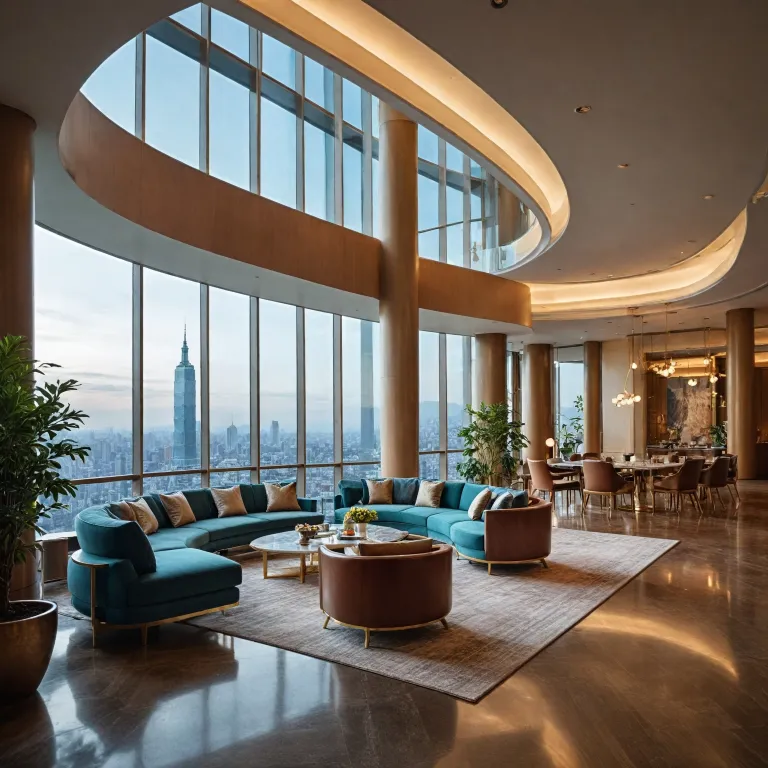
In the hotel lobby, Starck used reflective surfaces and sculptural seating to elongate perspectives and visually expand the mansion Taipei footprint. These gestures were balanced with warm timber, curated art, and controlled air conditioning flows to maintain comfort without sacrificing intimacy. Each room was treated as a cocoon, where B&O audio, tailored amenities, and precise air distribution created a quiet counterpoint to the city outside.
For FF&E specialists, the taipei s hotel project demonstrates how a tight palette can still support multiple room typologies. Bed frames, casegoods, and lighting were designed as a family, allowing hotels Taipei level consistency while still enabling subtle variations between suites and standard room categories. This strategy is particularly relevant for any future taipei mgallery or mgallery collection property seeking strong brand recall with optimized procurement.
There is also a clear parallel between S Hotel and contemporary workplace hospitality, where comfort, narrative, and performance converge. The same design intelligence seen here echoes in projects that elevate workspace experience through amenities and design innovation, as explored in this analysis of corporate office amenities and design innovation. For investors and asset managers, such cross typology insights help frame taipei s hotel not as an isolated icon, but as part of a broader shift toward human centric environments.
FF&E and amenities strategy: aligning guest comfort with asset performance
Behind the visual drama of any taipei s hotel style project lies a disciplined FF&E and amenities matrix. At S Hotel, the specification of B&O audio systems, curated in room technology, and high performance air conditioning was not only about guest delight, but also about lifecycle cost and maintenance. For technical directors, this taipei hotel illustrates how early coordination between design, engineering, and operations can protect long term ROI.
Each room was conceived as a calibrated ecosystem where furniture, lighting, and technology supported both rest and productivity. The choice of durable yet tactile finishes allowed the hotel to maintain a luxury feel while minimizing refurbishment frequency, a key concern for hotels Taipei operating in competitive urban markets. Amenities such as high quality bedding, intuitive controls, and acoustically insulated partitions reinforced the perception of a luxury mansion within the city.
For collection hotel brands like a potential taipei mgallery, the S Hotel model shows how to translate brand standards into locally resonant details. The mgallery collection ethos of storytelling through design aligns naturally with the narrative embedded in this mansion Taipei property. When replicated across hotels, such an approach can create a recognizable yet flexible language that works as well in Taipei Taiwan as in Hong Kong or other regional hubs.
Food and beverage programming was equally strategic, with collaboration from Michelin star level chefs in the restaurant bar. This elevated the perceived value of a stay, positioning the hotel Taipei asset as a culinary destination rather than just a place to sleep. For asset managers, this reinforces how a taipei s hotel style amenities stack can drive both rate premiums and non room revenue, provided that FF&E and back of house design support efficient service flows.
Urban context, air, and light: taipei’s hotel as a city interface
Situated on Dunhua North Road in Songshan, S Hotel operated as a finely tuned interface between interior calm and exterior intensity. The taipei s hotel design leveraged the city grid, tree lined boulevard, and proximity to Taipei Arena to frame views and choreograph guest movement. For urban minded designers, this taipei hotel demonstrates how a property can act as both a filter and amplifier of its surroundings.
Natural light was carefully managed, with glazing, sheer curtains, and reflective interior surfaces used to soften the often bright Taipei Taiwan daylight. Mechanical air conditioning systems were integrated discreetly, ensuring that air quality and thermal comfort met luxury expectations without visual clutter. This attention to air and light made each room feel like a controlled microclimate, a critical differentiator in dense hotels Taipei corridors.
The location also enabled the hotel to plug directly into the city’s cultural and commercial circuits. Guests could attend events at Taipei Arena, conduct business in nearby offices, and return to a mansion Taipei environment that felt insulated yet connected. For future taipei mgallery or mgallery collection developments, this interplay between city and sanctuary should inform both massing and ground floor programming.
Comparisons with other urban luxury concepts, such as elevated hospitality in rooftop pool resorts, are instructive here. Projects that position themselves as urban resorts in the sky show how air, views, and vertical circulation can become core amenities. In the case of this taipei s hotel, the emphasis was less on altitude and more on crafting a horizontal mansion experience along Dunhua, yet the underlying principle of choreographed urban immersion remains comparable.
Branding, mgallery ambitions, and regional influence from taipei to hong kong
During its lifecycle, S Hotel intersected with Accor’s ambitions, positioning it as a potential reference for a taipei mgallery style narrative. The mgallery collection framework, which favors hotels with strong stories and distinctive design, aligned naturally with the taipei s hotel identity. For investors evaluating collection hotel opportunities, this case illustrates how a single property can test brand fit before broader regional deployment.
The mansion Taipei positioning, rooted in a personal tribute to Barbie Hsu and executed by Philippe Starck, created a brandable story that resonated beyond Taiwan Taipei. Regional travelers from Hong Kong and other Asian gateways perceived the hotel Taipei asset as both a design destination and a cultural statement. This cross border appeal is critical when building a pipeline of hotels that must compete with established luxury brands.
For designers, the collaboration between Philippe and local partners showed how a hotel designed with a clear narrative can still accommodate future rebranding. Core architectural moves, FF&E frameworks, and amenities infrastructure were robust enough to support potential repositioning as a taipei hotel within a larger mgallery collection. This resilience is particularly valuable for asset managers planning exit strategies or portfolio rotations.
Communication strategy also played a role, with design news, culinary announcements, and lifestyle features reinforcing the property’s profile among hotels Taipei. The narrative around Michelin star collaborations in the restaurant bar, the emotional backstory linked to Barbie Hsu, and the prominence of Philippe Starck all contributed to a layered brand equity. For future taipei s hotel successors, the lesson is clear : align design, operations, and storytelling so that each stay feels like participation in an ongoing cultural project.
Operational lessons and future questions for taipei’s hotel designers
The operational arc of S Hotel, from opening to closure, offers valuable data points for technical directors and asset managers. With 103 room keys and a luxury positioning, the taipei s hotel model required meticulous calibration of staffing, maintenance, and FF&E replacement cycles. For hotels Taipei competing in a crowded market, such calibration can determine whether a mansion Taipei concept remains financially sustainable over time.
One recurring theme is the importance of aligning air conditioning, in room technology, and amenities with both guest expectations and local climate. In Taiwan Taipei, humidity, temperature swings, and urban pollution place additional stress on mechanical systems and finishes. A hotel designed without this resilience risks higher operating costs and inconsistent guest experience, undermining the perceived value of a stay.
As new projects emerge, from potential taipei mgallery developments to independent collection hotel ventures, stakeholders are asking more structured questions hotel by hotel. They want to know how each room type supports mixed use behavior, how the hotel lobby can flex between social hub and quiet lounge, and how the restaurant bar can sustain Michelin star level aspirations without overburdening the P&L. These questions hotel teams raise today are directly informed by the successes and challenges of S Hotel.
Looking ahead, the influence of S Hotel will likely extend beyond Taipei Taiwan into markets such as Hong Kong, where culturally anchored luxury hotels are in demand. The project’s legacy lies in showing that a taipei hotel can be both a personal tribute and a scalable reference for design, FF&E, and amenities strategy. For architects, designers, and investors, the taipei s hotel story remains a sophisticated case study in how love, city, and luxury can be woven into a single, memorable hospitality experience.
Key quantitative insights from S Hotel in taipei
- S Hotel operated for approximately 7 years, providing a full lifecycle reference for a luxury taipei hotel asset.
- The property offered 103 rooms, positioning it as an intimate yet operationally robust mansion Taipei scale hotel.
- The hotel’s location on Dunhua North Road in Songshan district placed it within a dense urban context, ideal for benchmarking hotels Taipei performance.
Key questions hotel professionals ask about S Hotel in taipei
Why was S Hotel named after Barbie Hsu?
The hotel was named 'S Hotel' after Barbie Hsu, who is known as 'Big S' in the entertainment industry, as a dedication by her husband, Xiao-Fei Wang.
Who designed the interior of S Hotel?
The interior of S Hotel was designed by renowned French designer Philippe Starck, blending traditional Taiwanese elements with modern design.
When did S Hotel close?
S Hotel closed on August 3, 2024, after operating for approximately seven years.
How did S Hotel integrate Taiwanese culture into its design?
S Hotel integrated indigenous Taiwanese art, traditional motifs, and collaborations with local artists into its interiors, ensuring that the taipei s hotel experience reflected Taiwan Taipei’s cultural identity while maintaining an international luxury standard.
What made S Hotel’s amenities strategy distinctive among hotels in taipei?
The combination of high end in room technology, B&O audio systems, carefully designed air conditioning, and Michelin star level restaurant bar offerings positioned S Hotel as a taipei hotel where amenities were not add ons, but core components of the overall design and guest journey.