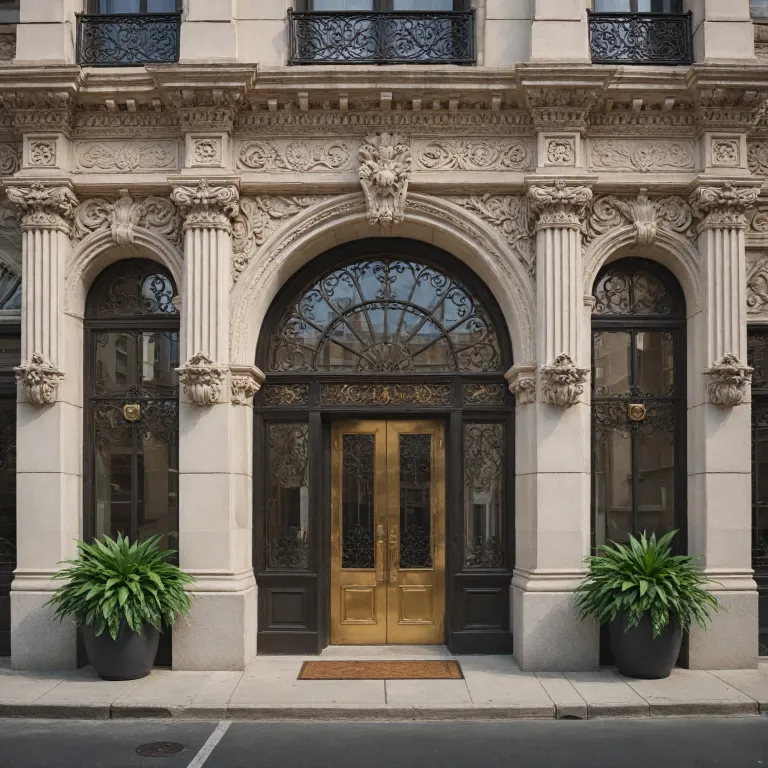
From Hotel Monaco San Francisco to The Marker Union Square
The story of the former Hotel Monaco San Francisco is a precise case study in adaptive repositioning for design led hospitality. When Kimpton Hotels & Restaurants operated the hotel as Hotel Monaco, the property already leveraged its Beaux Arts shell yet needed a sharper narrative for the evolving downtown San market. The rebranding to The Marker – Union Square under Destination Hotels reframed the francisco hotel as a contemporary boutique hotel while retaining its historic gravitas.
Originally opened as the Bellevue hotel, the building stands a short walk from Union Square in the dense theater district grid of san francisco. This location anchors the hotel as both neighborhood marker and urban retreat, with the city’s cultural institutions acting as an extended lobby. For architects and asset managers, the shift from Hotel Monaco to the Marker Union identity illustrates how a historic marker can be re scripted without erasing memory.
The hotel features 208 guest room keys and approximately 1 000 square metres of event spaces, which demanded a careful FF&E and layout strategy. Design teams had to respect the Beaux Arts envelope while upgrading every room to current expectations for connectivity, acoustic comfort, and wellness. The repositioned hotel features layered color, bold pattern, and curated arts references that speak to the building’s beaux arts heritage without pastiche.
For investors evaluating hotels in downtown san corridors, the Hotel Monaco San Francisco to monaco marker transition under Destination Hotels demonstrates how management change, brand narrative, and capital expenditure can align. The property’s luxury positioning remains boutique rather than resort scale, but the new hotel features and service script aim squarely at high yielding corporate and leisure segments. In this sense, the hotel monaco story is less about nostalgia and more about future proofing a compact urban property.
Beaux Arts bones and the challenges of historic integration
The building’s Beaux Arts architecture is both asset and constraint for any renovation of the former Hotel Monaco San Francisco. The façade and public volumes, including the marble staircase and double height lobby, act as a physical marker of early twentieth century ambition in san francisco. These beaux arts elements give the francisco hotel instant character, yet they also limit intrusive structural interventions that many contemporary hotels might pursue.
Designers working on hotels of this era must choreograph circulation, back of house, and event spaces around existing cores. At the Marker Union Square, the marble staircase becomes a theatrical spine, guiding guests from street to living room style lounges and up toward meeting floors. This approach turns a potential constraint into a luxury feature, aligning with broader industry practice seen in other historic conversions and in projects that redefine luxury resort design and FF&E integration, such as advanced resort FF&E integration strategies.
Within guest room floors, the original floor ceiling heights offer generous volume but complicate MEP routing and acoustic separation. FF&E packages for each room and for suites must therefore work harder, using upholstered wall panels, layered drapery, and soft flooring to temper sound and scale. For asset managers, the capex line for such bespoke solutions is higher than for new build hotels, yet the ADR uplift in a boutique hotel with authentic historic character can justify the spend.
From a portfolio perspective, Destination Hotels positioned the former Hotel Monaco as a distinctive city destination rather than a generic san property. The beaux arts narrative, the marble staircase, and the proximity to Union Square together create a clear sense of place. For architects and bureaux d’études, this case underlines how every historic marker in a city grid can be leveraged as both brand story and operational framework when planning long term renovation phases.
FF&E strategy in a compact boutique hotel footprint
Within the former Hotel Monaco San Francisco, FF&E decisions carry unusual weight because of the compact urban footprint. Each room must function as a flexible living room, workspace, and retreat, while the boutique hotel positioning demands a strong visual identity. Designers therefore treat every square metre as a marker of the brand, from headboards and casegoods to lighting and textiles.
The hotel features 208 rooms arranged around a tight core, which means repetition can easily slip into monotony if not carefully curated. To avoid this, the monaco marker design language uses varied color stories and art packages while maintaining consistent ergonomics and storage logic. This balance allows the hotels in the portfolio to share procurement efficiencies while giving this particular francisco hotel a distinct personality anchored in san francisco’s arts scene.
Public areas follow a similar logic, with the lobby and adjacent living room zones acting as social condensers. Here, FF&E must support both transient traffic and longer stay guests who treat the space as an extension of their room. Lessons from other urban boutique repositionings, such as those outlined in new blueprints for urban boutique hospitality, show that flexible seating clusters, power access, and durable yet tactile finishes are essential.
For asset managers and investors, the FF&E strategy at the former Hotel Monaco San Francisco illustrates how a boutique property near Union Square can command luxury rates without resort scale amenities. The hotel features layered textures, bespoke lighting, and curated arts that echo the beaux arts shell, reinforcing the building as a cultural destination within the city. In this way, the monaco san narrative is written as much through chairs, tables, and textiles as through architecture.
Rebranding, management change, and market repositioning
The transition from Hotel Monaco San Francisco under Kimpton Hotels & Restaurants to The Marker – Union Square under Destination Hotels was more than a name change. It represented a strategic repositioning of a historic hotel within a competitive downtown san landscape. For owners and asset managers, this shift highlights how management expertise and brand architecture can unlock latent value in existing hotels.
Destination Hotels approached the property as both a historic marker and a contemporary boutique hotel, aligning the beaux arts heritage with a refreshed service ethos. The rebranding objectives were clear : preserve the building’s architectural significance, enhance guest amenities, and integrate the hotel into a broader portfolio that values distinctive city properties. In practice, this meant rethinking the lobby as a living room, recalibrating event spaces for higher yielding corporate and social business, and refining the guest room offer.
From a design perspective, the monaco marker evolution required careful coordination between architecture, interiors, and operations. The marble staircase, floor ceiling proportions, and existing structural grid set non negotiable parameters, while the new brand narrative demanded more expressive color and pattern. For technical directors and bureaux d’études, the project demonstrates how to phase works in an operating francisco hotel without compromising guest experience or safety.
Market wise, the repositioned hotel features a sharper focus on Union Square as both geographic and emotional anchor. Communications emphasize the property’s proximity to theaters, retail, and dining, framing the hotel as a gateway to the city’s arts and culture. For investors evaluating similar hotels, the former Hotel Monaco San Francisco shows how a targeted rebranding can shift a property from generic downtown san inventory to a clearly defined boutique destination.
Guest experience, room typologies, and operational design
Within the former Hotel Monaco San Francisco, guest experience is shaped by a tight interplay between room typologies, public spaces, and service choreography. The hotel features a mix of standard rooms and suites, each designed to maximize perceived space within the constraints of a historic shell. Generous floor ceiling heights help, but careful placement of wardrobes, desks, and seating is essential to maintain clear circulation.
Designers treated each room as a hybrid living room and sleeping zone, reflecting how contemporary guests use boutique hotels in dense city locations. Layered lighting, integrated power, and flexible furniture allow the same room to support work, relaxation, and in room dining. For technical teams, this multi use approach requires robust infrastructure behind the walls, from HVAC zoning to acoustic separation, especially in a francisco hotel where downtown san noise can be intrusive.
Operationally, the proximity to Union Square and the theater district shapes peak arrival and departure patterns, as well as pre and post show bar traffic. The lobby and adjacent bar therefore function as both social marker and revenue engine, with FF&E layouts designed to flex between day and night modes. Event spaces on the upper levels extend this logic, offering adaptable rooms for meetings, small conferences, and private dining that align with the hotel’s boutique scale.
For architects and asset managers, the former Hotel Monaco San Francisco underscores the importance of aligning spatial planning with target segments. The hotel features service flows that keep back of house discreet while maintaining efficient connections to room floors and event spaces. In a competitive san francisco market, such operational clarity supports both guest satisfaction and long term asset performance.
Lessons for future adaptive reuse and boutique repositioning
The evolution of the former Hotel Monaco San Francisco into The Marker – Union Square offers transferable lessons for adaptive reuse across global city markets. First, treating a historic building as a narrative asset rather than a constraint allows architects to foreground elements like the marble staircase and beaux arts detailing as signature hotel features. Second, aligning FF&E, branding, and operations around a clear boutique hotel promise near Union Square type locations can elevate ADR without overbuilding amenities.
Comparisons with other adaptive projects, such as the transformation of a historic bank into a contemporary urban benchmark detailed in urban hotel benchmark conversions, show consistent patterns. Successful hotels treat each room as a carefully tuned living room, each public space as a flexible event platform, and each historic marker as a brand differentiator. For investors, this reinforces the value of location and story over sheer scale when evaluating city properties.
For technical directors and bureaux d’études, the former Hotel Monaco San Francisco highlights the need for early coordination between structural, MEP, and interior teams. Floor ceiling constraints, existing cores, and heritage requirements must be mapped against desired room counts, event spaces, and back of house needs. When this alignment is achieved, the resulting hotel features both operational efficiency and a compelling guest journey.
Ultimately, the monaco san and monaco marker narratives demonstrate how a francisco hotel can evolve across management eras while retaining its essence as a boutique destination. The building remains a physical and symbolic marker within downtown san, its beaux arts shell framing a contemporary hospitality experience. For architects, designers, asset managers, and FF&E suppliers, this case offers a precise template for balancing preservation, performance, and place in future hotel projects.
Key quantitative insights for historic boutique hotel repositioning
- The former Hotel Monaco San Francisco building dates back to 1910, anchoring its status as a genuine historic marker in the city’s hospitality landscape.
- The hotel features 208 guest rooms, requiring highly efficient FF&E strategies to maintain a boutique feel within a relatively dense key count.
- Approximately 1 000 square metres of event spaces support a diversified revenue mix beyond pure room nights.
- The rebranding to The Marker – Union Square under Destination Hotels was structured to preserve Beaux Arts architecture while upgrading amenities and services.
- The project illustrates how integrating a historic property into a modern portfolio can enhance occupancy and rate performance in competitive downtown san markets.
Questions architects and investors often ask about the former Hotel Monaco San Francisco
What was the original name of The Marker – Union Square ?
The original name of the property now known as The Marker – Union Square was the Bellevue hotel, a francisco hotel that opened in the early twentieth century. This historic marker status underpins its current positioning as a boutique hotel with authentic Beaux Arts character. For architects and designers, the Bellevue legacy informs every renovation decision, from lobby layouts to room typologies.
When was the hotel rebranded as The Marker – Union Square ?
The hotel was rebranded as The Marker – Union Square in 2015. This transition marked the shift from the Kimpton operated Hotel Monaco San Francisco identity to the Destination Hotels management model. For asset managers, that date represents a clear before and after in terms of brand narrative, hotel features, and market positioning near Union Square.
What architectural style is The Marker – Union Square known for ?
The Marker – Union Square is known for its Beaux Arts architectural style, which defines both the exterior and key interior volumes. This beaux arts language is visible in the marble staircase, ornamental detailing, and generous floor ceiling heights. Designers use these features as a marker of authenticity while layering contemporary FF&E to create a relevant boutique hotel experience in san francisco.
How does the location near Union Square influence design and operations ?
The proximity to Union Square places the former Hotel Monaco San Francisco at the heart of a dense cultural and retail district. This city context drives demand for flexible event spaces, activated lobby living room zones, and guest rooms that support short and medium length stays. Operationally, the downtown san location requires careful planning of arrivals, valet, and back of house flows to maintain a luxury perception despite tight urban constraints.
Why is this property relevant as a reference for other historic hotels ?
The evolution from Hotel Monaco to the Marker Union identity offers a clear template for repositioning historic hotels as contemporary boutique destinations. The project shows how to respect a beaux arts shell, leverage a marble staircase and other heritage features, and still deliver modern room comfort and technology. For architects, investors, and FF&E suppliers, the former Hotel Monaco San Francisco stands as a practical marker of what is possible when design, operations, and brand strategy align.