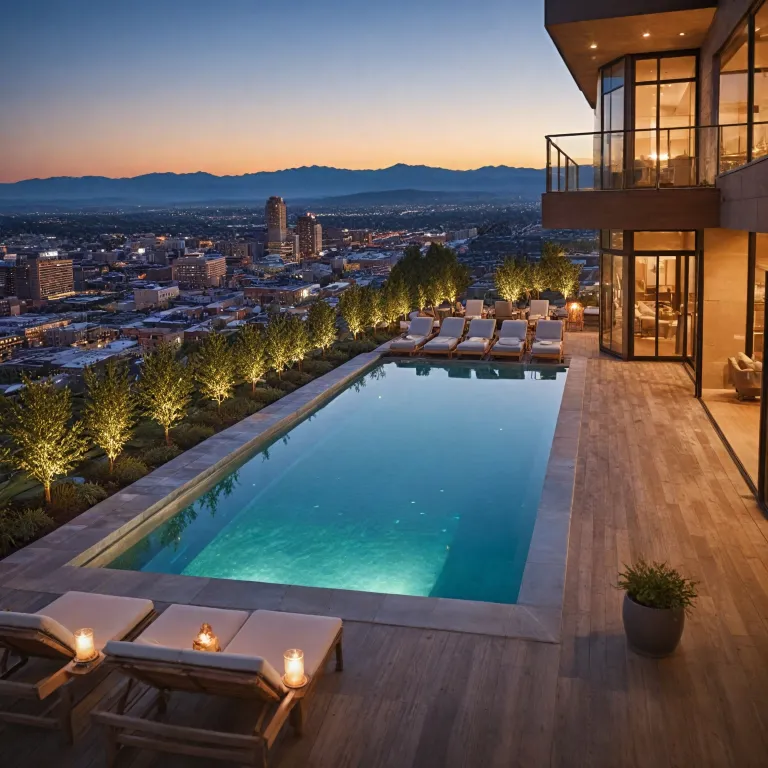
Rooftop altitude as a design brief for denver hotels with rooftop pool
In denver, the new luxury benchmark is no longer only the lobby but the rooftop. For architects and asset managers, denver hotels with rooftop pool now function as vertical resorts that must perform operationally in every season. This shift forces design teams to rethink structure, FF&E, and technical systems with the same rigor as a spa or restaurant.
Engineering a rooftop pool on a hotel in denver starts with load calculations, wind patterns, and freeze thaw cycles. The structural deck must support water volume, crowds, and heavy FF&E while integrating drainage, snow management, and acoustic control for rooms below. When the rooftop becomes a revenue engine, every square metre of rooftop deck, plunge pool edge, and pool hot tub zone must be planned for both day and night activation.
Operators now expect rooftop pools to host events, private cabanas, and pool food service without compromising guest comfort. This means early coordination between designers, directions techniques, and F&B teams on kitchen adjacency, dumbwaiters, and room service flows. For investors, the question is no longer whether to build with rooftop amenities, but how to ensure that rooftop pools and outdoor pool areas deliver measurable uplift in ADR and RevPAR.
Case study lenses: downtown altitude versus cherry creek lifestyle
In denver downtown, the typology of denver hotels with rooftop pool is shaped by skyline views and business travel patterns. Properties like Sheraton Denver Downtown Hotel and The Westin Denver Downtown use a rooftop pool or outdoor pool as an extension of the conference product, prioritising capacity, flexible furniture, and efficient service circulation. Their rooftops must handle large groups while protecting acoustic comfort for every room category beneath.
By contrast, cherry creek hotels with rooftop amenities lean into lifestyle positioning and residential scale. At Halcyon, a Hotel in Cherry Creek, the year round heated rooftop pool and hot tub are framed as a neighbourhood living room, with FF&E that blurs indoor outdoor boundaries. The Jacquard Hotel & Rooftop pushes the idea further with a 75 foot lap pool and private cabanas, turning the rooftop deck into a fitness, fashion, and events platform.
For designers, cherry creek and denver downtown each demand different narratives, even when both include a rooftop pool. Cherry creek guests expect a softer material palette, more intimate pools, and curated pool food and beverage moments. Downtown, the same guest may prioritise efficient service, clear wayfinding from lift to deck, and the ability to check emails poolside while still feeling part of the city’s energy.
Hydrothermal strategy: from plunge pool to pool hot tub ecosystems
Designing denver hotels with rooftop pool requires a hydrothermal strategy that treats each water element as part of a system. The Source Hotel’s heated rooftop plunge pool, the Skybridge Rooftop Deck & Plunge Pool at The Rally Hotel, and the landscaped terrace pool at Four Seasons Hotel Denver all show how varied these systems can be. Each combines a main pool, potential plunge pool, and sometimes a pool hot tub to extend the usable season.
For directions techniques, the challenge is integrating mechanical rooms, filtration, and chemical storage within tight rooftop footprints. A rooftop pool in a denver hotel must operate efficiently in winter, when wind chill and snow load stress both structure and MEP design. Locating plant rooms adjacent to the rooftop deck or below it reduces pipe runs, heat loss, and service disruption for guests in any room nearby.
Asset managers increasingly evaluate rooftop pools and rooftop decks as modular ecosystems rather than single features. A smaller plunge pool with a generous deck plunge zone for loungers, fire pits, and pool food service can outperform an oversized basin. When combined with a hot tub and flexible FF&E, these rooftop pools become programmable venues that support day pass products, private events, and premium room packages.
Programming, passes, and revenue: turning the rooftop into an asset class
For investors, the most compelling denver hotels with rooftop pool are those that treat water as a revenue platform. The Rally Hotel, with its Skybridge Rooftop Deck & Plunge Pool, illustrates how a rooftop deck can anchor brand storytelling, game day energy, and premium room categories. When a denver hotel connects its rooftop pool to a signature bar, curated pool food, and targeted events, the rooftop becomes a standalone profit centre.
Day pass and day passes strategies are reshaping how hotels with rooftop amenities engage both locals and visitors. Some denver hotels with rooftop pool now sell a structured day pass that includes a reserved lounger, pool food credit, and hot tub access, while protecting in house guest priority. This approach allows hotel denver operators to monetise shoulder periods and non peak days without diluting the guest experience.
From a design perspective, this revenue model requires zoning the rooftop deck into clear guest and day pass areas. Circulation for service staff, check in points for day pass users, and discreet storage for FF&E must be planned from concept stage. When room service is integrated into rooftop pools operations, back of house routes and lift programming must prevent tray traffic from crossing premium view corridors or quiet outdoor pool zones.
Guest experience choreography: from room to rooftop deck
For hospitality designers, the journey from room to rooftop pool is as critical as the water itself. Wayfinding, lift logic, and the transition from corridor to rooftop deck must feel intuitive for every guest profile. In denver hotels with rooftop pool, this path often intersects with meeting floors, F&B outlets, and sometimes a skybridge rooftop connection, as seen at The Rally Hotel.
Thoughtful FF&E and lighting design can turn these transitions into brand moments rather than mere circulation. A guest heading from a room in Sonesta Denver Downtown to its seasonal outdoor rooftop pool should experience a gradual shift in materials, acoustics, and light levels. This is where insights from hospitality lighting projects, such as those discussed in specialised lighting trade show coverage for denver hospitality architecture, become directly relevant.
Operationally, check in procedures, towel issue points, and pool food ordering must be choreographed to minimise friction. Hotels with rooftop amenities that support mobile ordering, discreet room service delivery to cabanas, and clear signage for hot tub and plunge pool rules report higher guest satisfaction. For asset managers, these micro interactions between guest, service team, and rooftop pools often determine whether the rooftop becomes a repeatable selling point or a seasonal novelty.
Technical resilience and future proofing for denver rooftop pools
Climate resilience is now central to any denver hotel project that includes a rooftop pool or outdoor pool. Freeze thaw cycles, UV intensity, and wind exposure demand robust waterproofing, slip resistant finishes, and durable FF&E. For both downtown and cherry creek locations, specifying materials for rooftop decks, pool edges, and hot tub surrounds must balance aesthetics with long term maintenance.
Directions techniques and bureaux d’études are increasingly asked to model lifecycle costs for rooftop pools and rooftop decks. This includes energy consumption for heating a rooftop pool, water loss from evaporation, and the operational impact of keeping a plunge pool open in colder months. “Check the hotel's official website for the most current pool hours and availability. Consider the season, as some pools may be seasonal or have limited hours during certain times of the year. Inquire about any additional fees or requirements for pool access.”
Looking ahead, denver hotels with rooftop pool will likely integrate more adaptive shading, retractable enclosures, and hybrid indoor outdoor pool concepts. Properties such as Warwick Denver and Four Seasons Hotel Denver already show how landscaping, cabanas, and carefully planned pool food service can soften the technical presence of MEP infrastructure. For investors and designers, the opportunity lies in treating every rooftop pool, plunge pool, and hot tub as a flexible stage that can evolve with guest expectations, brand repositioning, and neighbourhood dynamics.
Key quantitative insights for rooftop pool hospitality projects
- Many rooftop pools in Denver hotels are heated and open year round, but it's best to check with the specific hotel for their pool's availability.
- Access policies vary by hotel; some pools are exclusive to guests, while others may offer day passes or event access.
- Some hotels may charge additional fees for pool access or amenities; it's advisable to inquire directly with the hotel.
Frequently asked questions about denver hotels with rooftop pool
Are rooftop pools in Denver hotels open year-round ?
Many rooftop pools in Denver hotels are heated and open year-round, but it's best to check with the specific hotel for their pool's availability. Designers and operators often choose heating systems and wind protection to extend the season as much as possible. However, maintenance, weather events, or renovations can still lead to temporary closures.
Do I need to be a hotel guest to access the rooftop pool ?
Access policies vary by hotel; some pools are exclusive to guests, while others may offer day passes or event access. For asset managers, opening a rooftop pool to external guests via a structured day pass can unlock additional revenue. Architects should anticipate this by designing separate access routes and check in points for non resident users.
Are there any additional fees for using the rooftop pool ?
Some hotels may charge additional fees for pool access or amenities; it's advisable to inquire directly with the hotel. Fees can be linked to cabana rentals, premium loungers, or bundled packages that include pool food and beverages. From a design perspective, these premium zones should be clearly legible without feeling segregated.
How do rooftop pools impact room design and placement ?
Rooftop pools influence acoustic insulation, structural design, and the positioning of premium room types. Rooms directly below a rooftop deck or plunge pool require enhanced soundproofing and careful detailing around drains and expansion joints. Conversely, rooms with direct visual access to rooftop pools can be sold at higher rates if privacy and sightlines are well managed.
What should technical teams prioritise when engineering rooftop pools in Denver ?
Technical teams should prioritise structural capacity, waterproofing, and efficient MEP integration for rooftop pools. In Denver’s climate, heating systems, freeze protection, and wind mitigation strategies are critical for both guest comfort and asset longevity. Early collaboration between designers, directions techniques, and operators ensures that service routes, plant rooms, and safety systems support long term, low friction operations.