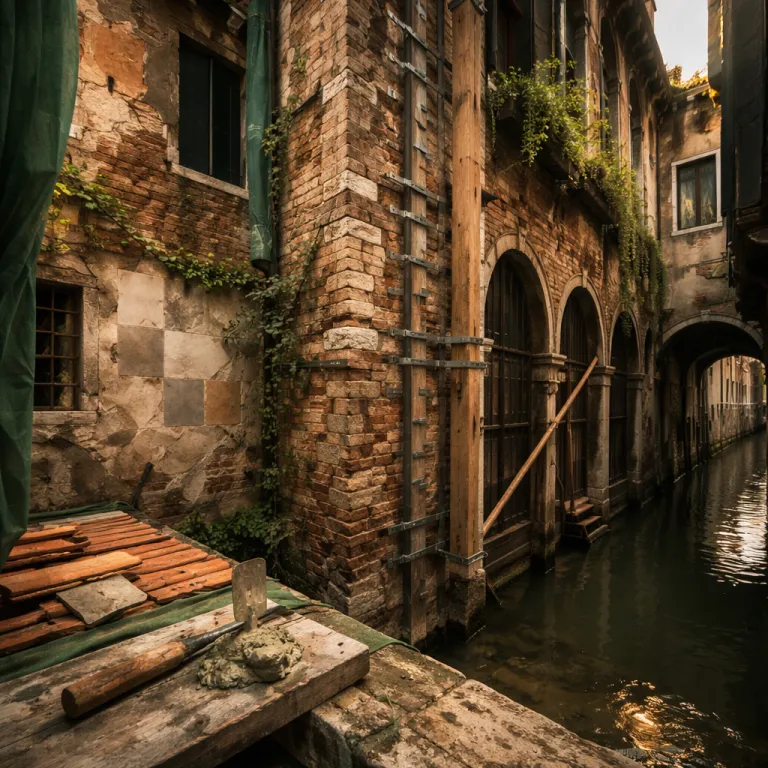
Circulation across three palazzi at Airelles Palladio Venice
Airelles Palladio Venice opens as a 45 room luxury hotel on Giudecca Island, facing the San Marco basin in Venice. The project turns three separate sixteenth century buildings and one hectare of private gardens into a single property where circulation feels continuous, not forced. For architects and technical directors, the core question is simple yet unforgiving ; how do you connect listed thresholds without erasing the Palladian bones that make this palladio narrative bankable for a hotel group like Airelles.
The design team working with Airelles, the French luxury hotel group behind Airelles Courchevel, Airelles Château de Versailles – Le Grand Contrôle and Château de la Messardière in Saint Tropez, had to respect Venetian heritage controls while delivering five star service flows. Vertical circulation is fragmented by necessity, so the strategy relies on lateral connectors that read as enfilades of salons rather than anonymous hotel corridors. That choice keeps each historic envelope legible while still allowing housekeeping, room service and spa teams to move between wings without crossing guest sightlines.
Guests arrive by boat from Piazza San Marco to the Giudecca Island landing, then transition through a sequence of vestibules that compress and release before opening to the gardens. This calibrated procession echoes the way Airelles manages arrival at Grand Contrôle in the Château de Versailles estate or at the Messardière Airelles palace in Saint Tropez, but here the water taxi drop off replaces the château courtyard. For a general manager or asset manager, the result is a circulation diagram where back of house routes shadow guest paths closely, reducing staffing cost per room while preserving the layered character of each palace scale volume.
The group’s Italian debut, often referred to as Airelles Venice or Airelles Palladio, must also reconcile brand expectations from hotel France loyalists who know the ski properties in Courchevel with the quieter, almost monastic rhythm of Giudecca. That tension shows up in the way public spaces are zoned ; one wing leans into the grand palace language familiar from Palace Versailles references, another keeps a more intimate chateau scale that recalls Airelles Château in Provence. For FF&E suppliers, this means three subtly different specifications for casegoods and seating, all tied together by a consistent palette of Venetian terrazzo, timber and metal finishes.
The spa and wellness circulation adds another layer of complexity, because the 1 700 square metre spa must connect discreetly to rooms and suites across the three buildings. Here the design borrows from Guerlain Spa precedents at Palace Versailles style properties, using low lit transition galleries and garden level passages to move guests between treatment rooms, pools and relaxation lounges. For operators, the key metric is dwell time in these spa zones ; the more intuitive the route from room to spa and back, the higher the ancillary revenue without additional wayfinding clutter.
From an engineering standpoint, threading modern MEP systems through three listed shells on Giudecca Island without visible compromise is the quiet achievement behind the guest experience. The hotel group had to phase works building by building, using the gardens as temporary logistics yards while protecting historic façades facing San Marco and the wider Venice lagoon. For technical directors planning similar multi building conversions, Airelles Palladio Venice shows that you can maintain separate structural identities yet still deliver a single, legible luxury experience where every room, suite and public space feels part of one coherent palace scale story.
Material and FF&E strategy under Venetian heritage constraints
The interiors of Airelles Palladio Venice, designed by architect and interior designer Christophe Tollemer, sit at the intersection of strict Venetian listing rules and a very codified Airelles brand language. The question for specifiers is whether to impose one material vocabulary across the three palazzi or to let each building speak in its own dialect while keeping the overall hotel experience coherent. In practice, the property uses a shared base palette of Venetian terrazzo, limewashed plaster and timber, then layers distinct FF&E stories that echo other Airelles chateau and palace references in France.
Public rooms closest to the San Marco basin lean into a more formal palace atmosphere, with higher ceilings, heavier drapery and a colour story that nods to Château de Versailles and the Grand Contrôle aesthetic. Deeper into the gardens, lounges and some room categories relax into a softer, almost villa like language that quietly references Château de la Messardière and the Messardière Airelles identity in Saint Tropez. For designers, the lesson is that you can cross index multiple brand memories within one hotel, provided the joinery details, metal finishes and lighting temperatures stay rigorously consistent.
Venetian heritage controls limit what can be touched in terms of structural openings, so FF&E carries more of the narrative load than in a ground up hotel in France or a new build ski resort like Airelles Courchevel. Casegoods are scaled to respect existing window heights and wall panelling, while custom rugs are used to zone spaces where walls cannot be moved. This is where the comparison with other multi building heritage conversions, such as the careful interventions at Belmond’s Villa San Michele in Fiesole, becomes instructive for any bureau d’études or asset manager evaluating renovation ROI.
Lighting strategy is equally critical, especially when ceilings and cornices cannot be disturbed, and this is where recent research on architectural lighting for hospitality becomes directly applicable to a project like Airelles Palladio Venice. For readers interested in specification level benchmarks, the analysis of architectural lighting shaping next generation hospitality experiences on Design for Travel offers a useful framework for balancing heritage fabric with contemporary guest expectations. In Venice, that translates into layered lighting scenes that shift the mood of each room and salon without relying on invasive ceiling interventions that heritage authorities would reject.
On the operational side, the FF&E brief must absorb the demands of three high profile culinary partnerships without visually fragmenting the hotel. The restaurants by Chef Nobu, Jean Georges Vongerichten and Norbert Niederkofler each require distinct atmospheres, yet they sit within the same palladio informed shell and share back of house service routes. For general managers, the key is to specify durable finishes and seating that can handle high turnover while still reading as part of a single luxury experience that guests associate with Airelles Saint properties in France.
For suppliers of spa furniture and wet area finishes, the 1 700 square metre spa and its pools and swimming pools present another layer of constraint driven creativity. Venetian humidity, salt air from the San Marco basin and the need for quiet acoustics in treatment rooms all shape the material schedule, from stone selection to door hardware. The result is a spa environment that feels aligned with Guerlain Spa level expectations, even though the brand here is different, and that alignment is what will ultimately support rate premiums and long term asset value for the hotel group.
The garden as narrative glue and brand bridge for Airelles in Italy
The one hectare of private gardens at Airelles Palladio Venice is not a backdrop ; it is the primary device that stitches three historic buildings into one legible hotel journey. Paths, planting and outdoor rooms are choreographed to link the palazzi, the spa, the pools and the water arrival in a way that feels inevitable rather than engineered. For landscape architects and hotel general managers, this garden is effectively the fourth building, carrying both circulation and brand narrative across the property.
In a city where outdoor space is scarce, the gardens on Giudecca Island give Airelles Venice a competitive advantage that echoes the parkland settings of Grand Contrôle at Château de Versailles and the terraced grounds of Château de la Messardière above Saint Tropez. Those French precedents show how a garden can extend the usable footprint of a palace or chateau hotel, hosting events, kids club activities and spa relaxation zones without overloading interior rooms. In Venice, the same logic applies, but with the added complexity of lagoon views towards Piazza San Marco and the constant presence of water at the garden edge.
From a design for travel perspective, the way these gardens are handled aligns with a broader trend in heritage resort renovation, where landscape becomes the mediator between old and new. The recent reopening of Belle Époque estates, such as the restoration of Le Beauvallon on the French Riviera, illustrates how outdoor spaces can absorb contemporary programmatic needs without flattening historic architecture. At Airelles Palladio Venice, lawns, cloistered paths and shaded terraces allow the hotel to host wellness classes, private dinners and kids club sessions while keeping the interiors closer to their original palladio proportions.
Operationally, the garden layout also supports service efficiency, giving staff discreet routes between buildings that bypass guest heavy corridors and sensitive heritage interiors. For a general manager watching payroll and maintenance KPIs, this means fewer staff hours lost to long internal detours and a clearer separation between guest experience and logistics. The same principle has underpinned successful multi building operations at ski properties like Airelles Courchevel and at large palace estates in France, where external paths quietly double as service arteries.
For investors and asset managers, the garden centric masterplan at this Venice hotel underpins both rate strategy and long term resilience. Outdoor pools or plunge pools, even when modest in size, extend the usable season and support spa and wellness packages that justify premium pricing, especially when paired with a high calibre service culture. The hotel’s amenities are a key part of that value proposition ; amenities include a spa, private gardens, and luxury accommodations.
Finally, the way Airelles positions this Italian property relative to its French portfolio matters for brand equity across all Airelles Saint and Airelles Château addresses. Guests who know the palace Versailles atmosphere of Grand Contrôle or the resort scale of Château de la Messardière in Saint Tropez will arrive in Venice with clear expectations about service, room comfort and the handling of heritage. For architects, designers and bureaux d’études, Airelles Palladio Venice now stands as a case study in how a hotel group can enter a new country, respect a powerful local architectural language and still deliver a distinct, repeatable Airelles experience that feels both site specific and globally coherent.
Sources
Whitewall – The 19 Most Anticipated Design Hotel Openings of 2026.
Luxury Travel Expert – Most Anticipated Luxury Hotel Openings 2026.
Archi e Interiors – The best design hotels in 2026.