Heritage first: what Belmond chose not to touch at Villa San Michele
The Belmond Villa San Michele renovation is less about spectacle and more about what stays quietly intact. The former Renaissance monastery above Florence is treated as a villa that already carries enough history and culture, so Luigi Fragola and his équipe focused on specification restraint rather than decorative overstatement. That decision will interest any asset manager weighing capex against the long-term value of heritage in a luxury hospitality asset, even where detailed investment figures have not been publicly disclosed by Belmond.
The façade, traditionally attributed to Michelangelo in some sources, remains largely untouched, with Luigi Fragola Architects concentrating instead on services, circulation, and the 39 redesigned rooms that sit behind the stone. In practice, that means the San Michele cloisters, refectory volumes, and key public axes were documented, monitored, and preserved while back-of-house and technical routes were reimagined to meet hotel fire, acoustic, and accessibility codes. For investors, this is a case where preserving history becomes a differentiating asset rather than a constraint on ADR and long-range performance, as emphasised in Belmond’s official Villa San Michele renovation announcement.
Floors in pietra serena and cotto were retained wherever structurally viable, with new slabs introduced only where loading or moisture data demanded intervention. Wall finishes in the Villa San Michele guest corridors were cleaned and consolidated instead of replaced, allowing the patina of history and culture to read against new lighting and FF&E. “When will Villa San Michele reopen?” and “Who is leading the renovation?” sit at the core of market anticipation, and the official answers — “April 28, 2026,” and “Luigi Fragola Architects” — are drawn from Belmond’s press releases and project briefings, which confirm the 39-room scope and underline how timing and authorship now shape the competitive set for every Belmond hotel in Tuscany.
For FF&E suppliers, the heritage brief effectively disqualified aggressively branded casegoods and overscaled lighting that would fight the Renaissance envelope. Belmond decision makers instead favoured Tuscan craftsmanship with low-profile joinery, slimline metalwork, and textiles that sit below the cornice line, keeping the view to arches and vaults unobstructed. Any hotel group planning to convert protected religious structures into hotels Belmond style will need partners comfortable with being edited down rather than up, accepting that the architecture is the primary storyteller and that furniture, lighting, and art must support rather than dominate the guest narrative.
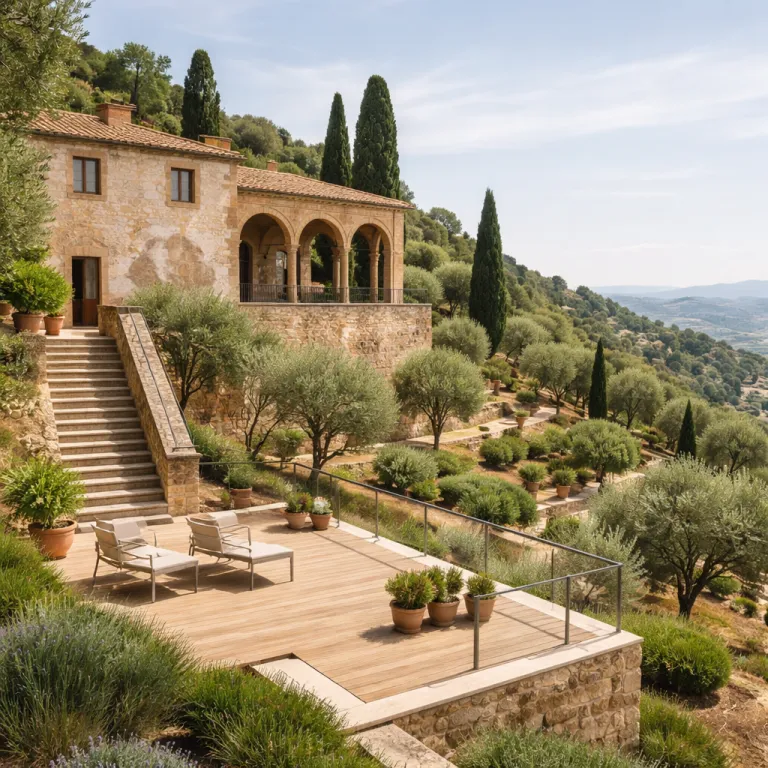
The terraced gardens above the hotel near Florence were treated as primary architecture, not landscape afterthought. Landscape architect Luca Ghezzi’s work on the flourishing gardens reinforces the slow luxury positioning, with paths, belvederes, and a reimagined garden stair that choreograph how guests move between cloister, loggia, and pool. For design teams used to leading with render-ready lobbies, this project shows how a garden can become the real lobby when the view over Florence does most of the narrative work and supports the brand promise, a point echoed in Belmond’s communications on the role of landscape at Villa San Michele.
Gardens, guestrooms and the friction cost of Renaissance architecture
The new spa and wellness layer at the Belmond Villa San Michele renovation tests how far a Renaissance monastery can stretch toward a spa-adjacent stay. The San Michele structure was never designed for hydrotherapy loops or thermal suites, so the design team had to work in half levels, vaulted ceilings, and thick masonry that resist open-plan wellness clichés. That friction cost is real, yet it also generates a more intimate, cloistered spa experience that aligns with slow luxury rather than a generic resort template, and positions the property distinctively within the Florence and wider Tuscany wellness hotel market.
Signature suites sit in former monastic cells and priory rooms, where Tuscan craftsmanship in plaster, stone, and timber frames the contemporary FF&E. Here, the guestroom design brief is closer to a Grand Tour narrative than to a conventional hotel Florence layout, with Bianco Bianchi plasterwork, local marbles, and custom metalwork referencing the villa and its gardens rather than any global brand palette. For architects and bureaux d’études, the lesson is clear: you cannot force a standard room bay into a listed shell without paying in awkward junctions and compromised ergonomics, a recurring theme in adaptive reuse case studies across the Belmond portfolio.
Operationally, the new spa and 39 redesigned rooms will raise expectations for comfort without erasing the monastery’s acoustic quirks and level changes. Asset managers should model a small but persistent accessibility and wayfinding cost, offset by the premium that guests pay for authentic history, culture, and a direct view over Florence from almost every terrace. The question “What new features will the hotel have?” is answered succinctly — “Redesigned rooms, new spa, enhanced gardens” — and these points are confirmed in Belmond’s official property information, yet the real value sits in how those features are threaded through the existing villa fabric rather than in any headline-grabbing expansion.
For FF&E specifiers, the project narrows the field to suppliers who can work with custom dimensions, non-orthogonal walls, and low-intervention fixing methods that respect heritage plaster and stone. Beds, casegoods, and seating in the signature suites rely on lighter frames and reversible installation, a strategy that mirrors best practices in high-performance hospitality spaces where structure cannot be compromised. Teams planning pillow menus or sleep-centric concepts, as analysed in work on the architecture of restorative sleep in luxury hotels, will find that San Michele-era proportions demand more bespoke solutions than a typical new-build tower and reward close collaboration between designers, operators, and manufacturers.
Public areas in the Villa San Michele complex balance monastic calm with contemporary social energy, using lighting, textiles, and small-scale joinery rather than heavy partitions. The gardens again do much of the work, with outdoor lounges, pergolas, and a reimagined garden bar allowing guests to flow between interior and exterior without overloading the cloisters. For themed hotels focused on culture and landscape, this is a reminder that the garden can carry as much brand weight as any lobby chandelier when it is treated as a core hospitality space and integrated into the overall guest journey from arrival to departure.
Adaptive reuse benchmarks and lessons for future monastery conversions
Within the wider portfolio of hotels by Belmond, the Villa San Michele renovation sits alongside other adaptive reuse assets where preserving history is central to the business case. Compared with urban conversions, this villa above Florence leans harder on its gardens and terraces, using the garden as a climatic buffer and social condenser that reduces pressure on indoor public space. That strategy will interest investors evaluating hillside or peri-urban monasteries where landscape can absorb program that the heritage shell cannot accommodate, particularly when planning permissions and conservation approvals limit new-build volume.
For architects bidding on protected religious structures, the San Michele case underlines the need for early alignment between conservation authorities, operators, and Luigi Fragola–style design teams. The project’s use of traditional craftsmanship alongside modern construction techniques echoes other European monastery-to-hotel conversions, yet the emphasis on Tuscan craftsmanship and local artisans gives this villa a sharper regional identity. Asset managers should note how this approach supports pricing power by tying luxury to place-specific materials and skills rather than to imported finishes, a point reinforced in Belmond’s statements on culture-led luxury at Villa San Michele and other Italian properties.
Comparisons with other adaptive reuse projects, such as Belle Époque estates where operators avoid flattening original character, show a shared commitment to editing rather than overwriting. In each case, the most successful hotel will be the one where the original structure, whether a monastery or a seaside villa, still leads the guest narrative and operational logic. For design leaders tracking benchmarks, this reinforces the value of case studies that analyse not just aesthetics but also the ROI of restraint in FF&E, MEP routing, and landscape investment across a full capex cycle, even when precise ADR or RevPAR uplift figures are not yet available in the public domain.
Digital tools play a quiet but important role in the Belmond Villa San Michele renovation, from BIM coordination to heritage documentation that teams can download and interrogate. While guests may never see a single drawing, the ability to work from detailed villa survey data and iterate design options allowed Luigi Fragola to test scenarios without invasive site work. For technical directors, this is a reminder that the most powerful design move in a Renaissance context may be the one that stays on screen rather than on site, reducing risk to protected fabric while still enabling performance-driven decision-making.
The project also sits within a broader narrative of slow luxury travel, where a Belmond hotel in Florence or London can share themes without copying finishes. Cross-referencing projects like the London townhouse that invites guests to explore a contemporary Grand Tour, or other urban conversions that reimagined historic fabric, helps clarify how history and culture can be translated across markets. For suppliers and designers, the key takeaway is that every villa, every Belmond asset, and every San Michele–era monastery demands its own calibration of restraint, gardens, and guest-facing innovation, informed by local regulations, climate, and guest expectations.
Key project statistics and benchmarks
- Number of redesigned rooms at Villa San Michele: 39 rooms, indicating a focused, high-impact interior scope rather than a full structural overhaul, as outlined in Belmond’s property brief and reiterated in official renovation communications.
- Renovation duration: 18 months from site start to reopening, a relatively tight programme for a listed Renaissance monastery with complex heritage constraints, based on Belmond’s published renovation timeline and planning documentation.
- The renovation combines architectural restoration, interior redesign, and garden landscaping, aligning building, FF&E, and landscape strategies in a single capex cycle for coherent positioning, even though detailed capex and projected ADR or RevPAR uplift figures have not been released.
- The stated objectives are to preserve historical architecture, enhance guest experience, and introduce modern amenities, framing every design decision against both heritage and ROI in Belmond’s communications and investor-facing materials.
Key questions from the market
When will Villa San Michele reopen ?
Villa San Michele will reopen on April 28, 2026, after an 18-month renovation programme led by Luigi Fragola Architects and focused on guestrooms, spa, and terraced gardens. This timing, referenced in Belmond’s official announcements and travel trade previews, positions the hotel strongly for the high season in Florence and Tuscany, with booking windows already opening for peak leisure and event demand. For portfolio planners, the date also matters for coordinating marketing, rate strategy, and group allocations across nearby assets in the wider Belmond network.
Who is leading the renovation ?
The renovation is led by Luigi Fragola Architects, a Florence-based practice with a track record in high-end residential and hospitality projects in historic buildings. Their local knowledge of heritage regulations and Tuscan craftsmanship ecosystems is a strategic asset for Belmond, especially in negotiations with conservation authorities and municipal planning offices. For architects and bureaux d’études, this underlines the competitive advantage of firms that combine design capability with deep regional regulatory experience and established relationships with local artisans.
What new features will the hotel have ?
The project introduces redesigned rooms, a new spa, and enhanced gardens, all integrated within the existing Renaissance monastery structure. Rather than adding large new volumes, the team reimagined internal layouts, services, and landscape circulation to support contemporary wellness and F&B expectations. This approach keeps the architectural envelope intact while still delivering a step change in guest comfort and amenity value that can be tracked in future ADR and RevPAR performance once the hotel has reopened and stabilised.
What are the main objectives of the renovation ?
The main objectives are to maintain architectural integrity, improve guest comfort, and offer modern facilities without compromising the monastery’s heritage character. For Belmond and its investors, this means aligning conservation outcomes with measurable gains in guest satisfaction, rate positioning, and length of stay. The project is also expected to reinforce the brand’s reputation for culture-led luxury in Tuscany and to serve as a reference point for future monastery conversions and other adaptive reuse developments in the portfolio.
How will the renovation impact guest experience and performance ?
The renovation is expected to elevate guest experience through better room ergonomics, a contemporary spa, and more usable terraced gardens, all while preserving the sense of place that defines the villa. From a performance perspective, Belmond anticipates increased bookings and stronger pricing power, driven by renewed product relevance in the competitive Florence luxury set. For asset managers, the case illustrates how targeted investment in heritage assets can unlock both emotional and financial returns when design restraint is paired with operational upgrades and carefully phased capex, even if precise performance metrics will only be confirmed after reopening.
Sources
- Belmond official communications and property information for Villa San Michele, Fiesole, Florence (press releases, project briefs, and renovation updates confirming reopening date, room count, and programme duration).
- Lightfoot Travel, overview of upcoming luxury hotel openings and scheduled relaunch dates, including Belmond Villa San Michele in the Florence and Tuscany market.
- Archi e Interiors, analysis of design-forward hotel projects, adaptive reuse case studies, and hospitality architecture trends with reference to Belmond and comparable heritage conversions.