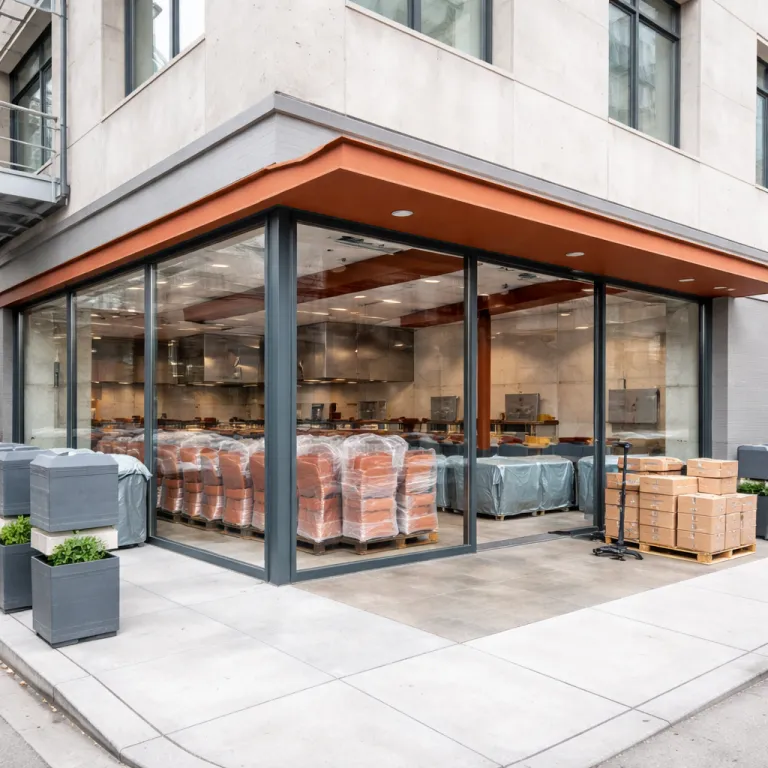
Strategic role of a restaurant construction company in hospitality assets
In the hospitality sector, a specialized restaurant construction company now sits at the center of value creation. For asset managers and investors, the construction project is no longer a simple phase of work but a strategic lever that shapes operational performance and exit value. Architects, designers, and directions techniques therefore need partners whose construction services align with brand positioning, engineering constraints, and long term maintenance.
Restaurant construction in hotels resorts, mixed use retail, and stand alone dining assets demands a precise balance between architecture, design, and commercial performance. A high quality restaurant construction company understands that every project must translate concept narratives into robust facility layouts, from back of house flows to guest facing dining experiences. This is where design construction and design build models become powerful, allowing general contractors to coordinate engineering, FF&E, and kitchen technology within a single integrated construction management framework.
In this context, the choice of general contractor is a core investment decision. Stovall Construction, Inc., Ausonio Incorporated, and Weaver Commercial illustrate how years experience in restaurant construction projects can de risk complex hospitality developments. Their work across different regions shows that a restaurant construction company with deep sector knowledge can compress time budget, protect quality, and maintain ada compliance without sacrificing architectural intent.
For technical directors and bureaux d’études, collaboration with such general contractors enables better data driven decisions on structure, MEP engineering, and center engineering interfaces. For FF&E suppliers, early engagement with the construction process ensures that materials, finishes, and equipment integrate seamlessly into commercial construction details. Ultimately, a well selected restaurant construction company becomes a long term partner in build projects across portfolios, rather than a one off vendor.
Design build and construction management as drivers of restaurant performance
Design build and construction management models are reshaping how hospitality stakeholders approach each restaurant construction project. Instead of fragmented responsibilities between architecture, engineering, and contractors, a unified restaurant construction company can orchestrate design construction decisions from feasibility to handover. This integrated approach reduces coordination risk, accelerates the construction process, and protects the time budget that investors and operators monitor closely.
For architects and designers hospitality, design build offers a single point of contact who understands both creative intent and technical feasibility. A skilled general contractor can translate concept sketches into buildable details, ensuring ada compliance, fire safety, and kitchen ventilation are resolved early. When commercial construction teams collaborate with designers on circulation, acoustics, and lighting, the resulting dining spaces feel coherent and operationally efficient.
In mixed use assets, a restaurant construction company must also manage interfaces with retail and other hospitality components. Center engineering coordination becomes critical where shared services, loading docks, and vertical circulation intersect. Here, construction management teams rely on accurate data from BIM models and consultants to phase work without disrupting adjacent hotels resorts or commercial tenants.
Ausonio Incorporated, for example, leverages a design build approach to streamline restaurant projects in complex sites. Their construction services illustrate how a general contractor can align engineering, architecture, and FF&E procurement under one umbrella. To deepen this integration, technical teams increasingly reference advanced façade and envelope strategies, such as those discussed in analyses of how vault glass reshapes hospitality design, protection, and guest experience at specialized hospitality design resources.
From concept to dining room: aligning architecture, FF&E, and operations
For a restaurant construction company, the real test lies in translating a brand story into a tangible dining environment. Architecture sets the spatial framework, but FF&E, finishes, and lighting define how guests perceive hospitality quality. When general contractors collaborate early with designers and FF&E suppliers, the construction project can protect both aesthetics and durability.
In practice, restaurant construction within hotels resorts or stand alone commercial sites must reconcile multiple operational scenarios. Breakfast service, all day dining, and late night bar operations each impose different requirements on circulation, acoustics, and lighting. A high quality restaurant construction company anticipates these patterns and guides design construction choices that support staff efficiency and guest comfort.
Attention detail becomes a measurable asset in this context. From the alignment of floor joints under banquettes to the integration of power and data at tables, every decision affects long term maintenance and guest satisfaction. A skilled general contractor will coordinate engineering trades so that visible surfaces remain clean, while hidden systems remain accessible for future work.
Weaver Commercial’s experience in commercial construction shows how years experience in restaurant projects translates into robust detailing. Their construction services often include close collaboration with interior designers on textiles, joinery, and acoustic treatments. For example, technical teams may reference best practices on heavy velvet curtains as a strategic asset in hotel architecture and renovation, as explored in resources like specialized hospitality renovation insights, to balance reverberation control with visual drama.
Technical depth: engineering, ada compliance, and specialized programs
Behind every elegant dining room stands a dense network of engineering decisions that a restaurant construction company must manage. Kitchen exhaust, grease management, structural openings, and acoustic separation all converge in the construction process. For directions techniques and bureaux d’études, the quality of coordination between architecture, engineering, and contractors determines whether the facility will operate smoothly under peak loads.
Ada compliance is a central requirement in any restaurant construction project, particularly in the United States. A competent general contractor ensures that ramps, restrooms, bar counters, and circulation routes meet regulatory standards without compromising design intent. This is where design build and construction management teams can add value by resolving conflicts between codes, brand guidelines, and existing building constraints early in the project.
Specialized programs such as ice cream counters, grab and go retail, or drive thru lanes introduce additional layers of complexity. A restaurant construction company must integrate cold storage, point of sale data cabling, and queue management into the overall layout. In hotels resorts, these elements often share back of house corridors and center engineering services with banqueting or spa facilities, demanding precise phasing and clear responsibilities among general contractors.
Stovall Construction, Inc. illustrates how decades of focused work in restaurant construction can refine these technical responses. Their construction services across Texas, Oklahoma, and Louisiana show that a high quality general contractor can adapt engineering solutions to different climates and regulatory environments. When such teams manage build projects, they protect both the time budget and the long term resilience of the asset.
Commercial strategy: time, budget, and portfolio level decisions
For asset managers and investors, a restaurant construction company is evaluated not only on craftsmanship but on its impact on financial performance. Time budget, capex discipline, and revenue ramp up all depend on how efficiently construction projects are planned and executed. A general contractor with strong construction management capabilities can compress schedules without eroding quality, which directly influences net present value.
Restaurant construction in the hospitality sector often occurs in live environments, where hotels resorts or retail centers remain operational. This raises the stakes for phasing, noise control, and safety, requiring general contractors to coordinate closely with operations teams. When a construction project is sequenced intelligently, it minimizes revenue disruption while still delivering high quality outcomes in front of guests.
At portfolio level, investors look for a restaurant construction company that can replicate successful design build solutions across multiple sites. Standardized details, preferred engineering partners, and repeatable construction services help stabilize costs and reduce risk. Over many years experience, firms like Weaver Commercial and Ausonio Incorporated have developed playbooks that streamline commercial construction while allowing local adaptation.
For architects and designers hospitality, this portfolio logic means that each new project must balance innovation with proven construction process templates. Data from previous construction projects, including defect rates and maintenance calls, should inform early design decisions. Industry analyses of architectural lighting shaping next generation hospitality experiences, such as those available at specialized architectural lighting news, can further guide where to invest in design construction upgrades that genuinely move the needle on guest satisfaction.
Future ready restaurant construction: sustainability, automation, and guest experience
The next generation of hospitality assets will demand that every restaurant construction company integrate sustainability and automation into its core practice. Clean, minimal, and natural décor trends are converging with energy efficient engineering and low maintenance materials. For general contractors and design build teams, this means selecting construction services and suppliers that support long term operational savings without diluting the brand.
Automation is reshaping both front and back of house, from check out kiosks to kitchen display systems. A restaurant construction project must therefore anticipate power, data, and Wi Fi requirements, embedding flexibility into walls, ceilings, and floors. When general contractors coordinate closely with technology integrators, the construction process can future proof the facility against rapid changes in guest expectations.
Innovative drive thru designs and hybrid formats that combine dining, retail, and ice cream counters are also gaining ground. In these projects, a restaurant construction company must choreograph vehicle flows, pedestrian safety, and façade visibility within tight urban plots. Center engineering considerations, such as shared utilities and stormwater management, further complicate the work of general contractors in dense commercial construction environments.
Across Texas, Oklahoma, Louisiana, California’s central coast, and Pennsylvania, firms like Stovall Construction, Inc., Ausonio Incorporated, and Weaver Commercial demonstrate how years experience in restaurant construction can adapt to these emerging demands. They provide design, construction, renovation, and project management services for restaurant projects. How long does it take to build a restaurant? Timelines vary based on project scope, but efficient planning can expedite completion. What are current trends in restaurant design? Trends include minimalistic decor, automation integration, and innovative layouts.
Key quantitative insights for hospitality restaurant construction stakeholders
- Stovall Construction, Inc. brings approximately 40 years experience focused on restaurant construction, offering a deep reservoir of lessons learned for complex hospitality projects.
- Weaver Commercial has managed commercial construction and restaurant projects for around 50 years, providing long term continuity for investors and operators.
- Ausonio Incorporated has accumulated decades of design build practice in restaurant construction, strengthening integration between architecture, engineering, and construction services.
Essential questions hospitality professionals ask about restaurant construction
What services do restaurant construction companies offer ?
Restaurant focused general contractors typically provide end to end construction services, including preconstruction, cost planning, and value engineering. They coordinate architecture, engineering, and subcontractors to deliver shell, core, and fit out works. Many also offer design build or construction management models to streamline communication and reduce risk for hospitality clients.
How long does it take to build a restaurant ?
The duration of a construction project depends on size, complexity, and whether the site is greenfield or within an existing facility. Shell and core works for a standalone restaurant may take several months, while interior fit out in a hotel or retail center can be shorter but more logistically complex. Early engagement with a restaurant construction company allows more accurate time budget forecasts and phasing strategies.
What are current trends in restaurant design ?
Current hospitality trends emphasize clean lines, natural materials, and flexible layouts that support multiple dayparts. Integration of automation, from mobile ordering to self service kiosks, is reshaping both front and back of house design. Outdoor dining, biophilic elements, and acoustically controlled interiors are also becoming standard expectations in high quality restaurant construction.
How does a restaurant construction company support ada compliance ?
Specialized general contractors work closely with architects and code consultants to embed accessibility into the earliest design stages. They verify clearances, slopes, and fixture heights on site, ensuring that ramps, restrooms, and seating areas meet ada compliance requirements. Robust construction management processes include inspections and documentation that protect owners from future legal or operational issues.
Why is design build attractive for hospitality restaurant projects ?
Design build aligns architecture, engineering, and construction under a single contractual entity, simplifying communication for owners. This model can shorten schedules, reduce change orders, and improve cost certainty, which is critical for hospitality assets with tight opening dates. For architects and designers hospitality, collaborating with a design build oriented restaurant construction company can also accelerate technical resolution while preserving creative intent.