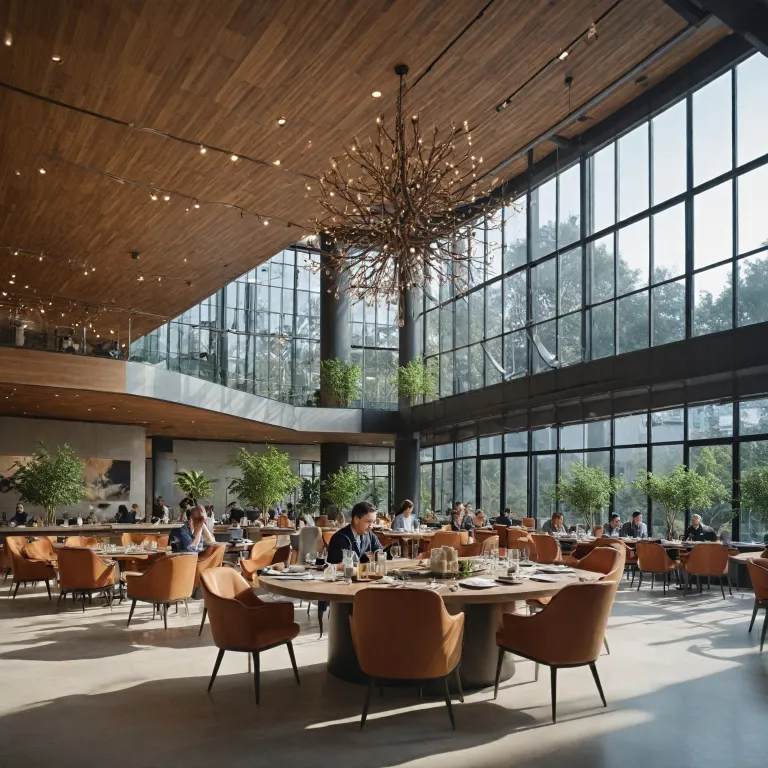
Why the Lodging Conference matters for hotel architecture and renovation
The Lodging Conference has become a strategic compass for every lodging stakeholder focused on design, FF&E, and renovation. For architects, designers, and technical directors, this conference in Phoenix is less a hospitality gathering and more a live laboratory for the future of hotel development. The event brings together hotel owners, investors, and asset managers who shape the hotel industry and directly influence capital allocation for design and construction.
Over several days at the JW Marriott Phoenix Desert Ridge Resort & Spa, the conference trade format blends general sessions, think tanks, and networking with a strong emphasis on real estate and business development. Over 2,900 hotel owners and executives attended in 2024, making it the largest hotel development conference globally. Attendees include influential owners, presidents, CEOs, and dealmakers. This density of decision makers, from president CEO profiles to chief development and development officer roles, creates rare opportunities for design led conversations that actually move budgets.
For FF&E suppliers and bureaux d’études, the Lodging Conference is where hospitality news becomes actionable specification strategy. The organizer, The Lodging Conference company, positions the event as a premier development conference for the hotel business, with a clear focus on profitability and operational efficiency. That focus means every discussion about hotels, from extended stay to mixed use, is grounded in measurable business outcomes. For design professionals, this is a great moment to align aesthetic ambition with the financial language of the conference industry and lodging association members.
From macro headwinds to design briefs: translating industry pressures into projects
The hotel industry context discussed at the Lodging Conference is defined by rising costs, flatlining revenue, and macroeconomic uncertainty. These pressures cascade directly into architecture, renovation, and FF&E decisions for every hotel lodging project. When a president CEO or vice president of development explains margin compression on stage, they are indirectly rewriting the design brief for the next wave of hotels.
Think tanks at the conference examine how real estate constraints, construction inflation, and financing terms reshape business development strategies. In these sessions, a chief development executive or development officer will often link brand standards, room counts, and public area concepts to debt coverage ratios and asset valuations. For architects and designers, this is where hospitality design becomes a financial instrument, and where each square metre must justify its existence in a detailed report or investment memo.
Because the Lodging Conference is a sponsor driven event, marketing teams and conference trade partners also influence which narratives gain visibility. A lodging association representative may highlight secondary and tertiary markets, while hotel owners push for flexible prototypes that can pivot between extended stay and multi family uses. The result is a set of open opportunities for design teams to propose modular FF&E, adaptive public spaces, and renovation phasing that respects both guest experience and cash flow. In this environment, the hotel business is inseparable from the architecture business.
Technology, AI, and the new FF&E brief for hotel owners
One of the most significant shifts at the Lodging Conference is the emphasis on technology and AI in hotel operations. For the hospitality design community, this is not just a back of house conversation about PMS or revenue management systems. It is a front of house challenge that touches lighting layouts, low voltage infrastructure, and the integration of smart FF&E within every lodging typology.
General sessions and educational panels explore how AI can improve operational efficiency, from predictive maintenance to dynamic staffing models. When a president CEO or vice president of operations presents a case study, they often show how data driven decisions reduce energy consumption and extend asset life. These insights should feed directly into specifications for materials, HVAC zoning, and the digital backbone of hotels, especially in complex resort spa environments like the Desert Ridge property.
For suppliers and bureaux d’études, the Lodging Connect online networking system and member login portal create a structured way to follow up on these conversations. A company that provides smart room controls or AI enhanced building management can use the conference industry platform to schedule meetings with hotel owners and development officer teams. In parallel, architects can position themselves as translators between technology vendors and real estate investors, ensuring that every innovation aligns with long term business development goals. In this sense, the Lodging Conference becomes a living specification guide for the hotel industry, where FF&E and IT converge.
Adaptive reuse, mixed use, and the architecture of resilient hotel business models
Sessions at the Lodging Conference increasingly focus on adaptive reuse, mixed use, and extended stay concepts as responses to shifting demand. For the architecture and design community, these themes redefine what a lodging project can be, especially in urban infill and secondary markets. A single hotel can now function as hospitality hub, residential asset, and flexible workspace, all within one real estate structure.
Panel discussions featuring president CEO profiles, vice president development leaders, and chief development executives examine how mixed use projects de risk hotel business models. They highlight case studies where hotels are integrated with retail, co living, or multi family components, supported by diversified revenue streams. These conversations are particularly relevant for hotel owners and investors evaluating whether to reposition aging hotel lodging assets rather than pursue ground up development.
For designers, this shift opens opportunities to rethink circulation, vertical zoning, and shared amenities across different user groups. A resort spa or ridge resort configuration, like the Phoenix Desert Ridge setting, can inspire new ways to layer public, semi public, and private spaces in urban hotels. Articles such as this analysis of resort development as a catalyst for design led sustainable hospitality (design led sustainable hospitality resort development) echo similar principles. Within the Lodging Conference ecosystem, these ideas are tested against hard metrics in every report and business development pitch, ensuring that architectural innovation remains grounded in the realities of the hotel industry.
Designing for the desert ridge context: climate, experience, and operational efficiency
The JW Marriott Phoenix Desert Ridge Resort & Spa is more than a picturesque venue for the Lodging Conference. Its desert ridge setting offers a live case study in climate responsive design, guest experience, and operational efficiency for large scale hotels. For architects and designers, walking the resort spa grounds between sessions becomes an informal masterclass in solar orientation, landscape strategy, and indoor outdoor transitions.
Within the conference trade program, discussions about energy costs and water scarcity often reference similar hot climate properties. A development officer or chief development executive may use the ridge resort as a benchmark when evaluating new lodging projects in arid regions. This context encourages design teams to prioritize shading devices, high performance glazing, and low water landscaping, while still delivering a hospitality experience that feels generous and open.
For FF&E and OS&E suppliers, the desert ridge environment raises specific questions about material durability, maintenance cycles, and lifecycle cost. Hotel owners and president CEO stakeholders are increasingly attentive to how fabrics, finishes, and outdoor furnishings perform under intense UV exposure. When these topics surface in Lodging Conference think tanks, they quickly translate into procurement criteria and specification updates. In parallel, the Lodging Connect platform allows companies to share performance data and case studies, turning the conference industry network into an ongoing knowledge base for climate resilient hotel business strategies.
Networking architecture: how relationships at the Lodging Conference shape future projects
Beyond formal sessions, the Lodging Conference is structured as a dense network of informal meetings, sponsor hosted gatherings, and corridor conversations. For architects, designers, and bureaux d’études, this is where future hotel development pipelines are quietly assembled. A brief exchange with a president CEO, vice president development, or chief development leader can lead to a competition invite, a feasibility study, or a long term framework agreement.
Registration includes access to general sessions, Think Tanks, three gourmet meals a day, refreshments, cocktails, networking events, documentation materials provided by speakers, a list of attendees, and access to Lodging Connect. Travel, accommodations, and certain activities are not included. This all inclusive conference trade format ensures that every hospitality professional, from hotel owners to marketing directors, remains on site and available for structured and spontaneous interactions.
For companies focused on business development, the member login tools and attendee lists are as valuable as any formal report. A lodging association executive might use them to map hotel business clusters, while a design firm tracks which hotel lodging brands are expanding in specific regions. Even practical details, such as proximity to Phoenix Sky Harbor International Airport and on site lodging at the resort spa, support high participation from across the hotel industry. Over time, repeated attendance creates an informal guild of conference industry regulars, where trust, shared vocabulary, and aligned expectations make each new project conversation more efficient and more ambitious.
Key statistics shaping design and development decisions
- Attendance at the Lodging Conference reached approximately 2,900 attendees in the previous edition, underlining its role as a major hotel development gathering.
- Projections indicate around 3,000 participants for the upcoming event, reinforcing its influence on hotel industry decision making.
- The conference spans four days of programming, combining general sessions, think tanks, and networking activities.
- The event is hosted at a single large scale resort property in Phoenix, concentrating hotel owners, investors, and design professionals in one lodging environment.
Frequently asked questions about the Lodging Conference and hotel design
Who attends the Lodging Conference and why does it matter for designers ?
Attendees include hotel owners, presidents, CEOs, investors, and senior development leaders who control pipelines and capital expenditure. For architects, designers, and FF&E suppliers, this concentration of decision makers makes the event a critical platform for influencing future hotel projects. The presence of both real estate investors and brand executives ensures that design conversations are anchored in long term asset strategy.
How does the Lodging Conference support business development for architecture and FF&E firms ?
The combination of curated networking, sponsor visibility, and the Lodging Connect system allows firms to target specific hotel owners, brands, and investors. By aligning thought leadership content with one to one meetings, companies can position themselves as strategic partners rather than transactional vendors. This integrated approach often leads to multi project collaborations and early involvement in feasibility and master planning phases.
What role does technology play in shaping hotel renovation strategies discussed at the event ?
Technology and AI are presented as levers for operational efficiency, guest personalization, and predictive maintenance. These themes directly influence renovation scopes, from infrastructure upgrades to smart room systems and back of house automation. Design teams are encouraged to integrate flexible, future ready infrastructure that can accommodate evolving digital tools without repeated invasive works.
Why is the Phoenix Desert Ridge setting relevant for global hotel projects ?
The desert ridge context offers transferable lessons in climate responsive design, outdoor living, and resort scale operations. Many principles tested in this environment, such as shading strategies and water efficient landscaping, can be adapted to other hot or resource constrained markets. For global hotel portfolios, the property serves as a tangible reference point when discussing sustainability and guest experience.
How can first time participants maximize value from the Lodging Conference ?
First time attendees should prepare by mapping target contacts, reviewing the agenda, and scheduling meetings through Lodging Connect. During the event, balancing sessions with informal networking at meals and sponsor events is essential. Afterward, timely follow up with tailored proposals or design insights helps convert conversations into concrete hotel development opportunities.