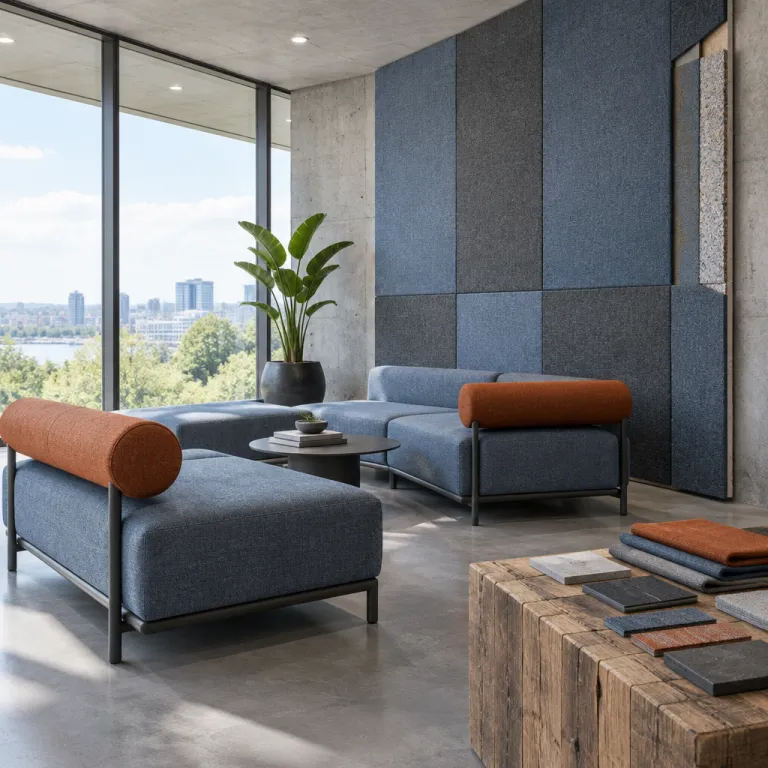
The strategic role of xorel in hospitality FF&E ecosystems
Xorel has moved from niche wallcovering to a strategic hospitality material that quietly reshapes FF&E ecosystems. For architectes, designers hospitality, directions techniques, asset managers, investisseurs, fournisseurs FF&E, and bureaux d’études, this textile now sits at the intersection of performance, carbon, and guest experience. The shift is clear ; what began as a single product family has become a platform for responsible products and measurable performance.
Carnegie fabrics positioned xorel textiles as a high performance textile solution when most wall and panel coverings still relied on PVC and heavy metals. That decision years ago anticipated today’s imperative for pvc free and plant based alternatives in hotels, resorts, and serviced apartments. For hospitality portfolios under pressure to reduce carbon footprint while maintaining high design standards, the material now offers a rare combination of durability, cleanability with water, and credible third party verification.
Every xorel product is engineered as a living product in the sense used by regenerative design frameworks, where the full cradle to cradle journey is mapped and audited. This approach allows a design team to compare the footprint of different products at concept stage and align the specification with brand ESG targets. When a product challenge arises on site, such as impact resistance in corridors or acoustic control in meeting rooms, performance xorel variants give the équipe a robust, pvc free answer that still respects the interior narrative.
From single product to ecosystem partner
Carnegie as a manufacturer has evolved from selling a single product to curating an ecosystem of products that orbit around xorel. For hospitality investors and asset managers, this means that a single specification can extend from wall panels to headboards, wardrobe fronts, and even acoustic baffles without fragmenting the supply chain. The result is a tighter FF&E ecosystem where the same material language supports both front of house drama and back of house resilience.
Carnegie design teams now collaborate earlier with architecture studios to align biobased xorel and other plant based materials with long term operational models. This early engagement reduces the risk that a high performance specification will be value engineered out in the final year before opening. It also allows directions techniques to test cleaning protocols, water usage, and maintenance cycles on sample products before committing across a portfolio.
For bureaux d’études, the availability of transparent data on biobased content, carbon footprint, and red list compliance simplifies environmental modelling. Instead of approximating the impact of generic textile wallcoverings, consultants can plug verified performance xorel data into their tools and generate more accurate scenarios. Over several years, this level of precision becomes a competitive advantage when negotiating green financing or sustainability linked loans for hospitality assets.
Performance, risk, and lifecycle cost in hospitality renovation
Renovation cycles in hospitality are tightening, and xorel sits precisely where performance and risk intersect. A corridor refurbishment that once aimed only for a fresh look now carries expectations around carbon, water, and indoor air quality. For asset managers, the question is no longer only “How much will it cost ?” but “What will this material do to our footprint and our risk profile over the next ten years ?”.
High performance xorel textiles are engineered to withstand abrasion, impact, and repeated cleaning, which directly affects lifecycle cost. When a design team specifies a pvc free, solution dyed textile for high traffic areas, they reduce both colour fade and the need for aggressive cleaning agents. Over time, this protects not only the product but also the staff who handle cleaning chemicals and the guests who occupy the space.
Carnegie fabrics emphasises that each xorel product is tested by independent third party laboratories for durability, cleanability, and safety. This third party validation matters when investors scrutinise renovation budgets and ask why a premium material is justified. By presenting data on performance xorel, including resistance to stains and water based cleaning, directions techniques can argue for fewer replacements and less downtime across the asset’s life.
Managing specification risk with responsible products
Responsible products are no longer a marketing add on ; they are a risk management tool. When a hospitality group selects biobased xorel with verified biobased content and red list screening, it reduces exposure to future regulatory shifts on chemicals and heavy metals. This is particularly relevant in jurisdictions where building codes and health regulations are tightening around interior finishes.
Years ago, many hotel corridors were lined with vinyl wallcoverings that trapped dirt and aged poorly, forcing early replacement. Today, a plant based, pvc free textile with high performance characteristics can extend the interval between renovations while maintaining a sharp visual profile. For investors, this translates into a more predictable cash flow and a stronger residual value at exit.
Case studies from premium hospitality projects show that when a design team integrates xorel textiles into headboards, wall panels, and public area joinery, maintenance calls drop significantly. Staff can clean surfaces quickly with water and mild detergents, avoiding harsh solvents that damage both the product and the environment. Over a 15 year horizon, this operational simplicity becomes as valuable as the initial design gesture.
Material health, red list scrutiny, and guest wellbeing
Material health has moved from specialist concern to boardroom agenda in hospitality groups. Guests now expect that the textile surfaces they touch in suites, lobbies, and spas are free from unnecessary toxins. For architectes and designers hospitality, xorel offers a way to align elevated design with rigorous red list and material health criteria.
Biobased xorel is engineered with plant based polymers and without added heavy metals, which directly addresses common red list concerns. When a design team specifies this material for wall panels or upholstered elements, they reduce the presence of problematic substances in guest rooms and public spaces. This is especially relevant for wellness oriented brands that position air quality and material purity as part of their value proposition.
Carnegie fabrics supports this approach by publishing detailed information on biobased content, carbon footprint, and compliance with leading material health frameworks. For bureaux d’études, this transparency simplifies the task of aligning a product with WELL, LEED, or BREEAM criteria. It also allows directions techniques to respond confidently when corporate sustainability officers or third party auditors request documentation.
From carbon footprint to living product thinking
The concept of a living product reframes how hospitality stakeholders evaluate materials like xorel. Instead of focusing only on upfront carbon footprint, the analysis extends across the entire cradle to cradle journey, including manufacturing, transport, use, and end of life. This broader lens reveals that a durable, high performance textile can outperform a cheaper alternative when measured over the full lifecycle.
Carnegie design teams increasingly work with asset managers to model different renovation scenarios using performance xorel and other responsible products. They compare the carbon and cost implications of frequent low cost replacements versus longer lasting, pvc free materials with verified biobased content. In many cases, the higher initial investment in xorel textiles is offset by reduced waste, fewer interventions, and stronger ESG reporting.
For investors, this shift towards living product thinking aligns with the rise of sustainability linked financing and green bonds. Lenders now ask how each product will affect the asset’s environmental profile over time, not just in the opening year. When a portfolio can show consistent use of plant based, solution dyed, red list screened materials, it gains a tangible advantage in these conversations.
Design language, brand storytelling, and the xorel palette
Beyond metrics and certifications, xorel has become a design language that hospitality brands can speak fluently. The textile’s ability to hold colour, texture, and pattern allows designers to translate brand narratives into tactile surfaces. For concept driven hotels, this is where the material moves from technical specification to emotional storytelling.
Carnegie design studios have expanded the xorel products palette to include subtle textures, bold geometrics, and refined plains that work across different hospitality typologies. A design team can now use the same family of xorel textiles to link a lobby feature wall, guest room headboard, and meeting room paneling. This continuity supports brand recognition while simplifying procurement and maintenance for directions techniques.
The xorel meteor collection illustrates how a single product line can bridge aesthetics and performance. Its nuanced surface catches light in public spaces while still delivering high performance characteristics such as abrasion resistance and easy cleaning with water. For asset managers, this means that a visually expressive material does not compromise on durability or operational efficiency.
Craft, regional narratives, and FF&E integration
When hospitality projects engage with regional craft, xorel can act as a contemporary counterpoint to traditional materials. In properties that celebrate Asian craftsmanship, for example, designers may combine carved timber, woven rattan, and plant based xorel panels to create layered narratives. This approach respects local heritage while integrating a globally verified, pvc free textile into the FF&E package.
Strategic sourcing of FF&E, as seen in initiatives that reshape hospitality furniture ecosystems, shows how a single material can anchor multiple product typologies. By pairing xorel textiles with responsibly sourced joinery and seating, design teams create coherent, low footprint environments that still feel crafted and specific. This is particularly powerful in lifestyle and luxury segments where guests expect both authenticity and performance.
For bureaux d’études and fournisseurs FF&E, the ability to integrate xorel into panels, seating, and casegoods reduces fragmentation in the supply chain. They can coordinate with a single team at Carnegie fabrics to align colour, texture, and performance across multiple products. Over time, this integrated approach reduces errors, accelerates approvals, and strengthens the overall FF&E ecosystem.
Supplier relationships, data transparency, and the download culture
The relationship between hospitality specifiers and manufacturers has shifted from catalogue browsing to data driven collaboration. For xorel, this means that every product must come with immediate access to technical sheets, environmental data, and digital assets. The ability to download accurate, up to date information is now as critical as the physical sample itself.
Carnegie fabrics has invested in digital platforms where design teams, bureaux d’études, and directions techniques can download product data, certificates, and maintenance guidelines. This reduces friction during design development and accelerates approvals from investors and brand standards committees. When a product challenge arises late in the process, the équipe can quickly compare alternative xorel products and make informed decisions.
For asset managers overseeing multi country portfolios, consistent access to verified data on carbon footprint, biobased content, and red list status is essential. They can benchmark different properties, track progress against ESG targets, and ensure that each year brings measurable improvement in material choices. This level of transparency also supports communication with guests and corporate clients who increasingly request evidence of responsible products in the spaces they occupy.
From free samples to strategic material partnerships
The traditional model of free samples and ad hoc specification is giving way to long term material partnerships. Hospitality groups now work with suppliers like Carnegie to define preferred product lists where xorel plays a central role. These lists balance high performance requirements, aesthetic flexibility, and strict criteria on pvc free and plant based content.
For fournisseurs FF&E, aligning with such preferred lists means that their own products must integrate xorel textiles or meet comparable standards. This creates a ripple effect across the supply chain, pushing more manufacturers towards responsible products and transparent data. Over several years, the cumulative impact on the industry’s footprint becomes significant.
Design teams benefit from this shift because they can focus on creative applications rather than revalidating basic performance criteria for each new project. When xorel is already approved as a living product with robust third party verification, the conversation moves to pattern, scale, and integration with other materials. This is where design intent and operational reality finally align.
Case based insights: adaptive reuse, heritage, and xorel
Adaptive reuse projects in hospitality present some of the most demanding contexts for materials like xorel. Designers must respect existing structures, manage complex technical constraints, and still deliver contemporary comfort. In such settings, a high performance textile that is thin, light, and pvc free can solve multiple challenges at once.
In heritage conversions where original masonry or timber must remain visible, xorel textiles can provide discreet acoustic and impact protection without overwhelming the architecture. Panels wrapped in biobased xorel can be detailed to float in front of historic walls, preserving sightlines while meeting modern performance standards. This strategy is particularly effective in corridors, meeting rooms, and suites where guests expect both character and comfort.
Projects that transform former institutional buildings into hospitality destinations often face strict regulations on material health and fire performance. Here, the combination of red list screening, third party testing, and solution dyed durability makes xorel a pragmatic choice. Directions techniques can demonstrate that the material respects both conservation requirements and contemporary safety codes.
Learning from radical transformations
One of the most instructive examples of sensitive transformation is the conversion of historic cell blocks into contemporary suites in Nara, where the design team retained the original structure while inserting refined hospitality layers. In such contexts, a material like xorel meteor can provide a quiet, high performance backdrop that does not compete with the architecture. Its subtle texture and robust performance allow designers to introduce comfort without erasing history.
For asset managers evaluating similar adaptive reuse opportunities, the key lesson is that material selection must support both narrative and operations. A plant based, pvc free textile with proven performance reduces long term risk while enabling nuanced design moves. Over the years, this combination of storytelling and resilience becomes a defining asset for the property.
Carnegie design teams often enter these projects early to align xorel products with conservation strategies, acoustic studies, and FF&E packages. By treating the textile as part of the architectural toolkit rather than a late stage finish, they help architectes and bureaux d’études resolve complex junctions between old and new. The result is a more coherent, future ready hospitality environment.
Key figures and market signals for responsible hospitality materials
- According to the World Green Building Council, buildings account for roughly 39 % of global energy related carbon emissions, with materials and construction responsible for around 11 % ; this underscores why specifying low carbon, plant based textiles such as biobased xorel has become a strategic lever for hospitality portfolios.
- The Global Wellness Institute reports that wellness tourism reached an estimated multi hundred billion euro market value, growing faster than overall tourism ; hospitality brands that integrate red list screened, pvc free materials like xorel are better positioned to capture this wellness driven demand.
- Data from the Ellen MacArthur Foundation indicates that extending the life of products and materials in buildings can reduce embodied carbon by up to 44 % in some scenarios ; high performance xorel textiles directly support this by extending renovation cycles in high traffic hospitality spaces.
- Industry surveys from major hotel groups show that more than 70 % of corporate clients now include sustainability criteria in RFPs for meetings and events ; specifying responsible products with transparent carbon footprint data, such as xorel, helps properties remain competitive in this segment.
- Third party certification bodies report steady growth in projects pursuing green building labels in the hospitality sector, with thousands of hotels now certified worldwide ; materials that combine biobased content, solution dyed durability, and red list compliance simplify the path to these certifications.
FAQ about xorel in hospitality architecture and FF&E
How does xorel differ from traditional vinyl wallcoverings in hotels ?
Xorel is a textile based, often plant based and pvc free material, whereas traditional vinyl wallcoverings rely on PVC and may contain heavy metals. It offers high performance in abrasion and cleanability while supporting lower carbon footprint and improved material health. For hospitality projects, this means longer renovation cycles and easier alignment with green building standards.
Can xorel be used beyond wall panels in hospitality projects ?
Yes, xorel textiles are increasingly used on headboards, wardrobe fronts, acoustic panels, and selected seating elements. Their durability and solution dyed colour stability make them suitable for high traffic areas such as corridors and meeting rooms. This versatility allows design teams to create cohesive FF&E packages with a single material language.
What role does biobased xorel play in reducing carbon footprint ?
Biobased xorel incorporates plant based polymers that can reduce reliance on fossil fuel derived materials. When combined with long service life and responsible manufacturing, this helps lower the overall carbon footprint of a hospitality interior. Asset managers can then report more favourable embodied carbon figures across renovation cycles.
How do third party certifications support the specification of xorel ?
Third party testing and certification provide independent verification of performance, material health, and environmental claims. For xorel, this can include assessments of durability, red list compliance, and biobased content. Such documentation helps architectes, bureaux d’études, and investors justify premium specifications in competitive tender processes.
Is xorel suitable for heritage and adaptive reuse hospitality projects ?
Xorel is well suited to heritage contexts because it is thin, light, and can be detailed to respect existing structures. Its high performance characteristics allow designers to add acoustic and impact protection without visually overwhelming historic surfaces. This makes it a valuable tool in adaptive reuse projects where conservation and contemporary comfort must coexist.