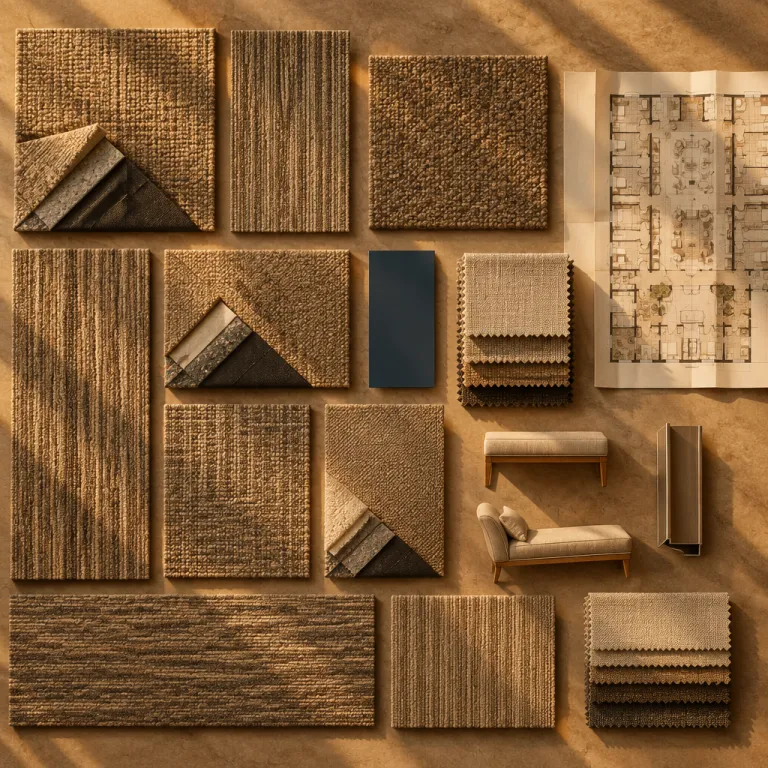
Rethinking surface flooring in hospitality: where kinetex truly fits
Hospitality projects now demand composite flooring systems that balance aesthetics, day-to-day operations and long term asset value. In guest rooms and public areas, the choice between traditional carpet and hard surface finishes is no longer binary, because Kinetex® flooring introduces a textile composite category with hybrid attributes. This shift encourages architects, hospitality designers, technical directors, asset managers and consulting engineers to review every floor covering specification against new expectations for comfort, durability and sustainability performance.
At its core, Kinetex is a textile composite flooring solution that behaves like a hard surface in terms of durability and maintenance, while retaining the underfoot comfort and acoustic performance of a dense carpet. These Kinetex products use a high performance fiber matrix fused to a stable backing, creating a thin surface flooring profile that works in both high traffic corridors and more intimate rooms. For FF&E suppliers and manufacturers, this hybrid construction changes how they position products in hospitality specifications, because Kinetex attributes sit between resilient tiles and soft carpet tiles.
Design teams evaluating Kinetex flooring in hotel areas must analyse several attributes simultaneously, including moisture management, ergonomic comfort and long term performance under rolling loads. The textile composite structure offers strong protection against indentation and wear, which is critical in high traffic lobbies, meeting rooms and back of house offices. When asset managers compare composite flooring options, they increasingly see sustainability advantages associated with Kinetex, such as post consumer content and recyclability, aligning with portfolio level ESG objectives and third party reporting frameworks.
From back of house to guestrooms: aligning kinetex attributes with operational realities
Operational leaders judge any flooring solution by how it behaves during daily maintenance and over the full asset life cycle. In kitchens, service corridors and engineering areas, a hard surface is often preferred for its resistance to moisture and ease of cleaning, yet acoustic comfort and staff health can suffer when impact noise and fatigue increase. Kinetex flooring offers a middle path, delivering a hard surface feel for trolleys and equipment while its textile composite layer cushions steps and reduces sound transmission.
For guestrooms and suites, designers must balance visual warmth, comfort and moisture management constraints, especially in coastal or tropical climates. Kinetex textile constructions manage incidental moisture better than many traditional carpet products, thanks to rapid drying fibers and dimensional stability that support moisture tolerance in rooms with frequent balcony access or pool adjacency. When technical directors run a technical check on floor covering options, they often find that Kinetex attributes reduce the risk of mold, odours and premature replacement in these sensitive areas.
Restaurant and bar concepts add another layer of complexity, because surface flooring must handle spills, stains and high traffic while preserving design intent. Project teams selecting high performance restaurant construction partners often review guidance similar to what is outlined in specialist frameworks for choosing high performance restaurant construction partners, and those same criteria apply when evaluating composite flooring systems. In these food and beverage areas, Kinetex flooring tiles can be replaced selectively after localised damage, limiting downtime and improving long term performance metrics for both front and back of house zones.
Health, acoustics comfort and guest experience: why surface choices matter
Guest perception of comfort often starts underfoot, long before they notice the artwork or lighting. A well specified floor covering in circulation areas and rooms can reduce noise, improve thermal comfort and support better indoor air quality, all of which influence health outcomes for both guests and staff. Kinetex flooring contributes to this experience by combining a dense fiber surface with a resilient backing that absorbs impact and dampens sound more effectively than many hard surface alternatives.
In open plan lobbies, co working lounges and hotel offices, acoustic comfort is now a core design driver rather than a secondary benefit. The textile composite structure of Kinetex products helps control reverberation and footfall noise, allowing designers to use more glass and hard finishes on walls and ceilings without sacrificing speech privacy. When asset managers evaluate performance data, they often see that composite flooring with strong comfort and durability characteristics can reduce complaints and extend refurbishment cycles, which directly affects NOI and long term asset value.
Health considerations extend beyond acoustics to include slip resistance, ergonomics and cleaning chemistry. Because Kinetex behaves like a hard surface in terms of stain resistance and maintenance, housekeeping teams can use less aggressive cleaning agents than those required for some porous materials, which benefits staff health and reduces environmental impact. For FF&E suppliers, positioning Kinetex sustainability narratives around reduced chemical use, post consumer content and recyclability helps align with investor expectations and with the evolving procurement strategies highlighted in analyses of how large furniture manufacturers reshape hospitality FF&E sourcing, such as the perspectives shared in reports on shifting FF&E sourcing models.
Moisture tolerance, maintenance moisture and risk management for asset owners
Water is one of the most expensive enemies of any hospitality asset, affecting flooring, walls and substructures across multiple areas. Traditional carpet in guestrooms and corridors can trap moisture, while some hard surface finishes become dangerously slippery or delaminate when exposed to repeated wet cleaning. Kinetex flooring addresses these risks through engineered moisture tolerance, allowing rapid evaporation at the surface and stable adhesion at the backing, which supports more predictable performance in high traffic zones.
For technical directors and facility managers, moisture management protocols often dictate labour costs and downtime. Composite flooring systems like Kinetex products can be cleaned with low moisture methods that reduce drying times, enabling rooms and meeting areas to return to service faster after deep cleaning cycles. This mitigation of operational disruption is particularly valuable in convention hotels and resorts, where surface flooring turnover between events must be almost immediate to protect revenue.
Risk management also extends vertically, especially where a Kinetex wall finish might be considered in corridors or lift lobbies to protect against luggage impact and scuffing. While Kinetex textile solutions are primarily designed as floor covering systems, some projects experiment with coordinated wall panels to create a continuous protective envelope with shared attributes of durability and acoustic comfort. Asset managers evaluating such composite flooring and wall strategies must check local codes and manufacturer guidance carefully, often consulting Kinetex FAQs and technical documentation to ensure that moisture, fire and health requirements are fully addressed before specification.
Design language, kinetex textile aesthetics and integration with heritage properties
Designers working on heritage hotels or sensitive renovations often hesitate to introduce new composite flooring technologies into historically significant rooms. They worry that a textile composite surface might clash with original stone, timber or terrazzo, or that the visual language of Kinetex textile patterns will feel too contemporary. Yet recent projects show that Kinetex flooring can be detailed with refined transitions and custom tile layouts that respect existing materials while improving comfort and performance.
In properties where conservation constraints limit interventions on walls and ceilings, upgrading the floor covering becomes one of the most effective ways to enhance acoustic comfort and guest experience. Case studies such as the renovation of Belmond Villa San Michele, analysed in depth in an expert review of what changed and what remained untouched, illustrate how careful material selection can protect heritage while modernising operations. Applying similar thinking, designers can use Kinetex products in secondary areas, back of house offices or meeting suites, keeping original hard surface finishes in signature spaces yet still benefiting from the comfort, durability and sustainability advantages associated with Kinetex elsewhere.
Pattern, colour and scale also play a decisive role in integrating Kinetex attributes into complex hospitality programmes. Large format tiles can visually elongate corridors, while smaller modules allow precise zoning of areas such as pre function spaces, co working lounges and kids’ clubs. By coordinating Kinetex flooring with textiles, wall finishes and lighting, FF&E suppliers and consulting engineers can create cohesive narratives that support brand identity, operational clarity and long term durability across the entire surface flooring portfolio.
Procurement, sustainability kinetex and the role of suppliers and manufacturers
For investors and asset managers, flooring is no longer a purely aesthetic line item; it is a strategic lever for sustainability, lifecycle cost and guest satisfaction. Kinetex flooring stands out in procurement discussions because many Kinetex products incorporate significant post consumer content and are designed for recycling at end of life, which supports corporate sustainability reporting. These Kinetex sustainability attributes must be quantified and verified, so project teams should always check Environmental Product Declarations and third party certifications when comparing composite flooring options.
Suppliers and manufacturers serving the hospitality sector increasingly position Kinetex as part of a broader portfolio that spans carpet, hard surface resilient materials and textile composite systems. This allows architects and hospitality designers to specify different surface solutions for different rooms and areas while maintaining consistent colour stories and performance levels. Offices, conference centres and staff facilities within a hotel complex often benefit from Kinetex textile installations, where comfort, durability and acoustic comfort improve staff retention and productivity without sacrificing ease of maintenance.
Strategic procurement also requires clear communication tools, including well structured Kinetex FAQ resources that address common questions about moisture tolerance, moisture management procedures and health implications. When manufacturers publish detailed Kinetex FAQs, they help technical directors and consulting engineers make faster, more confident decisions about where composite flooring is appropriate and how it should be detailed. Over time, this transparency strengthens trust between brands, specifiers and asset owners, ensuring that Kinetex attributes are fully leveraged across the property lifecycle and that every floor covering, from guestrooms to high traffic lobbies, delivers the expected performance.
Key figures and benchmarks for kinetex flooring in hospitality
- Independent acoustic tests on textile composite flooring systems from major commercial flooring brands such as J+J Flooring and Mohawk Group report substantial impact sound reductions compared with many hard surface finishes. This level of attenuation can significantly improve guest sleep quality in guestrooms located below high traffic corridors.
- Lifecycle cost analyses published by large flooring manufacturers, including studies referenced in J+J Flooring performance summaries, indicate that hybrid composite flooring with high durability can reduce replacement frequency compared with conventional broadloom carpet in high traffic hotel corridors, especially when supported by structured moisture management programmes.
- Studies on indoor environmental quality in offices and hospitality environments, such as research summarised by the World Green Building Council and the Center for the Built Environment at UC Berkeley, report that improved acoustic comfort and underfoot comfort are associated with higher perceived productivity and satisfaction scores, which supports the business case for investing in comfort and durability attributes in both guest and staff areas.
- ESG reporting from several global hotel groups, including Marriott International and Hilton sustainability reports, shows that specifying floor covering products with post consumer recycled content contributes measurably to portfolio level carbon reduction targets, particularly when composite flooring is installed across large surface areas such as convention centres and meeting complexes.
FAQs about kinetex flooring in hospitality projects
How does kinetex flooring compare with traditional carpet in guestrooms ?
Kinetex flooring offers a thinner textile composite surface that combines the softness and acoustic comfort of carpet with the durability and stain resistance of a hard surface. In guestrooms, this means better moisture tolerance, easier maintenance and more predictable performance under rolling luggage. Designers often use Kinetex products where they want a warm feel but need faster drying and lower lifecycle costs than conventional carpet.
Is kinetex suitable for high traffic hotel corridors and lobbies ?
Yes, Kinetex flooring is engineered specifically for high traffic areas such as corridors, lobbies and meeting pre function spaces. The dense fiber construction and stable backing provide strong wear resistance and protection against crushing, while the surface maintains slip resistance and acoustic comfort. Asset managers value this composite flooring approach because it reduces replacement frequency and keeps circulation areas visually consistent over time.
What are the main maintenance moisture requirements for kinetex products ?
Kinetex products are designed for low moisture cleaning methods, which shorten drying times and reduce the risk of mold or odours in rooms and back of house areas. Routine vacuuming removes dry soil from the fiber surface, while periodic encapsulation or extraction can be scheduled based on traffic levels. Technical directors should always check manufacturer Kinetex FAQs for specific cleaning agents and equipment recommendations to protect both health and durability.
Can kinetex textile solutions support sustainability goals in hotel portfolios ?
Many Kinetex textile systems incorporate post consumer recycled content and are designed for recycling at end of life, which aligns with corporate sustainability and ESG targets. Because the composite flooring construction is highly durable, it also reduces material turnover and waste over the asset lifecycle. Investors and consulting engineers should request detailed Kinetex sustainability documentation, including Environmental Product Declarations, to quantify these benefits accurately.
Where should kinetex not be used in a hospitality property ?
Kinetex flooring is versatile, but it is not intended for constantly wet areas such as showers, commercial kitchens or outdoor pool decks, where specialised hard surface finishes remain more appropriate. In these zones, continuous moisture exposure exceeds typical moisture tolerance parameters for textile composite systems. Project teams should review Kinetex FAQ guidance and local codes to define clear transition points between Kinetex and other floor covering types.