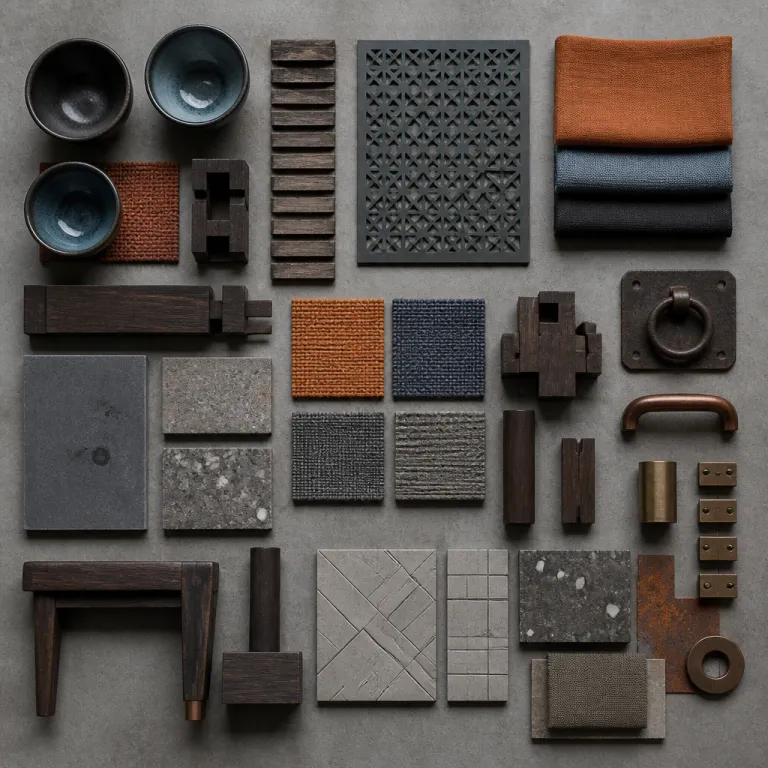
Asian craftsmanship as a value engine in hospitality ecosystems
Asian craftsmanship has moved from decorative detail to strategic asset in high-end hospitality. For architects, interior designers and asset managers, this shift reframes every FF&E package, every piece of art and every work of joinery as part of a measurable value chain. When you treat Asian craftsmanship as a core capability rather than a styling option, you unlock new levers for guest loyalty, ADR uplift and long-term asset resilience.
Across Asia, highly skilled artisans still work with wood, bamboo, silk, clay and metals using handcrafting, natural materials and traditional tools. Their craftsmanship is not nostalgic; it is a living ecosystem supported by local communities, cultural organizations and government bodies that understand its economic and cultural power. For hospitality investors and technical directors (often referred to in French as “directions techniques”), partnering with these artisans means accessing a supply chain that is both rooted in heritage and open to innovation, especially when traditional methods are integrated with contemporary design language and modern performance standards.
The luxury market in Asia illustrates this clearly. The Bluebell Group’s “Asia Lifestyle Consumer Profile 2023” report indicates that a large majority of surveyed Asian luxury consumers rate craftsmanship as at least as important as brand name when making purchase decisions, with around 70% highlighting the importance of artisanal quality in their purchasing criteria. This figure should immediately influence how you brief designers and FF&E suppliers when specifying suites in Singapore, resort villas in China or urban lifestyle hotels in Japanese cities. In practice, Asian craftsmanship becomes a strategic answer to guests who are saturated with global brand imagery yet still seek authentic stories, tangible heritage and a sense of place that no generic fashion or luxury concept can provide.
From fashion ateliers to FF&E workshops : translating luxury codes
Many hospitality design teams already understand how fashion designers build value through materials, cut and finishing. The same logic applies when you commission Asian craftsmanship for FF&E, where the weave of a textile, the joinery of a chair or the glaze of a ceramic basin carries the same emotional weight as a couture garment. When you look at the best fashion maisons in Japan, Singapore or China, you see a rigorous approach to sourcing and artisanship that can directly inform how you structure your supplier ecosystem.
Brands such as Shang Xia, backed by a major global luxury group, have shown how a contemporary brand story can be built around Chinese heritage techniques while still addressing an international luxury market. For hospitality projects, this approach means treating each crafted object as a work of art that connects the guest to a specific Asian place, rather than as a generic decorative prop. When you brief FF&E suppliers, you should explicitly reference these fashion and luxury benchmarks, asking for collections that are capable of creating unique narratives through texture, proportion and detail.
On the project delivery side, the discipline of a high-end fashion atelier mirrors the rigor of a specialized restaurant construction company that elevates hospitality projects from concept to opening, as illustrated in industry analyses of how a restaurant construction company elevates hospitality projects from concept to opening. Both rely on tightly managed supply chains, clear policy terms with suppliers and a shared understanding of rights reserved for designs and images. For technical directors and design offices (bureaux d’études), importing this fashion-level discipline into FF&E procurement is essential when working with multiple Asian artisans across different regions and time zones.
Curating asian craftsmanship : art, heritage and guest experience
When you curate Asian craftsmanship for a hotel, you are effectively building a living gallery of art and heritage. Each crafted object, from a Japanese raku tea bowl to a hand-carved screen from China, becomes part of a spatial narrative that guests can read intuitively as they move through the property. This is where collaboration between interior designers, art consultants and FF&E suppliers becomes critical, because the line between art and operational object is intentionally blurred.
In practice, you should treat every crafted piece as both a functional element and a work of art that carries stories about local culture, materials and techniques. The goal is not to create a museum, but to embed heritage into everyday touchpoints such as door handles, bedside lamps, textiles and tableware that guests handle repeatedly. A recent example from the Curio Collection by Hilton is the Palacio Bellas Artes San Sebastián, where locally sourced artworks, Basque ceramics and regionally crafted furnishings were integrated into public spaces and guestrooms to root the hotel in the cultural fabric of its destination. Hilton has highlighted similar approaches in Curio Collection communications as a way to anchor properties in their local context, showing how deeply integrated narratives can transform a building into a destination; the same principle applies when Asian craftsmanship shapes the tactile and visual language of a hotel.
Digital assets also matter, because the way you capture and share images of these crafted pieces influences both brand perception and supplier visibility. High-quality photo documentation, whether produced in house or via agencies such as Getty Images, should respect rights reserved agreements and align with your privacy policy and policy terms for content usage. For asset managers, this visual archive becomes a strategic tool, supporting valuation, insurance, maintenance planning and even future repositioning of the property as guest expectations and global design trends evolve.
Building resilient supplier networks with asian artisans
Working with Asian artisans requires a different supplier management mindset than ordering from standard catalogues. Lead times are often longer, production is more sensitive to seasonal rhythms and each workshop may specialize in a narrow slice of craftsmanship that cannot easily be replicated elsewhere. For technical directors and design offices, this means planning earlier, specifying more precisely and building redundancy into the network without diluting authenticity.
One effective strategy is to map your Asian craftsmanship ecosystem by material, technique and geography, identifying clusters of artisans in regions such as central Japan, southern China or the outskirts of Singapore. This mapping should include both individual workshops and larger manufacturers that can scale traditional methods for hospitality volumes while maintaining quality. When you structure framework agreements, you must address policy terms around intellectual property, brand story usage and rights reserved for patterns, motifs and product names, especially when the hotel brand intends to feature artisans prominently in marketing campaigns.
Supporting these suppliers also involves more than purchase orders, because cultural preservation and economic sustainability are intertwined. Many Asian artisans operate within local communities where craft skills are passed down through generations, and your long-term contracts can help maintain this transmission. As industry research on cultural tourism and craft economies consistently notes, this approach preserves cultural heritage and supports local economies while reinforcing the distinctiveness of the destination. For investors and asset managers, this is not only a social impact argument; it is a hedge against the homogenization that erodes differentiation in the global luxury market.
Designing FF&E with asian craftsmanship : from brief to mock up
Translating Asian craftsmanship into FF&E packages starts with a precise design brief that balances narrative ambition with operational constraints. Architects and interior designers should define which spaces will carry the strongest crafted signatures, whether it is a lobby ceiling in carved timber, guestroom textiles woven in traditional patterns or a spa clad in handmade ceramic tiles. Each decision must consider maintenance, durability and replacement strategies, because a crafted object that cannot be repaired or reproduced will become a liability for technical directors.
During the mock-up phase, it is essential to prototype key crafted elements at full scale, ideally with the artisans present or connected in real time. This allows designers and FF&E suppliers to adjust dimensions, finishes and fixings while respecting the integrity of the craftsmanship. For example, a Japanese joinery detail may need subtle adaptation to meet fire regulations or acoustic requirements, while still expressing the same art and style that guests expect from a high-end Asian property.
Digital coordination tools can support this process, but they must be used thoughtfully so they do not reduce artisans to anonymous vendors. High-resolution images and photo references, annotated drawings and clear skip content markers in shared documents help everyone focus on the right details without confusion. When you integrate these assets into your BIM models or FF&E schedules, you also create a traceable record that supports future renovations, ensuring that the original Asian craftsmanship intent is not lost when the property cycles through its next refurbishment.
Communicating asian craftsmanship : brand, guests and compliance
Once Asian craftsmanship is embedded in the architecture and FF&E, the next challenge is communication. Hospitality brands must articulate why these crafted elements matter, how they relate to local heritage and what makes them different from generic luxury styling. This narrative should be consistent across on-site signage, in-room collateral, digital channels and training materials for front-of-house teams.
From a brand perspective, Asian craftsmanship offers a powerful way to differentiate in a crowded global market where many hotels share similar fashion and lifestyle aesthetics. A well-crafted brand story can highlight collaborations with specific Asian artisans, explain the techniques behind signature pieces and invite guests to read the property as a sequence of stories rather than a collection of instagrammable moments. When you publish news articles, blog posts or curated stories on your website, you should integrate clear links to further reading while respecting privacy policy requirements and transparent policy terms for data collection.
Visual communication must also be handled with care, especially when using professional images from agencies such as Getty Images alongside your own photography. Every photo that features identifiable artisans, workshops or proprietary designs should be cleared under explicit rights reserved agreements, with usage scopes aligned to your long-term marketing strategy. For asset managers and investors, this disciplined approach to content governance protects the intangible value created by Asian craftsmanship, ensuring that the hotel’s unique identity is both legally secure and commercially exploitable over the full life cycle of the asset.
Key figures on asian craftsmanship in hospitality
- The percentage of Asian luxury consumers prioritizing craftsmanship over brand is reported at around 70% in the Bluebell Group’s 2023 Asia Lifestyle Consumer Profile, which confirms that Asian craftsmanship is a primary decision factor rather than a secondary detail.
- Traditional Asian craftsmanship spans a timeline from ancient origins through medieval developments to modern adaptations, showing that current hospitality collaborations tap into a multi-century continuum rather than a short-lived trend.
- Common materials used in Asian craftsmanship include wood, bamboo, silk, clay and metals, which align well with sustainable design strategies and low embodied carbon targets in contemporary hospitality projects.
- Key methods such as handcrafting, the use of natural materials and reliance on traditional tools like chisels, looms and kilns require longer lead times but deliver higher perceived value per square metre of guest-facing space.
- Strategic partnerships with local communities, cultural organizations and government bodies around Asian craftsmanship can generate both cultural preservation outcomes and measurable economic benefits for destination hospitality assets.
FAQ about asian craftsmanship in hospitality design
What are common materials used in asian craftsmanship for hospitality projects ?
Common materials used in Asian craftsmanship include wood, bamboo, silk, clay and metals, which can be specified for joinery, textiles, lighting and decorative art within hotels. These materials offer rich tactile qualities and can be sourced responsibly when working with established artisan networks. For technical teams, their performance must be validated against fire, acoustic and durability standards before large-scale deployment.
How can one support Asian artisans through hospitality developments ?
One can support Asian artisans by purchasing authentic handmade products and promoting their work through long-term procurement contracts and visible in-property storytelling. Developers and operators should engage artisans early in the design process, not as last-minute decorators. Structured agreements that respect fair pricing, training opportunities and co-branding rights help sustain both the craft and the communities behind it.
Why is traditional craftsmanship important for hotel differentiation ?
Traditional craftsmanship is important because it preserves cultural heritage and supports local economies while giving hotels a distinctive identity that cannot be copied easily. Guests increasingly seek meaningful experiences rather than generic luxury, and crafted elements provide tangible proof of place. For investors, this differentiation can translate into stronger pricing power and higher asset resilience over time.
How should designers integrate asian craftsmanship into FF&E packages ?
Designers should integrate Asian craftsmanship into FF&E by identifying key touchpoints where crafted elements will have maximum emotional and functional impact, such as headboards, lighting, casegoods and tableware. Collaboration with artisans during prototyping ensures that traditional techniques adapt correctly to hospitality performance requirements. Detailed documentation, including drawings, material samples and high-quality images, supports consistent implementation across all rooms and public areas.
What risks should asset managers consider when relying on artisan suppliers ?
Asset managers should consider risks related to lead times, capacity constraints and succession planning within artisan workshops, as some skills may be concentrated in a few individuals. Mitigation strategies include diversifying suppliers within the same craft tradition, establishing clear policy terms for quality and timelines, and documenting designs thoroughly for future reproduction. These steps help protect the long-term availability of key crafted elements during renovations or brand repositioning.