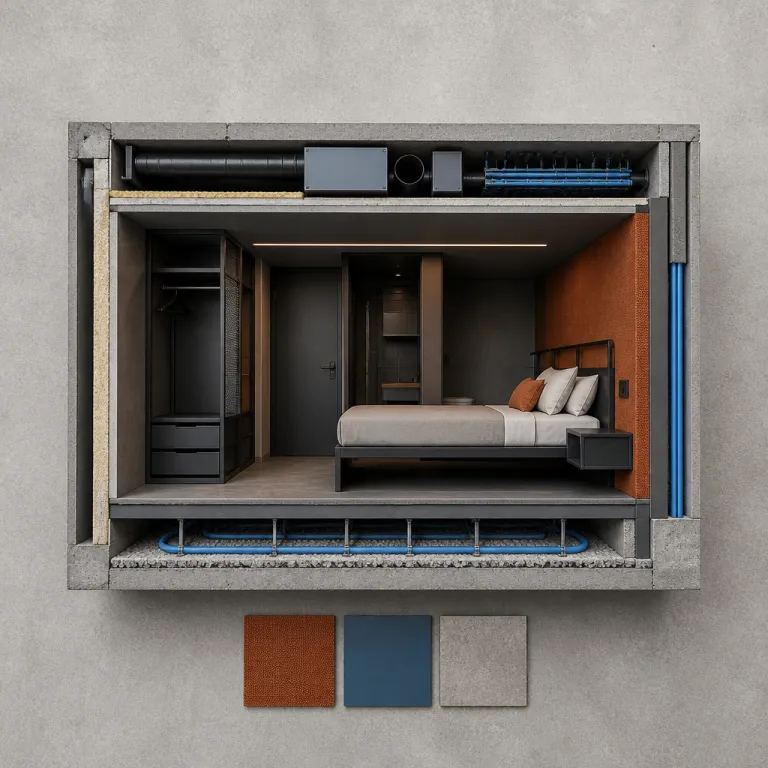
The strategic role of hotel renovation companies in complex hospitality projects
Hotel renovation companies now sit at the center of high value hospitality projects. For architects, hospitality designers, technical directors, asset managers and investors, the right renovation contractor becomes a strategic partner rather than a simple construction supplier. In a competitive hotel market where each active property must perform financially, renovation and construction decisions directly influence asset value, guest satisfaction and long term brand positioning.
Specialized hospitality construction and hotel renovation firms operate across the United States with dedicated teams trained for occupied property conditions. Their work on hotel renovations and hotel remodeling projects integrates interior design coordination, FF&E installation and building systems upgrades, aligning with brand standards while protecting ongoing revenue streams. These construction services are structured as hospitality projects with clear phases for planning, design build coordination, execution and post opening fine tuning.
For owners, developers and engineering consultants, the most effective hotel renovation companies are those that combine rigorous project management with deep understanding of guest facing operations. A construction company with strong hospitality experience typically offers integrated services that cover preconstruction planning, on site coordination with hotel management and tight control of guest disruption in every occupied property. This integrated approach helps owners maintain ADR and occupancy while the construction contractor delivers the physical transformation of the property.
Design studios, consultants and contractors : building the right project ecosystem
High performance hotel renovation projects depend on a carefully curated ecosystem of design studios, consultants and remodeling contractors. For each hotel, the core team usually includes an interior design practice, a lead architecture office, a renovation contractor and specialist FF&E suppliers aligned with the brand’s positioning. When this team is assembled early, the project benefits from coherent design build strategies and realistic construction planning.
Some renovation contractors operate as design build partners, coordinating design services with construction execution for hotel renovations across the United States. Others concentrate on interior remodeling projects and FF&E work, collaborating closely with hospitality design consultants to translate concept narratives into buildable details. Restaurant and bar areas often require an additional layer of expertise, where hospitality construction specialists work with F&B designers to create high performance spaces, as explored in this analysis of rethinking restaurant design and construction for high performance hospitality spaces.
For asset managers and technical directors, the challenge is to align this extended team around clear KPIs for cost, duration and guest experience. Effective management and coordination between design studios, hotel renovation companies and hotel operators helps owners avoid scope creep and late design changes that can destabilize the construction schedule. When the ecosystem functions as a single integrated project team, hospitality projects move from concept to completed work with fewer claims, better quality control and stronger guest facing outcomes.
Design build strategies to minimise guest disruption in occupied properties
Most hotel renovation projects now take place in an active property, where guest disruption must be tightly controlled. For hotel operators and owners developers, closing the entire hotel is rarely viable, so construction work must be sequenced around occupancy patterns and revenue critical periods. This reality pushes hotel renovation companies and design consultants to adopt design build strategies that prioritise phasing, logistics and acoustic separation.
Specialised national actors structure their construction services around occupied property protocols. Typical hotel renovations are divided into room blocks, with each project phase including demolition, remodeling, FF&E installation and snagging within a compressed timeframe to return inventory to the hotel management quickly. Public areas and other guest facing zones require even more precise coordination, with night work, temporary circulation routes and clear communication to minimise perceived guest disruption.
For architects and hospitality designers, this context changes how interior design and construction details are developed. Prefabricated bathroom pods, preassembled casegoods and modular wall systems can reduce on site construction time and dust, which directly helps owners protect guest satisfaction scores. When design build teams integrate these solutions from the planning stage, the renovation contractor can maintain productivity while the hotel continues to operate as a fully active property.
From façade to FF&E : integrating interior design, construction and brand standards
Hotel renovation companies increasingly operate across the full spectrum of construction, from façade upgrades to interior remodeling and FF&E installation. Exterior work, structural interventions and envelope improvements are coordinated with interior design teams working on guest room and public space concepts. This integrated approach ensures that hospitality construction decisions on the shell support the narrative and operational needs of the interior spaces.
For design studios and FF&E suppliers, alignment with brand standards and local context is essential to the success of hotel remodeling projects. Asset managers expect each hotel renovation to reinforce the brand while also reflecting its specific location, which often involves sourcing regional stone, local timber and artisan tile, as analysed in this perspective on materials that make a hotel feel rooted in its place. When construction contractors and interior designers collaborate on these material choices, they can balance durability, maintenance and guest perception within the overall project budget.
In practice, this means that renovation planning must integrate technical constraints, FF&E lead times and the sequencing of remodeling contractors on site. Detailed coordination between the construction company, the renovation contractor responsible for specialist trades and the hotel’s own engineering team reduces clashes and rework. For owners developers, such integrated management of design, construction and FF&E helps owners secure both short term operational continuity and long term asset resilience.
Data driven planning, cost control and risk management for hospitality assets
For investors and asset managers, the decision to launch a hotel renovation project is fundamentally a capital allocation question. Industry data for select-service and full-service hotels in North America indicates that the average cost of hotel renovation per room is approximately $8,000 per room, while the average duration of hotel renovation is around 6 months, which sets a clear financial and operational framework. Within these parameters, hotel renovation companies and design consultants must structure construction services that protect cash flow and brand equity. Recent benchmarks from sources such as the Hotel Asset Managers Association capital expenditure studies and STR’s published capex summaries support these order-of-magnitude figures, although actual costs vary by market and segment.
Experienced hospitality construction actors use project management tools to track planning, coordination and on site productivity across multiple hospitality projects. Their teams model different phasing scenarios to understand how various hotel renovations will impact occupancy, ADR and guest satisfaction, especially when working in an occupied property. This analytical approach helps owners and technical directors choose between more intensive but shorter hotel remodeling campaigns and longer, lower impact remodeling projects.
Risk management also extends to contractor selection and contract structure. A renovation contractor with a strong track record in guest facing environments in the United States will typically manage safety, noise and dust more effectively than a generalist construction company. For complex assets in markets such as New York or other dense urban locations, this expertise in constrained site logistics and stakeholder coordination becomes a decisive factor in project success.
Global benchmarks and the role of specialised hotel renovation companies
Across the United States, a group of specialised hotel renovation companies has emerged as reference partners for brands and institutional investors. These actors focus exclusively on hotel renovation, hotel remodeling and related construction services, which allows them to refine methods and processes specific to hospitality projects. Their accumulated experience covers everything from limited service refresh programs to full scale repositioning of complex urban hotels.
Many of these companies operate as national remodeling contractors, capable of delivering consistent quality across multiple hotel properties for the same ownership group. Their teams understand the operational realities of guest facing spaces, from lobby sequencing to back of house circulation, and they adapt construction planning to minimise guest disruption. In this context, hospitality construction is less about generic building work and more about orchestrating a complex service operation inside a living hotel.
For design studios and consultants, collaborating with such specialised hotel renovation companies creates a feedback loop that improves future projects. Lessons learned on one property in New York, for example, can inform design build strategies for another hotel in a secondary market, optimising both cost and guest experience. Industry case studies frequently note that sustainable practices, smart technology and wellness amenities are now central to competitive hotel renovations, and the most agile construction contractors integrate these priorities into every new project.
Key statistics shaping hotel renovation strategies
- The average cost of hotel renovation per room is approximately 8,000 USD per room for midscale and upscale properties in North American markets, according to aggregated industry reports such as STR’s capex analyses and Hotel Asset Managers Association surveys, which means a 200 room property typically requires around 1.6 million USD in direct construction investment.
- The average duration of hotel renovation is around 6 months per project, based on sector data and published case studies, which obliges owners and hotel management to plan carefully for revenue impact and guest communication during this period.
- Specialised hotel renovation companies in the United States have collectively renovated well over ten thousand rooms in recent years; for example, public references from firms such as Genesis Hotel Services and similar GAAP-style case study portfolios report pipelines exceeding ten thousand renovated keys, illustrating the scale of experience available to owners developers.
- Industry guidance for guests suggests that travellers should check hotel availability during renovations, inquire about potential disruptions and consider alternative accommodations if necessary, which underlines the importance of transparent communication from hotel operators during construction work.
- Current trends in hotel renovations emphasise sustainable renovations, smart room technology and wellness focused amenities, reflecting a broader shift in hospitality projects toward energy efficiency, digital integration and health oriented guest experiences.
FAQ : hotel renovation companies and hospitality projects
What is the typical cost range for a hotel renovation project ?
Industry benchmarks indicate that the average cost of hotel renovation per room is approximately 8,000 USD per room for select-service and full-service hotels in mature North American markets. For a midscale 150 room hotel, this implies a construction budget in the region of 1.2 million USD, excluding soft costs such as design services and project management. The final figure depends on scope, brand standards, building condition and whether structural work or extensive systems upgrades are required.
How long does a standard hotel renovation usually take ?
Most full scope hotel renovations require around 6 months from the start of construction to completion, based on aggregated industry data and published hospitality case studies. This duration can extend when the property remains fully operational, as phasing and guest disruption constraints slow down the work. Early planning with hotel renovation companies and design consultants helps compress the schedule without compromising quality.
Which trends are currently shaping hotel remodeling strategies ?
Current trends in hotel renovations focus on sustainable practices, smart technology and wellness amenities, as highlighted by sector analyses and brand renovation guidelines. For design studios and renovation contractors, this translates into specifying energy efficient systems, integrating smart room controls and creating wellness oriented guest facing spaces such as fitness zones and spa like bathrooms. These investments support both guest satisfaction and long term asset performance.
How should owners select a hotel renovation contractor for an occupied property ?
Owners developers should prioritise hotel renovation companies with proven experience in occupied property conditions and guest facing environments. References from similar hospitality projects, clear methodologies for minimising guest disruption and strong coordination with hotel management are critical selection criteria. National specialists typically provide structured processes and dedicated teams for this type of work.
What role do design studios and consultants play alongside construction companies ?
Design studios and consultants define the interior design concept, space planning and technical specifications that guide the work of hotel renovation companies. Their collaboration with the construction company and remodeling contractors ensures that aesthetic ambitions remain buildable, code compliant and aligned with operational needs. When this ecosystem functions as an integrated team, it helps owners achieve coherent, guest centric hotel renovations that respect both budget and brand.