Why hotel room acoustic insulation STC is now a P&L issue
Noise is consistently the second most cited complaint in hotel reviews after cleanliness, according to large scale analyses of guest feedback by platforms such as TripAdvisor and review management providers including Revinate and Medallia. For a hotel asset, that means acoustic performance is no longer a nice-to-have detail but a direct driver of RevPAR, guest retention and brand positioning. When hotel room acoustic insulation STC targets are missed, the cost shows up in compensation, downgraded ratings and weakened pricing power.
STC, or Sound Transmission Class, is a laboratory rating that measures how well a building partition reduces airborne sound across a range of speech frequencies, typically determined using ASTM E90 and classified under ASTM E413. An uninsulated stud wall with an STC rating around 30 allows normal speech to be clearly heard, while a high performance wall with an STC rating near 55 reduces sound transmission so that raised voices become a faint murmur. For hotel rooms, an STC rating of 50 or higher is recommended in many brand standards and industry guidelines to ensure guest comfort, and that threshold should be treated as a baseline rather than an aspiration for contemporary hotels.
Guest expectations have shifted faster than many design standards. Guests increasingly expect muted technology: invisible smart systems that do not generate operational noise, and they assume that interior noise from common areas, corridors and adjacent guest rooms will be controlled as rigorously as lighting or air quality. For asset managers and technical directors, the business case is simple: hotel soundproofing that lifts online ratings by even half a star often costs less than one year of revenue lost to poor reviews about sound. Case studies from urban properties that upgraded partitions and door systems show capital costs in the low single digit percentage of construction budget, with payback periods under three years once improved review scores and reduced compensation are factored in.
What STC 45, 50, 55 and 60 mean at midnight in a hotel room
STC ratings only become real when translated into what a guest hears while lying in bed. Around STC 40 to 45, typical of a basic insulated wall assembly, normal speech from the next room is still intelligible and television sound is clearly audible, which means speech heard through the wall will trigger complaints in upper midscale hotels. At STC 45, some select service brands accept this compromise, but it is already misaligned with the expectations of tech savvy travellers who benchmark hotels against their own homes.
At STC 50, inter-room sound transmission drops to the point where normal speech is not easily understood and only loud speech or impact noise is noticeable. This is the minimum transmission class that serious hotel brands should target for standard guest rooms, because it keeps most interior noise from adjacent rooms below the threshold that drives negative ratings. Moving to STC 55, achieved with higher mass wall assemblies or decoupled studs, means that even loud television sound becomes a low level background sound, which is where luxury and upper upscale hotels need to be.
Once you reach STC 60 and above, the acoustic separation between hotel rooms approaches that of a small recording studio, and speech heard through the partition is effectively eliminated in normal operation. That level of soundproofing is appropriate for suites, connecting rooms and high value categories where premium pricing must be protected. For CTOs and innovation leads evaluating smart room systems, these STC ratings define the acoustic envelope within which sound masking, in-room voice assistants and other audio based technologies can operate without adding to perceived noise.
For teams planning technology heavy properties, aligning acoustic targets with digital infrastructure is now part of core technical design. The conversations previewed in many hospitality technology forums about guest facing systems only work when the base building keeps corridor noise, HVAC hum and plumbing sound below the level where any new device becomes the scapegoat. That is why any serious discussion of hotel room acoustic insulation STC should sit alongside technology strategy, not follow it.
The three weakest links: doors, plumbing and HVAC in hotel rooms
Most architects and engineering consultants can design a compliant wall assembly on paper, yet the weakest links in hotel soundproofing are rarely the walls themselves. Corridor door systems, bathroom plumbing and HVAC ducts routinely undermine otherwise robust acoustical design, because they introduce flanking paths that bypass the rated wall assemblies. In guest reviews, these failures show up as complaints about hallway noise, flushing toilets and humming ceilings rather than about walls or panels.
The typical guest room entry door has an effective STC rating far below the adjacent walls, especially when the door seal and threshold are treated as commodity hardware instead of acoustic components. A solid core door without perimeter seals can perform closer to an STC 25 to 30 element, which means speech heard in the corridor passes almost unfiltered into the hotel room. Specifying acoustic door assemblies with continuous door seal systems, drop seals at the bottom and properly detailed frames is one of the cheapest ways to lift overall room ratings without changing wall panels or ceiling tiles.
Bathroom plumbing and HVAC ducts create another layer of interior noise that is rarely captured in headline STC ratings. Waste stacks running through guest rooms, uninsulated pipe chases and shared ductwork allow sound transmission between vertically stacked rooms and across common areas, bypassing the primary wall assemblies. For technical directors, the lesson is clear: treat every penetration in the walls and ceilings as an acoustical risk, and coordinate with acoustic engineers, construction contractors and hotel management early so that sound absorbing pipe wraps, lined ducts and resilient hangers are budgeted before value engineering begins.
Short stay concepts and extended stay properties are particularly exposed, because higher occupancy churn amplifies corridor traffic and plumbing use. Projects that are reshaping technical design standards for short term stays show that when corridor doors, plumbing risers and HVAC are detailed with the same care as guest room finishes, noise reduction is measurable in both decibels and review scores. The teams that internalise this now will set the benchmark for how quiet a compact urban hotel can feel.
Wall assemblies, ceilings and windows that achieve STC 55 without breaking the budget
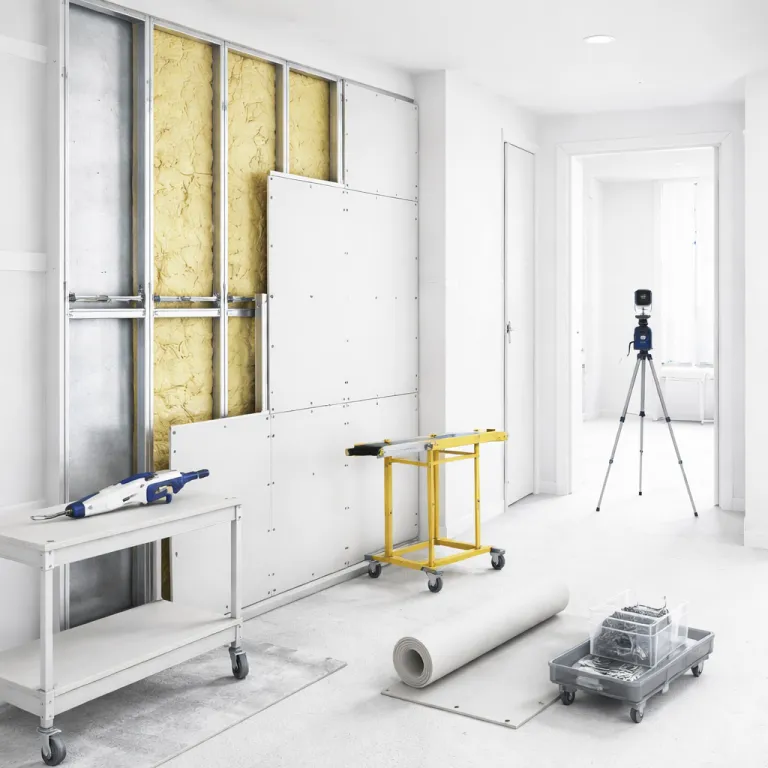
The good news for investors is that achieving an STC rating of 55 in typical hotel rooms does not require exotic materials or a doubled budget. A standard insulated stud wall with a single layer of gypsum board on each side might reach an STC rating around 45, while a high performance wall with double layers, staggered studs or resilient channels can push into the mid 50s. The cost delta often sits in the single digit percentage range of the total wall assembly budget, yet the impact on guest satisfaction and ratings is disproportionate.
Effective hotel room acoustic insulation STC strategies combine mass, decoupling and damping. Double stud wall assemblies or resilient channel systems separate the two faces of the wall, reducing direct sound transmission, while additional layers of dense material such as high mass gypsum or mass loaded vinyl increase soundproofing without stealing too much floor area. Sealing all joints with acoustic caulk and treating electrical boxes, back to back outlets and service penetrations as critical details prevents flanking paths that can undo the theoretical performance of the wall panels.
Ceiling design is just as important, especially in properties with active common areas above guest rooms. Suspended ceilings with sound absorbing ceiling tiles, resilient hangers and insulation can significantly reduce interior noise from bars, gyms or meeting rooms, while still allowing access to services. Window inserts and high performance glazing help control exterior sound transmission, but they must be integrated with the wall and ceiling interfaces so that the overall transmission class of the façade matches the target STC ratings for the room.
For asset managers focused on lifecycle value, the acoustic specification should be evaluated alongside embodied carbon and material efficiency. Choosing a slightly heavier wall assembly or better ceiling tiles may increase initial material quantities, but if those choices extend the refurbishment cycle and protect online ratings, the long term ROI is compelling. In practice, the quietest hotels are rarely the ones with the most expensive materials; they are the ones where the details of the wall, ceiling and window assemblies were coordinated early and executed without compromise, often documented in internal case studies that link capital cost, measured STC and review outcomes.
Door seals, sound masking and the specification clauses that protect your reviews
Once the primary walls and ceilings are defined, the final 5 to 10 decibels of perceived noise reduction come from details that are cheap to specify and expensive to retrofit. Door seal systems, thresholds, wall panels in corridors and soft finishes in common areas all contribute to how much sound reaches the guest rooms. A continuous acoustic door seal around the frame, combined with a drop seal at the bottom, can transform a standard door into a high performing element that aligns with the surrounding wall assembly.
Sound masking systems offer another layer of control, especially in open plan common areas or co working zones adjacent to hotel rooms. By introducing a controlled background sound, these systems make intrusive speech heard from neighbouring spaces less intelligible, which guests interpret as a calmer environment. However, sound masking should never be used to compensate for underperforming hotel room acoustic insulation STC; it is a complement to robust soundproofing, not a substitute for proper wall assemblies, ceiling tiles or door hardware.
Writing the acoustic specification clause that holds the contractor accountable is where technical design meets contract strategy. The clause should define target STC ratings for each partition type, reference relevant test methods such as ASTM E90 and ASTM E336 or ISO 140-4 for field verification, and require testing of a sample of completed rooms. It should also state that any partition failing to meet the required sound transmission class must be remediated at the contractor’s cost and that substitutions must match or exceed the specified performance.
In practice, that means naming the wall assembly types, ceiling constructions, door assemblies, window inserts and sound absorbing finishes that have been tested to achieve the desired performance. A simple sample clause might read: “Contractor shall provide laboratory test reports demonstrating compliance with specified STC ratings and shall arrange independent field tests of not less than 10% of guest rooms. Any construction that does not meet the specified rating when tested in accordance with ASTM E336/ISO 140-4 shall be upgraded at no additional cost to the Owner. Proposed substitutions must be submitted with equivalent or better test data.” Requiring coordination between acoustic engineers, construction contractors and hotel management during design, construction and post construction evaluation ensures that the implemented solutions match the intent. When these elements are aligned, hotel soundproofing stops being a line item to cut and becomes a measurable asset that protects both guest satisfaction and long term brand equity.
From design phase to post-stay review: managing acoustic performance as a continuous process
Acoustic performance in hotels is not a one off design decision but a continuous process that spans the design phase, construction phase and post construction evaluation. During design, acoustic engineers define the target STC ratings, select wall assemblies and specify acoustical materials, while hotel management clarifies brand standards and acceptable interior noise thresholds. Construction contractors then implement the wall, ceiling and door details, using tools such as resilient channels, acoustic caulk and mass loaded vinyl to achieve the required sound transmission control.
Once the hotel opens, the real test of hotel room acoustic insulation STC performance appears in guest reviews and operational feedback. Noise complaints about speech heard through walls, slamming doors or plumbing sounds should be logged as structured data, not anecdotal stories, and correlated with room locations, wall types and adjacent common areas. This post occupancy data allows technical services teams and asset managers to identify weak spots, from under sealed door frames to poorly insulated risers, and to prioritise targeted noise reduction interventions.
Operational teams can also support the acoustic strategy through allocation policies and maintenance. Assigning noise sensitive guests to rooms with the best wall assemblies, maintaining door seal integrity during routine inspections and monitoring changes in interior noise levels when new equipment is installed all help preserve the original STC rating intent. Over time, this creates a feedback loop where design decisions, construction quality and guest experience are linked by measurable acoustic KPIs rather than by intuition.
One real world retrofit example illustrates the impact. A 200 room urban hotel with inter-room partitions tested on site at STC 44 using field methods consistent with ASTM E336/ISO 140-4 faced persistent complaints about corridor noise and neighbouring televisions, averaging 3.8 out of 5 on “quietness” in post stay surveys. After upgrading guest room doors with perimeter seals and drop seals, adding acoustic backing to headboards on shared walls and sealing visible penetrations, follow up tests measured an effective improvement of 6 to 8 dB in typical rooms. Within six months, the noise related survey score rose to 4.3, and the overall review rating increased by 0.2 points, with no change to the core wall construction.
For investors and FF&E suppliers, the message is clear: acoustic performance is now part of the core value proposition of hotel rooms, not an optional upgrade. When hotel room acoustic insulation STC is treated with the same rigour as fire safety or structural design, the result is a quieter, more resilient asset that commands better ratings and stronger loyalty. In a market where guests can filter hotels by review score in seconds, the walls, ceilings and doors that they never consciously notice may be the most valuable components in the entire building.
FAQ
What is an STC rating in the context of hotel rooms ?
STC, or Sound Transmission Class, is a single number rating that indicates how well a building partition such as a wall, floor or door reduces airborne sound between spaces. In hotel rooms, higher STC ratings mean less sound transmission between adjacent rooms, corridors and common areas, which directly reduces noise complaints. For most modern hotels, an STC rating of 50 or higher for inter-room partitions is recommended to ensure that normal speech and television sound are not easily heard by neighbours.
What STC rating should I target for different hotel segments ?
Select service and economy hotels typically target around STC 45 for standard inter-room walls, accepting that some speech may still be audible but not fully intelligible. Upper upscale properties should aim for STC 50 to 55 in guest rooms, which significantly reduces interior noise and protects premium pricing, while luxury hotels and suites often target STC 60 or higher to create a sense of acoustic privacy. These targets should be applied not only to walls but also to doors, ceilings and façade elements so that the overall transmission class of the room meets the brand promise.
How can hotels improve existing room soundproofing without full reconstruction ?
For existing hotels, the most cost effective upgrades usually involve improving door seal systems, adding sound absorbing finishes and addressing obvious flanking paths. Installing perimeter seals and drop seals on guest room doors, adding acoustic wall panels or upholstered headboards on shared walls, and sealing gaps around service penetrations can all improve effective STC performance without rebuilding the wall assembly. In some cases, adding secondary window inserts or upgrading ceiling tiles in noisy zones can further reduce sound transmission from exterior sources or common areas above.
Who should be involved in specifying hotel room acoustic insulation STC ?
Effective acoustic design requires collaboration between acoustic engineers, architects, interior designers, technical services teams, construction contractors and hotel management. Acoustic specialists define the required STC ratings and propose suitable wall assemblies and materials, while designers integrate these into the room layout and FF&E concept. Hotel management and asset managers then ensure that the specification is protected through procurement, construction oversight and post opening performance monitoring.
How do online reviews relate to acoustic performance in hotels ?
Guest review analyses consistently show that noise is the second most cited complaint after cleanliness, which means acoustic failures directly impact ratings and booking decisions. When guests report hearing corridor traffic, neighbouring televisions or plumbing noise, they often downgrade their overall stay rating even if other aspects of the hotel perform well. By investing in hotel room acoustic insulation STC, robust wall assemblies and properly detailed doors and ceilings, hotels can reduce these complaints and protect both their online reputation and long term revenue.