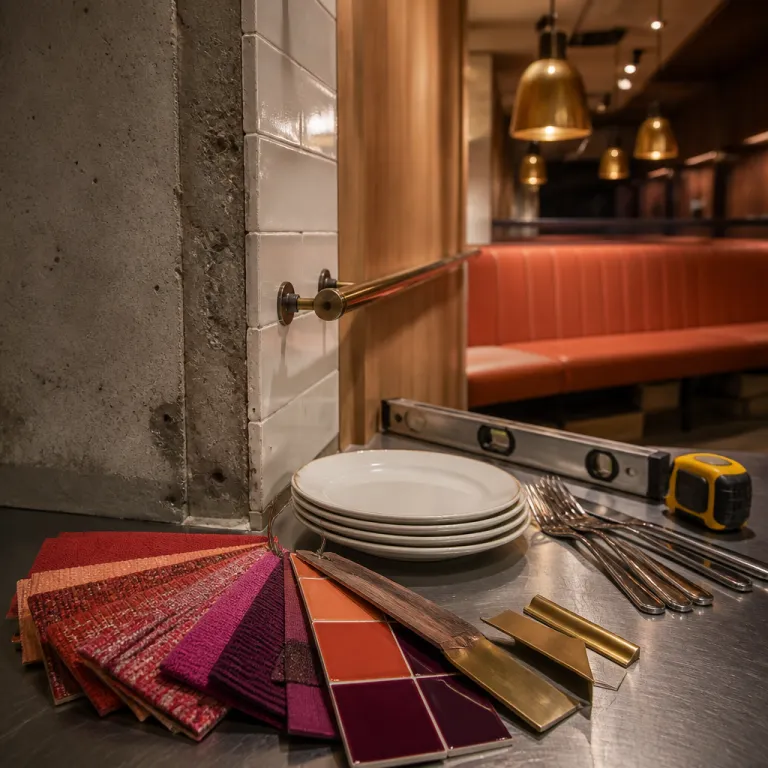
Why the right restaurant contractor is a strategic partner, not just a builder
For hospitality investors and designers, the choice of restaurant contractor shapes the asset’s long term performance. A specialised general contractor who understands restaurant construction will translate brand, operational flow, and technical constraints into a coherent build strategy that protects both CAPEX and future NOI. When the construction company is treated as a strategic partner rather than a late stage supplier, the project can align design, construction, and operations from the first feasibility study.
In practice, a dedicated restaurant contractor manages the full project timeline, from early budgeting and permitting through to inspections and handover of the completed restaurant. Their team coordinates architects, engineers, kitchen consultants, and specialist trades so that every construction detail supports the intended dining experience and throughput. This integrated project management approach is particularly critical for commercial restaurant assets in dense urban locations, where building constraints, neighbours, and city approvals can easily derail delivery.
For asset managers and technical directors, the most valuable restaurant contractors bring deep experience in both ground up commercial construction and complex renovation of trading restaurants. They understand that each project will be judged not only on schedule and cost, but on acoustic comfort, kitchen efficiency, and the ability to flex the space for evolving concepts. Publicly documented projects such as the renovation of the Union Square Café in New York, delivered with Shawmut Design and Construction as construction manager according to the firm’s published case study, illustrate how a contractor’s early involvement can protect heritage character while upgrading building systems and improving back of house workflow. When you evaluate a restaurant contractor, you are effectively selecting a risk manager for your restaurant portfolio, not just a supplier of building services.
From concept to kitchen : how design build models reshape restaurant projects
Design build delivery has become a powerful model for complex restaurant projects, especially when timelines are compressed and sites are technically challenging. Under a design build structure, the restaurant contractor and design team work as a single entity, aligning construction services, FF&E specifications, and operational requirements from day one. This reduces redesign cycles, improves attention to detail, and allows the project team to lock in long lead items for the kitchen and dining space earlier.
For hospitality groups rolling out multiple restaurants, design build can stabilise costs across several projects while preserving local character. A restaurant contractor with strong design build capability will coordinate BIM models, MEP engineering, and commercial kitchen layouts so that the scope reflects real equipment loads, extraction needs, and service circulation. This is particularly valuable in markets like Los Angeles, where commercial construction regulations, seismic codes, and neighbourhood sensitivities can add layers of complexity to every project. The design build delivery of the Broken Spanish restaurant in Downtown LA, for example, required close coordination between the contractor, city plan checkers, and kitchen consultants to route new exhaust systems through an existing high rise without disturbing office tenants, as described in public permitting summaries.
Forward looking investors now benchmark restaurant contractors on their ability to integrate design build thinking with data driven prototyping of guest rooms and public areas in mixed use assets. The same mindset that turns a hotel room into an urban living lab, as shown in this analysis of HQ development as an urban living lab, can be applied to restaurant construction to test seating densities, acoustic treatments, and lighting scenarios. When the general contractor participates in these early simulations, the project can move from concept sketches to build ready documents with fewer surprises on site and tighter control of cost and schedule.
Suppliers, manufacturers, and the FF&E ecosystem behind high performance dining spaces
Behind every successful restaurant contractor stands a dense ecosystem of FF&E manufacturers, specialist suppliers, and technical consultants. For architects and designers, the quality of this network often matters as much as the contractor’s own experience, because it determines how faithfully the design intent will survive value engineering and on site constraints. A contractor who curates reliable suppliers for banquettes, lighting, stone, and bespoke joinery can maintain attention to detail while still protecting the project budget.
In restaurant construction, FF&E choices are inseparable from commercial building performance, especially when the dining space shares structure and services with hotel rooms or offices. The best restaurant contractors work with manufacturers who understand fire ratings, acoustic performance, and cleanability in high turnover restaurants, ensuring that every chair, table, and wall finish supports both guest comfort and operational efficiency. When these suppliers collaborate early with the design team, the project can avoid late substitutions that compromise the restaurant’s brand narrative.
Material storytelling is also becoming a competitive lever, as seen in contemporary hotel projects that use expressive stones and finishes to shape guest perception. The same thinking applies to restaurants, where a contractor aligned with the design team can source and install complex surfaces such as those explored in this study of stone aesthetics and narrative driven design. Case studies like the use of locally quarried stone and custom terrazzo at the Hoxton hotel restaurants in London, documented in public project photography and press coverage, show how FF&E decisions can reinforce a narrative of locality while still meeting commercial durability standards. For asset managers, the key is to select restaurant contractors whose supplier ecosystem can deliver both robust performance and the emotional resonance that turns a one time visit into repeat dining.
Operational performance : kitchens, back of house, and the invisible architecture of service
While guests judge a restaurant by its dining room, the long term profitability of restaurants is often decided in the kitchen and back of house. A specialised restaurant contractor understands that kitchen design is not just about equipment lists, but about the choreography of chefs, servers, and dishwashing teams across a constrained space. When the general contractor collaborates closely with kitchen consultants and operations leaders, the project can integrate extraction, drainage, and cold rooms into the building fabric without sacrificing front of house design.
Restaurant projects demand rigorous coordination of grease ducts, make up air, and structural penetrations, especially in multi storey commercial buildings where other tenants share the same structure. Contractors with strong project management skills use digital tools to model these systems, reducing clashes on site and protecting the programme. They also understand that a construction schedule must sequence kitchen installation, finishes, and commissioning so that equipment can be tested under real loads before the restaurant is completed and handed over.
For technical directors and asset managers, the most effective restaurant contractors treat the kitchen as a long term asset rather than a cost centre. They work with suppliers to specify durable, maintainable equipment and finishes that can withstand years of high intensity service, while still allowing for future menu changes and concept shifts. Documented projects such as the multi phase kitchen upgrade at Eleven Madison Park in New York, where the contractor coordinated new ventilation, dishwashing, and prep areas while the wider building remained occupied according to publicly available project descriptions, demonstrate how thoughtful sequencing and robust detailing can extend the life of a restaurant without disrupting its brand. As one New York based contractor summarised in a post project review, “Investing an extra 3–5% of the construction budget in resilient kitchen infrastructure typically saves owners 10–15% in unplanned maintenance over the first five years.” When the construction company brings this operational mindset to every project, the restaurant contractor becomes a guardian of lifecycle value rather than just a builder of shiny new spaces.
Risk, regulation, and project management across complex restaurant portfolios
Regulatory compliance is one of the most underestimated dimensions of restaurant construction, yet it is where a skilled contractor can protect enormous value. Health codes, fire regulations, accessibility standards, and energy performance rules intersect in every project, and missteps here can delay openings or trigger costly redesigns. As one industry summary states, "What does a restaurant contractor do? Manages construction or renovation of restaurant spaces."
For multi asset owners, the right restaurant contractors standardise project management processes across locations while adapting to local codes and cultural expectations. In markets such as Los Angeles, where seismic requirements and neighbourhood review boards add layers of scrutiny, a seasoned general contractor will pre negotiate inspection strategies and documentation with authorities. Public records from the City of Los Angeles Department of Building and Safety indicate that restaurant projects which submit coordinated mechanical, structural, and health department packages at the outset typically move through plan check faster than fragmented submissions, underlining the value of an organised contractor. This proactive work reduces the risk that a project will stall at the final hurdle, when staff are already hired and marketing campaigns are live.
Portfolio level thinking also changes how restaurant contractors structure their services and contracts. Instead of treating each restaurant as an isolated project, they build frameworks for general contracting, preferred suppliers, and repeatable details that can be deployed across several locations with minimal redesign. For investors, this approach turns individual builds into a managed programme, where lessons learned on one commercial restaurant feed directly into the next, improving schedule reliability and cost predictability over time.
From renovation to repositioning : when construction services unlock new asset value
Many of the most interesting opportunities for restaurant contractors now lie in renovation and repositioning rather than new build. Ageing hotel restaurants, underperforming street corner cafés, and obsolete food courts can all be transformed into high yield dining concepts when a construction company collaborates early with designers and asset managers. In these scenarios, the contractor must work within existing building constraints while still delivering a fresh guest experience and updated technical infrastructure.
Complex renovation projects often require phased work to keep part of the asset trading, which demands meticulous project management and communication with operations teams. A contractor experienced in live environment construction will sequence noisy works, temporary access routes, and service shutdowns so that the project protects both guest satisfaction and revenue. This is where attention to detail in hoarding design, wayfinding, and temporary dining space layouts becomes a competitive advantage for both the contractor and the owner.
Strategic renovation of restaurants is increasingly integrated into broader hotel repositioning programmes, where public spaces, rooms, and F&B concepts are reimagined together. Insights from high performance hotel renovation programmes, such as those analysed in this article on how renovation companies and design studios reshape hospitality assets, show how tightly coordinated design and build teams can unlock new revenue streams. Publicly reported repositioning projects like the overhaul of the Park Hyatt New York’s restaurant and bar, delivered in tandem with a wider guest room refresh according to press releases and design coverage, demonstrate how synchronised construction services and design strategy can lift average daily rate and F&B spend per guest. When a restaurant contractor is embedded in this wider vision for the life of the asset, construction services become a lever for brand elevation and long term asset value, not just a response to wear and tear.
Key statistics shaping the restaurant contractor landscape
- The contract food service industry in the United States generates tens of billions of dollars in annual revenue, according to market research providers such as IBISWorld and Statista, underlining the scale of restaurant construction and renovation opportunities for specialised contractors. These estimates for institutional and contract catering reinforce the long term demand for experienced restaurant builders.
- Across this market, contractors who focus on sustainable building practices and energy efficient kitchens can materially reduce operating costs, which directly improves the long term ROI of restaurant projects for investors.
- Open kitchen designs, now common in contemporary dining concepts, require more intensive coordination between design teams and general contractors, because extraction, fire safety, and acoustic treatments must be integrated into visible architecture.
- The growing integration of technology into restaurants, from digital ordering to smart lighting, increases the importance of early collaboration between construction companies, IT integrators, and FF&E suppliers during the project planning phase.
FAQ about working with a restaurant contractor
What does a restaurant contractor do on a typical project ?
A restaurant contractor manages the full construction or renovation of restaurant spaces, coordinating trades, schedules, and compliance. They translate design documents into buildable solutions, oversee site work, and ensure that the restaurant is completed to code and ready for operations. Their role spans planning, permitting, construction, inspections, and final handover.
How should owners and designers choose a restaurant contractor ?
Owners and designers should evaluate a restaurant contractor based on proven experience with similar restaurant construction projects, including both new build and renovation. References from previous clients, quality of completed restaurants, and the strength of their project management processes are critical selection criteria. It is also essential to assess how well their team collaborates with architects, kitchen consultants, and FF&E suppliers.
What are the key considerations in restaurant construction and renovation ?
Key considerations include strict compliance with health and fire codes, efficient kitchen and back of house layout, and the durability of materials in high traffic dining environments. The construction project must also address acoustic comfort, lighting, and accessibility to support a high quality guest experience. Early coordination between the general contractor, design team, and operations leaders reduces costly changes during construction.
When should a restaurant contractor be involved in the design process ?
A restaurant contractor should be involved as early as possible, ideally during concept design and feasibility. Early input on structural constraints, services routing, and buildability helps the design team avoid solutions that are difficult or expensive to construct. This collaboration supports more accurate budgets, realistic schedules, and smoother permitting.
How can a restaurant contractor support sustainable and technology rich dining spaces ?
A contractor with strong commercial construction experience can integrate energy efficient systems, low impact materials, and flexible infrastructure for future technology upgrades. They coordinate with suppliers and engineers to ensure that sustainable solutions are practical to build and maintain. This approach helps owners align ESG objectives with operational performance in both new restaurants and renovation projects.