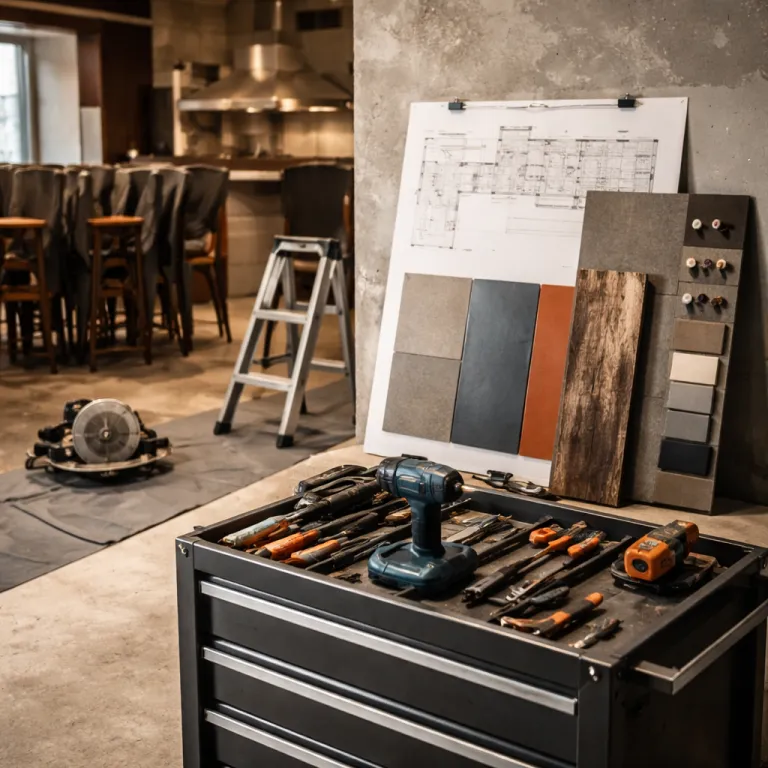
Strategic role of the restaurant renovation contractor in hospitality assets
For hospitality investors, the restaurant renovation contractor is now a strategic partner. The right contractor will align renovation, construction and design decisions with asset positioning and long term value. In a competitive restaurant and hotel market, every renovation project must translate into measurable uplift.
Restaurant renovation contractors sit at the intersection of commercial construction, hospitality operations and brand strategy. Their restaurant renovation services extend beyond basic construction work to include programming of the dining space, optimization of the commercial kitchen and coordination with FF&E suppliers. When a general contractor understands both restaurant construction and hotel guest flows, the restaurant build becomes a lever for higher customer experience and stronger business performance.
From the first site assessment, an experienced restaurant renovation contractor will map adjacencies between kitchen, bar, back of house and public areas. This experience restaurant approach reduces operational friction, shortens service routes and protects acoustic comfort in the dining room. In mixed use hospitality assets, the contractor will also coordinate with other commercial construction teams to manage shared shafts, structural constraints and fire compartments.
For asset managers, the key is to frame each restaurant remodel as a capital allocation decision. The construction company and design team must quantify how restaurant renovations will impact covers, average check and dwell time. When renovation restaurant work is aligned with brand standards and local market expectations, the project becomes a precise instrument rather than a cosmetic upgrade.
Aligning restaurant remodeling with brand, operator and investor objectives
Every restaurant remodeling initiative in a hotel or resort is a negotiation between stakeholders. The renovation contractor must translate the operator’s experience, the brand’s design language and the investor’s ROI expectations into one coherent construction scope. Without this alignment, even a visually impressive restaurant remodel can underperform commercially.
During early design workshops, the restaurant renovation contractor will challenge assumptions about space allocation and circulation. Should the dining space prioritize flexible banquettes or fixed tables for group business ? How can the commercial kitchen layout support both à la carte service and high volume banqueting without excessive remodeling costs ? By testing scenarios, the team protects both guest experience and back of house efficiency.
For conversions or repositionings, restaurant renovations often sit within a broader renovation project that touches guestrooms, lobby and wellness areas. In these cases, the general contractor coordinates phasing so that construction work in the restaurant does not disrupt key revenue periods. Phased renovation services, night shifts and temporary pop up dining concepts can maintain business continuity while the main restaurant construction progresses.
Case studies of health driven reuse models in urban hospitality show how a carefully planned restaurant build can support new wellness narratives. When a contractor will integrate daylight, biophilic materials and open kitchen concepts, the renovation restaurant becomes a flagship for the repositioned brand. For investors, this integrated approach to restaurant remodeling and wider asset strategy reduces risk and strengthens exit value.
Designing the restaurant space as an operational and experiential engine
In contemporary hospitality, the restaurant space is no longer a closed box. A skilled restaurant renovation contractor will treat the dining area, bar, lobby and terrace as one continuous experience restaurant journey. This holistic view of space, design and construction allows the project team to choreograph guest flows from arrival to final bill.
Restaurant renovation decisions about ceiling heights, sightlines and acoustic treatments directly influence perceived intimacy and energy. The contractor and design team must coordinate structural interventions, lighting, FF&E and finishes so that the restaurant remodel supports both breakfast service and evening signature dining. When restaurant renovations are planned with multiple dayparts in mind, the business can capture more revenue from the same square metres.
The commercial kitchen is the technical heart of any restaurant construction project. An experienced restaurant contractor will optimize extraction routes, cold chain logistics and staff circulation to reduce wasted steps and improve safety. In many renovation restaurant projects, reconfiguring the kitchen and pass can deliver more impact than expanding the dining room, especially in constrained urban assets.
For boutique and lifestyle hotels, the restaurant build often carries the brand narrative through custom millwork, curated art and tactile materials. Insights from the artisan boutique hospitality model show how tightly integrated FF&E and construction services can create highly differentiated dining environments. When the construction company, design studio and operations team collaborate early, restaurant remodeling becomes a precise tool for storytelling and revenue generation.
Technical coordination, compliance and risk management in restaurant renovations
Behind every elegant dining room lies complex technical coordination. A restaurant renovation contractor must manage fire safety, ventilation, grease management and acoustic separation while preserving the design intent. This is where the contractor’s experience in both restaurant construction and broader commercial construction becomes critical.
Restaurant renovations typically involve heavy interventions in MEP systems, especially when upgrading to a modern commercial kitchen. The contractor will coordinate with engineers to route ducts, sprinklers and drainage without compromising ceiling heights or key sightlines. In renovation restaurant projects within existing hotels, structural limitations and heritage constraints often require creative construction solutions and meticulous phasing.
Regulatory compliance is non negotiable for any renovation project involving food and beverage. The general contractor must ensure that all construction work meets health codes, fire regulations and accessibility standards, while also aligning with brand guidelines. When the renovation contractor documents every step and maintains transparent communication, asset managers gain confidence that long term operational risks are controlled.
Risk management also extends to programme and cost. Industry data indicates that a typical restaurant renovation takes “Typically 2-4 months, depending on project scope.” and costs “Approximately $200,000, varying by size and design.” A disciplined construction company will structure the restaurant remodel schedule around key trading periods and build contingencies for latent conditions. For hospitality portfolios, consistent reporting across multiple restaurant renovations supports better benchmarking and capital planning.
Sustainability, materials and future ready restaurant construction
Sustainability has moved from optional to essential in restaurant remodeling within hospitality assets. A forward looking restaurant renovation contractor will integrate eco friendly materials, efficient systems and circular FF&E strategies from the outset. This approach supports both ESG commitments and the long term resilience of the business.
In many renovation restaurant projects, the biggest sustainability gains come from envelope improvements, efficient commercial kitchen equipment and intelligent controls. By coordinating with specialists, the contractor will reduce energy loads, optimize ventilation and specify durable finishes that age gracefully. Open kitchen concepts, when properly engineered, can enhance customer experience while still meeting stringent performance targets.
For hotel owners, aligning restaurant renovations with broader sustainable design strategies can unlock certification benefits and marketing advantages. Guidance on eco friendly hotel architecture shows how integrated design and construction services can elevate both guest satisfaction and environmental performance. When the restaurant build follows the same principles, the dining space becomes a visible expression of the brand’s values.
Future ready restaurant construction also anticipates evolving service models, from delivery friendly layouts to flexible private dining. The renovation contractor and design team should plan infrastructure for future equipment, digital ordering and evolving health regulations. By embedding adaptability into the restaurant renovation, the construction company protects the asset’s relevance and reduces the need for disruptive short cycle remodels.
Orchestrating teams, phasing and guest centric execution on site
The success of any restaurant renovation ultimately depends on execution. A capable restaurant renovation contractor will orchestrate a multidisciplinary team of architects, designers, engineers, FF&E suppliers and specialist subcontractors. This experienced restaurant network allows the construction company to manage complexity while keeping the guest front of mind.
In operating hotels, phasing is critical to protect revenue and customer experience. The contractor will sequence construction work to minimize noise during peak dining periods, maintain safe access routes and coordinate temporary food and beverage offers. Not always; phased renovations can allow continued operation. When the general contractor communicates clearly with operations, the restaurant remodel becomes a managed transition rather than a disruptive event.
Full service renovation services should include detailed mock ups, sample rooms and on site coordination of FF&E installation. For a high impact renovation project, the restaurant build must align perfectly with lighting, signage and brand standards at handover. Restaurant renovations that respect both the design vision and operational realities tend to deliver stronger long term performance.
For hospitality decision makers, selecting the right renovation contractor is therefore a strategic choice. Research local contractors, check references and review portfolios to assess experience in restaurant construction and commercial kitchen projects. When the contractor will act as a true partner, every renovation restaurant initiative becomes an opportunity to refine brand positioning, enhance guest journeys and strengthen the underlying business.
Key figures for restaurant renovation timelines and budgets
- Typical duration for a complete restaurant renovation project ranges from 2 to 4 months, depending on scope and site constraints.
- The average investment for a full service restaurant remodel is around 200 000 USD, with significant variation by size, design ambition and construction complexity.
- Phased restaurant renovations can maintain partial operations, reducing revenue loss compared with full closure during construction work.
- Most hospitality focused restaurant renovation contractors structure programmes around a 3 month baseline, adding contingencies for latent conditions and approvals.
Key questions hospitality professionals ask about restaurant renovation contractors
How long does a restaurant renovation take ?
Timelines for restaurant renovations in hospitality assets typically range between two and four months. The exact duration depends on whether the renovation project involves only cosmetic remodeling or deep structural and MEP interventions. Phasing, night work and coordination with hotel operations can extend the calendar while protecting revenue.
What is the average cost of renovating a restaurant ?
Industry benchmarks indicate that a comprehensive restaurant remodel often requires an investment of around 200 000 USD. Costs rise when the renovation contractor must reconfigure the commercial kitchen, upgrade extraction or address structural issues. Early collaboration between the construction company, design team and operator helps align scope with budget.
Do I need to close my restaurant during renovation ?
Full closure is not always necessary for a renovation restaurant project. Many hotel based restaurants adopt phased restaurant remodeling, isolating work zones and using temporary dining spaces to maintain service. The general contractor and operations team must jointly assess safety, guest experience and financial trade offs.
Which professionals should be involved alongside the restaurant renovation contractor ?
A successful restaurant construction project typically involves architects, interior designers, MEP engineers and specialist kitchen consultants. The renovation contractor coordinates these disciplines, ensuring that design intent, technical compliance and commercial objectives remain aligned. For complex hospitality assets, asset managers and brand representatives also play a central role.
How can I select the right contractor for a hospitality restaurant project ?
Decision makers should prioritize contractors with proven experience restaurant portfolios in hotels, resorts or mixed use developments. Reviewing past restaurant renovations, checking references and assessing communication style are essential steps. A contractor will who understands both commercial construction and guest centric operations is best positioned to deliver long term value.