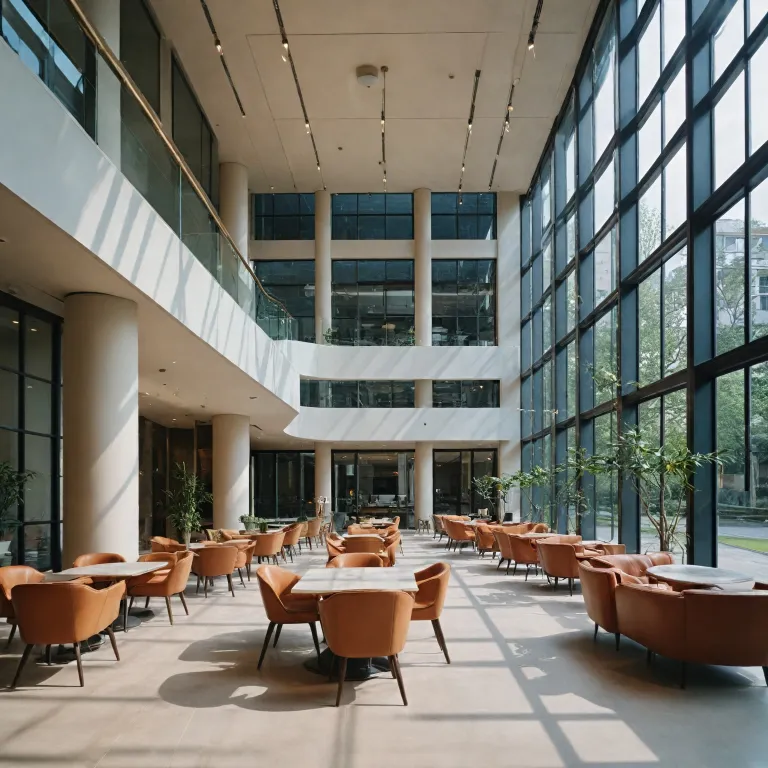
Adaptive reuse at Triton Court London: blending history with modernity
Triton Court London stands as a testament to the power of adaptive reuse in the hospitality and office sectors. Originally comprising three distinct buildings on Finsbury Square, the site’s transformation into the Alphabeta Building demonstrates how historical architecture can be preserved while meeting the demands of contemporary businesses. The project’s location at 14–18 Finsbury Square, on the north side of the city, places it at the intersection of London’s rich history and its innovative future.
Studio RHE, the architectural firm behind the redesign, integrated original features such as the gate house and city gate with modern amenities. The building’s proximity to Worship Street, City Road, and key transport hubs like Old Street station and Liverpool Street station enhances its accessibility. The redevelopment not only respected the site’s October history but also introduced sustainable materials and advanced building management systems, setting a new standard for office space in city London.
Asset managers and investors have recognized the value of Triton Court’s strategic position near Finsbury Square and Mary Moorfields. The building’s adaptive reuse approach has inspired similar projects across London, especially in areas like Lincoln Inn and the east side of the city. The integration of communal spaces and cyclist-friendly features, such as London’s first cycle-in office, has redefined what things London can offer to creative and tech industries.
Design innovation and FF&E strategies in the Alphabeta Building
The Alphabeta Building’s design innovation is rooted in a meticulous approach to FF&E (furniture, fixtures, and equipment) selection and placement. Studio RHE’s vision was to create flexible office space that could adapt to the evolving needs of tenants from various sectors. The use of sustainable FF&E materials and modular furniture systems supports both environmental goals and operational efficiency.
Resolution Property, the developer, prioritized the integration of modern design elements with the building’s historic character. This balance is evident in the careful restoration of the gate house and the addition of contemporary communal areas. The building’s layout encourages collaboration, with open-plan office spaces and breakout zones overlooking Finsbury Square and the vibrant city London landscape.
For asset managers and bureaux d’études, the Alphabeta Building offers a model for maximizing value through thoughtful FF&E investment. The inclusion of retail and restaurant space on the ground floor, facing Worship Street and the east side, enhances the building’s appeal to both tenants and visitors. For more insights into FF&E best practices, explore this comprehensive guide to hospitality FF&E strategies: hospitality FF&E strategies.
Technical renovation challenges and sustainable solutions
Renovating Triton Court London into the Alphabeta Building presented significant technical challenges, particularly in integrating modern systems within a historical structure. Galliford Try, the construction contractor, employed advanced construction techniques to reinforce the existing framework while maintaining the integrity of original architectural elements. The use of sustainable materials, such as low-VOC finishes and energy-efficient lighting, was a priority throughout the project.
One of the most notable innovations was the introduction of a dedicated cycle-in ramp, making the Alphabeta Building the first of its kind in London. This feature supports the city’s push for greener commuting options and aligns with the growing demand for cyclist-friendly office spaces. The building’s management systems, including smart HVAC and lighting controls, contribute to reduced energy consumption and improved occupant comfort.
Technical directors and asset managers can draw valuable lessons from the project’s approach to balancing preservation with modernization. The building’s location near street station and city road required careful coordination with local authorities to minimize disruption during construction. For a deeper exploration of sustainable renovation in hospitality, visit this resource on sustainable hospitality renovations: sustainable hospitality renovations.
Urban integration and the role of Finsbury Square in Triton Court’s success
The urban context of Triton Court London, particularly its relationship with Finsbury Square and the surrounding city London area, played a crucial role in the project’s success. The building’s design enhances connectivity between the creative hub of Shoreditch and the financial district, fostering a dynamic environment for tenants and visitors alike. The proximity to key landmarks such as Mary Moorfields, Lincoln Inn, and the bustling square ensures a steady flow of foot traffic and business opportunities.
The Alphabeta Building’s mixed-use spaces, including retail, leisure, and office areas, reflect the evolving needs of modern urban environments. The inclusion of amenities like basketball and squash courts, a yoga studio, and roof terraces positions the building as a destination for both work and recreation. This approach aligns with the trend towards creating vibrant, multifunctional spaces in city London and beyond.
Asset managers and investors have noted the positive impact of the building’s integration with the local urban fabric. The project’s success has encouraged similar developments on the east side and north side of Finsbury Square, contributing to the area’s ongoing revitalization.
FF&E procurement, supplier collaboration, and project management
Effective FF&E procurement and supplier collaboration were essential to the timely and successful completion of the Alphabeta Building. Resolution Property worked closely with a network of trusted suppliers to source high-quality, sustainable materials that met both aesthetic and functional requirements. The project’s scale, with over 220,000 square feet of office space and 22,000 square feet of retail and restaurant areas, demanded rigorous project management and coordination.
Asset managers and bureaux d’études played a key role in overseeing the selection and installation of FF&E components. The building’s flexible layouts required adaptable furniture solutions that could accommodate changing tenant needs throughout the year, from January to December. Supplier relationships were strengthened through transparent communication and a shared commitment to sustainability, ensuring that all parties were aligned with the project’s objectives.
The experience gained from Triton Court London has informed best practices for FF&E procurement in similar large-scale renovations. The project’s success demonstrates the importance of early supplier engagement and integrated project management in achieving high-quality outcomes. For more on supplier collaboration in hospitality projects, refer to this detailed analysis: supplier collaboration in hospitality.
Seasonal dynamics, occupancy trends, and the future of Triton Court London
The occupancy trends at Triton Court London reflect the building’s ability to adapt to seasonal dynamics and the evolving needs of tenants. Throughout the year, from January to December, the building experiences fluctuations in demand, influenced by factors such as industry cycles, local events, and broader economic conditions. The flexible office space and communal amenities allow tenants to scale their operations in response to these changes.
The building’s location near Finsbury Square, Worship Street, and street station ensures a steady influx of visitors and potential tenants, particularly during peak months like April, July, August, September, October, and November. The integration of retail and leisure spaces supports year-round activity, making the Alphabeta Building a vibrant hub in the city London landscape. The project’s success has set a benchmark for future developments in the area, inspiring asset managers and investors to pursue similar adaptive reuse strategies.
Looking ahead, the continued evolution of Triton Court London will depend on its ability to anticipate and respond to changing market demands. The building’s history, innovative design, and commitment to sustainability position it as a model for future hospitality and office projects in London and beyond. The Alphabeta Building is accessible via Moorgate, Liverpool Street, and Old Street stations. Visitors can enjoy nearby attractions such as Finsbury Square and the Shoreditch area. "The Alphabeta Building is a modern office complex in London, formerly known as Triton Court, redeveloped to cater to creative and tech industries."
Key statistics: Triton Court London and the Alphabeta Building
- Total refurbishment cost: 36 million GBP
- Total office space after redevelopment: 220,000 square feet
- Additional retail and restaurant space: 22,000 square feet
Frequently asked questions about Triton Court London and the Alphabeta Building
What is the Alphabeta Building?
The Alphabeta Building is a modern office complex in London, formerly known as Triton Court, redeveloped to cater to creative and tech industries.
Where is the Alphabeta Building located?
It is located at 14–18 Finsbury Square, London, EC2A 1AH.
What unique features does the Alphabeta Building offer?
It includes London's first cycle-in office with a dedicated ramp for cyclists, along with communal spaces like basketball and squash facilities, a yoga studio, and roof terraces.