From Traverse City to Salt Lake City : redefining the hybrid hotel model
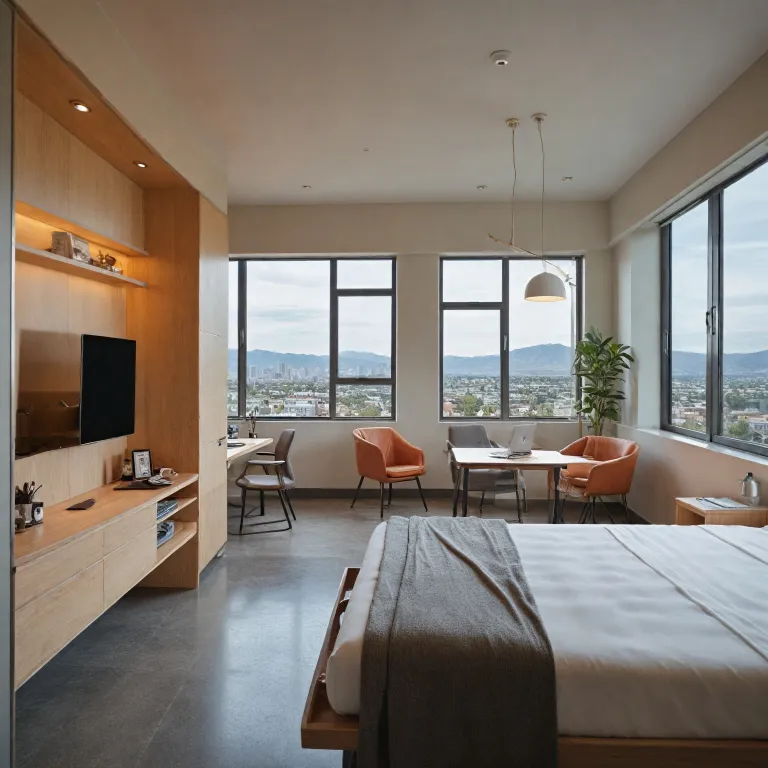
When professionals speak about rnr hospitality hotels slc, they are really addressing a new hybrid between serviced apartment, hotel, and club style community. This model, born from RnR Hospitality’s experience in Traverse City, translates operational intelligence from lakeside short term rentals to an urban mountain city where design, FF&E, and technical systems must support flexible use. For architects and designers, the shift means planning units that behave like a resort suite by day and an efficient extended stay hotel room by night.
RnR Hospitality, based in Traverse City’s Cass Road area, has built its reputation on comprehensive property management and technical consulting for short term rentals, and this expertise now informs rnr hospitality hotels slc specifications. Their teams rely on automated pricing systems, booking platform integration, and smart home technology, which directly impacts low voltage layouts, server rooms, and back of house planning in every hotel or resort style project. For asset managers and investors, this technology driven backbone is as critical as the façade or lobby design, because it underpins occupancy, ADR, and long term asset value.
The brand’s roots in a lakeshore city known for wineries and a strong vacation culture also shape its approach to guest experience in Salt Lake City. Instead of copying a beach resort aesthetic, rnr hospitality hotels slc uses the contrast between sun filled mountain days and crisp valley nights to define lighting, shading, and thermal comfort strategies. This duality allows designers to create spaces that feel intimate at night yet remain bright and efficient for day time remote work, aligning with both leisure and marathon business stays.
Designing flexible units : from short term rental logic to hotel efficiency
The most distinctive contribution of rnr hospitality hotels slc to the hospitality design conversation is the translation of short term rental ergonomics into repeatable hotel typologies. RnR Hospitality has hosted more than 1000 five star stays, and this operational feedback loop informs every square metre of the guestroom, from wardrobe depth to kitchenette positioning. For technical directors and bureaux d’études, this means that MEP, acoustic, and fire strategies must anticipate higher variability in use than in a conventional city hotel.
In practice, a typical rnr hospitality hotels slc unit must support a quick weekend club trip, a family vacation, or a month long relocation linked to a nearby medical hub such as the Mayo Clinic. This requires FF&E packages that can withstand resort level wear while maintaining the refined detailing expected in a western urban center. Designers increasingly specify modular sofas, stackable chairs, and headboards with integrated lighting and USB power, allowing rapid reconfiguration between single, double, and family layouts without structural changes.
Case studies from adaptive reuse projects, such as those documented in this hotel renovation before and after analysis, show how hybrid units can be inserted into existing grids while preserving heritage fabric. RnR Hospitality’s technical consulting helps teams calibrate smart locks, sensors, and HVAC zoning so that each unit behaves like a self contained apartment within a larger hotel ecosystem. For investors, this flexibility supports higher occupancy across seasons, whether demand is driven by a convention center event, a regional marathon, or leisure traffic heading toward a nearby national park or beach destination.
Public spaces that balance community, privacy, and operational control
Public areas in rnr hospitality hotels slc projects are conceived less as traditional lobbies and more as multi layer social landscapes. The aim is to combine the informality of a club, the clarity of a business center, and the relaxed atmosphere of a resort lounge, all within a compact urban footprint. Architects must choreograph flows so that guests arriving late at night, remote workers, and families on vacation can coexist without acoustic or visual conflict.
In many schemes, the ground floor is divided into three primary zones : a reception and micro retail area, a flexible lounge that can host small events, and a co working zone with semi enclosed booths. This configuration allows the hotel to serve both the local community and transient guests, turning the property into a small urban hub rather than a closed box. When a nearby convention center or city marathon increases demand, furniture layouts can be adjusted to create informal meeting points, while lighting scenes shift from day time work mode to evening social ambience.
RnR Hospitality’s experience with smart home technology in Traverse City short term rentals translates into granular control of lighting, access, and environmental systems in these shared spaces. Zoning allows operators to close off certain areas at night while keeping circulation to lifts and guestrooms secure and intuitive. For FF&E suppliers, this means specifying durable yet elegant pieces that can handle resort level traffic, from ski boots in winter sun to wet gear returning from a lake or beach style excursion in warmer months.
Technical infrastructure : smart systems, maintenance, and asset resilience
Behind the refined interiors of rnr hospitality hotels slc lies a dense technical infrastructure shaped by years of short term rental management. Automated pricing systems and booking platform integration require robust data networks, secure server rooms, and resilient Wi Fi coverage across every area of the hotel. For directions techniques and bureaux d’études, early coordination between IT, low voltage, and architectural teams is essential to avoid costly retrofits.
Smart home technology, originally deployed by RnR Hospitality in individual Traverse City units, scales up in Salt Lake City to control access, climate, and energy consumption. Each guestroom behaves like a micro apartment, with sensors managing occupancy based HVAC, while central dashboards allow operators to monitor performance across the entire resort style property. This approach not only improves guest comfort during both day and night, but also supports sustainability targets and long term operating cost reductions.
Maintenance strategies are equally influenced by the brand’s short term rental heritage, where non local owners depend on reliable, remote friendly systems. Standardized FF&E, modular bathroom pods, and accessible service zones reduce downtime when components need replacement, which is critical during peak periods linked to events at the convention center or regional attractions. As RnR Hospitality notes in its own positioning, “RnR Hospitality provides property management, technical consulting, and mentorship for short-term rental hosts.”, and this triad of services underpins the resilience of rnr hospitality hotels slc assets for investors and asset managers.
Contextual storytelling : landscape, western identity, and guest expectations
Although RnR Hospitality is rooted in a lakeshore city famous for its National Cherry Festival, the narrative of rnr hospitality hotels slc is anchored in the western landscape. Architects and designers draw on the contrast between the valley floor, nearby mountain peaks, and the intense high altitude sun to craft a material palette that feels both local and timeless. Timber, stone, and metal are combined with soft textiles to evoke a contemporary lodge rather than a generic urban hotel.
Guest expectations in Salt Lake City are multifaceted, blending business, outdoor recreation, and cultural tourism, which pushes design teams to think beyond a single use profile. A visitor may attend meetings near a convention center during the day, then head to a park, trail, or even a distant beach or lake for weekend relaxation. Rnr hospitality hotels slc must therefore support gear storage, quick transitions between work and leisure, and intuitive wayfinding that remains legible even late at night after a long flight.
For FF&E suppliers and asset managers, this context translates into specific performance requirements for finishes and furnishings. Fabrics must resist UV exposure from strong western sun, while flooring must handle both city dust and resort style traffic from guests returning after a grand day outdoors. Insights from coastal renovation projects, such as those detailed in this in depth beach hotel renovation study, can be adapted to mountain environments, ensuring that rnr hospitality hotels slc properties age gracefully while retaining their narrative coherence.
Strategic positioning : linking Traverse City expertise with national healthcare and leisure hubs
For investors evaluating rnr hospitality hotels slc, the strategic positioning of the brand is as important as its design language. RnR Hospitality’s base in Traverse City, Michigan, has trained the company to operate in secondary markets with strong seasonal patterns, which is directly relevant to Salt Lake City’s mix of winter sports and summer tourism. This experience helps calibrate unit mix, public space sizing, and FF&E investment to match real demand rather than aspirational projections.
Moreover, the hybrid model allows rnr hospitality hotels slc to capture diverse demand drivers, from leisure guests heading toward national parks to medical travelers connected to institutions such as the Mayo Clinic. While the brand is not a resort in the traditional beach sense, it borrows resort thinking in terms of amenity planning, extended stay comfort, and family friendly layouts. References to destinations like San Diego or other western coastal cities often appear in guest expectations, pushing designers to balance urban sophistication with relaxed, vacation ready atmospheres.
For asset managers, this multi vector demand reduces risk and supports more stable cash flows across the year. The same property can host a corporate group linked to a convention center event, welcome families on a grand road trip across the country, and accommodate long stay guests seeking a calm base in the valley. By aligning technical consulting, property management, and mentorship, RnR Hospitality ensures that rnr hospitality hotels slc assets remain operationally agile, aesthetically coherent, and financially resilient over time.
Key quantitative insights for rnr hospitality hotels slc
- More than 1000 five star stays hosted by RnR Hospitality inform the design and operational standards applied to rnr hospitality hotels slc.
- The company’s ongoing expansion from Traverse City into other markets demonstrates sustained demand for technology enabled short term rental and hybrid hotel models.
- Automated pricing systems and booking platform integration are deployed across the portfolio to optimize occupancy and revenue per available unit.
- Smart home technology is systematically integrated into guestrooms to enhance guest comfort and reduce energy consumption.
Key questions architects and investors ask about rnr hospitality hotels slc
What services does RnR Hospitality offer that are relevant to hotel design ?
RnR Hospitality combines property management, technical consulting, and mentorship, which means that feedback from daily operations directly informs architectural layouts, FF&E specifications, and smart system integration in rnr hospitality hotels slc projects. This closed loop between design and operations reduces the risk of overdesigning amenities that do not perform in real markets. For architects and asset managers, it provides a data backed framework for decision making.
Where is RnR Hospitality based, and why does it matter for Salt Lake City projects ?
The company is headquartered in Traverse City, Michigan, a market characterized by strong seasonality, lakeside tourism, and a mix of leisure and event driven demand. This context has trained RnR Hospitality to manage fluctuating occupancy, which is directly applicable to rnr hospitality hotels slc in a mountain city with pronounced winter and summer peaks. The operational lessons from Traverse City help calibrate unit mix, amenity sizing, and maintenance strategies.
How does smart home technology influence the architecture of rnr hospitality hotels slc ?
Smart locks, sensors, and connected HVAC systems require early coordination between architects, MEP engineers, and IT consultants. In rnr hospitality hotels slc, these technologies shape wall thicknesses, shaft locations, and service zones, ensuring that devices remain accessible while preserving clean interior lines. The result is a building that looks refined yet operates with the precision of a well tuned short term rental portfolio.
Why is the hybrid model between hotel and short term rental attractive to investors ?
The hybrid positioning of rnr hospitality hotels slc allows a single asset to serve multiple demand segments, from weekend leisure guests to extended stay professionals and medical travelers. This diversification smooths revenue volatility and supports stronger long term asset value. Investors also benefit from standardized FF&E and technical systems that simplify maintenance and brand scaling.
How can design teams engage with RnR Hospitality on upcoming projects ?
Designers, technical directors, and FF&E suppliers can engage with RnR Hospitality through its consulting and mentorship channels, using operational data from existing properties as a starting point for new briefs. Early workshops typically address unit typologies, public space programming, and smart system integration for rnr hospitality hotels slc. This collaborative approach aligns architectural ambition with operational reality from the first sketches.