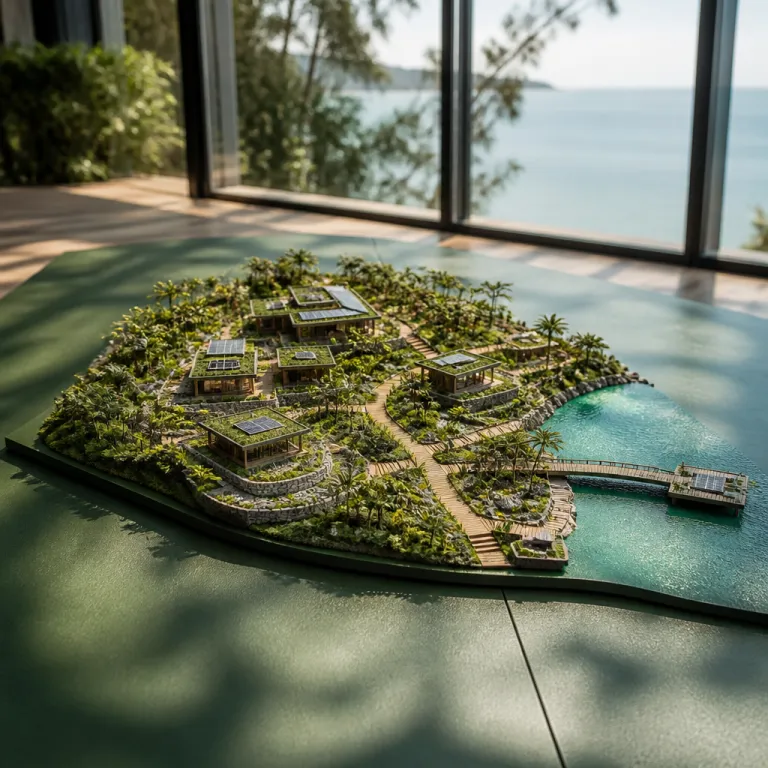
LEED Gold island resort hotel design on a remote Cycladic headland
Eréma on Cape Chalaka in Milos is positioned as the first LEED Gold island resort within the Design Hotels portfolio, and it treats the certification path as a design brief rather than a compliance exercise. The 41 suite hotel, developed by Empiria Group with architecture by Aristides Dallas Architects and Micromega Architecture & Strategies, had to align every building decision with a LEED certification strategy that could function on an island with limited construction infrastructure and fragmented supply chains. For hospitality professionals, this sustainable island resort illustrates how a remote property can still operate as a high performance green building without compromising guest experience, while also exposing the operational constraints that come with building to an international standard on a small Aegean island.
The project team worked with environmental consultants and the Hellenic Green Building Council to map which LEED credits were realistically achievable for a Cycladic resort hotel, then sequenced procurement and construction in order to qualify for those specific points. In practice, that meant prioritising sustainable materials with traceable origin, specifying energy efficient systems that could be maintained by local technicians, and designing the building massing to reduce cooling loads before adding technology. According to the design team, “every kilowatt and every litre had to be justified against both LEED criteria and guest comfort,” and this is where leadership in energy and environmental design becomes operational rather than theoretical, because the resort had to show that it achieved LEED performance targets under third party review while still delivering a luxury hospitality product that can command strong average daily rates; however, the same sources acknowledge that some higher cost credits were set aside because they offered limited measurable benefit for this particular island context.
The resort’s LEED Gold certification was confirmed in 2024 under the LEED v4 BD+C: Hospitality rating system, with the official scorecard documenting more than 30 percent energy cost savings and over 35 percent reduction in indoor water use compared with a conventional baseline hotel; these figures are based on modeled performance against ASHRAE and LEED reference cases rather than post occupancy metering, a distinction that matters for operators tracking real utility bills. For asset managers and investors, the LEED Gold island resort hotel design at Eréma is therefore a live case study in how sustainability goals intersect with P&L realities on a small island, where imported equipment, specialist commissioning and certification fees can add noticeable capital cost even as they reduce long term operating exposure to volatile energy and water prices. The resort’s green hotel certification is expected to support rate premiums with eco conscious travel segments, but it also hard wires lower energy and water consumption into the building from day one; whether those modeled savings fully materialise will depend on occupancy patterns, maintenance discipline and guest behaviour, which are rarely captured in marketing narratives. As one of the project FAQs states without ambiguity: “What is LEED Gold certification? A prestigious sustainability certification for buildings,” yet the more interesting question for owners is how far that label translates into resilient cash flow and reputational value over a full asset life cycle.
Volcanic geology, local materials and the water question
The architectural language of Eréma is anchored in the volcanic geology of Milos, with local stone and marble used extensively across suites, public areas and landscape walls. This material strategy supports green building certification by reducing transport emissions and aligning with criteria on regional materials, while the earth tone finishes help the hotel building recede visually into the Cycladic headland. For design teams, the project demonstrates how a LEED Gold island resort hotel design can use local geology as both an aesthetic driver and a sustainability tool, turning the rocky terrain into a passive cooling ally; at the same time, reliance on local quarries and craftspeople introduces schedule and capacity risks that need to be priced into early feasibility studies rather than glossed over as purely narrative benefits.
Native planting and drought tolerant landscaping are central to the resort’s environmental design, because water stress is a structural issue for hotels resorts on small Aegean islands. Rainwater harvesting, efficient irrigation and low flow fixtures are deployed to reduce potable water use by an estimated 35 to 40 percent compared with a conventional resort, yet every one of the 41 suites still offers a private pool. That tension between private pool luxury and water conservation is not resolved by a single technology; it is managed through a portfolio of measures that includes pool sizing, filtration efficiency, guest communication and operational controls, all of which are now standard talking points in sustainable renovation strategies for hospitality properties, but which also raise uncomfortable questions about whether certain amenities can ever be fully reconciled with long term island water security.
For general managers and technical directors, the operational brief is clear: the resort must maintain high indoor air quality, stable indoor air temperatures and reliable hot water while keeping energy environmental metrics within LEED thresholds. Solar power is part of the energy mix, but the real leadership in energy performance comes from passive shading, natural ventilation strategies and high performance glazing that reduce cooling demand before any kilowatt is generated. The project team reports that these passive measures, combined with efficient HVAC, contribute to a modeled 28 percent reduction in annual energy consumption versus code minimum, again based on design stage simulations rather than measured post occupancy data. For teams planning eco friendly transformation of existing assets, the project echoes many of the tactics outlined in this analysis of sustainable hotel renovation strategies on Design for Travel, which treats sustainability as a long term asset management play rather than a marketing add on, yet Eréma also underlines that achieving similar performance on retrofit projects may be harder where building orientation, envelope and legacy systems are already locked in.
Certification as brand asset and template for remote resorts
Eréma’s LEED Gold island resort hotel design positions Empiria Group and Design Hotels as early movers in a market where sustainability certification is rapidly becoming a brand qualifier rather than a differentiator. The resort is promoted as the first LEED Gold certified island property in its segment, and that status is validated through a third party rating system under the global LEED building council framework. For owners with portfolios in the United States, the United Kingdom or other mature hospitality markets, the project reads as a signal that guests will increasingly expect certified sustainability performance even in remote leisure destinations far from London or other major travel hubs, though it remains to be seen whether all travellers will be willing to pay consistent premiums for that assurance once certification becomes commonplace.
From a capital planning perspective, the fact that Eréma achieved LEED Gold rather than LEED Platinum reflects a deliberate balance between upfront cost, operational savings and guest facing value. Leadership in Energy and Environmental Design is structured so that each additional certification level requires incremental investment, and the project team focused on credits with the strongest long term ROI in energy, water and maintenance. For CFOs and asset managers, this mirrors the embodied carbon arguments now entering the hotel balance sheet, where 50 to 75 percent of lifecycle emissions and waste can be influenced at design stage, as explored in depth in Design for Travel’s analysis of embodied carbon on the hotel balance sheet, yet the Eréma case also illustrates that even well intentioned projects may stop short of the highest rating when marginal gains become financially or operationally hard to justify.
The Anthologist retail concept at Eréma, which curates Greek ceramics, vintage pieces and locally made objects, plays a pivotal role in extending the sustainability narrative beyond the building envelope into the guest journey. It turns responsible sourcing into a tangible part of the hospitality brand, allowing guests to learn about local makers and materials while reinforcing the resort’s sustainability goals. For developers planning new hotels or mixed use projects, the project sits comfortably alongside flexible programming models discussed in Design for Travel’s piece on why the mixed use hotel is not a compromise, showing how a certified green building can still host layered retail, F&B and leisure experiences without diluting its environmental performance, although the commercial success of such concepts ultimately depends on curatorial quality and local economic linkages rather than certification alone. Image alt text for project photography typically highlights the Cycladic headland setting, the LEED certified resort architecture and the integration of local stone, helping search engines and readers connect the visual story with the sustainable design narrative while also providing a basic audit trail for claims about context, materials and building form.