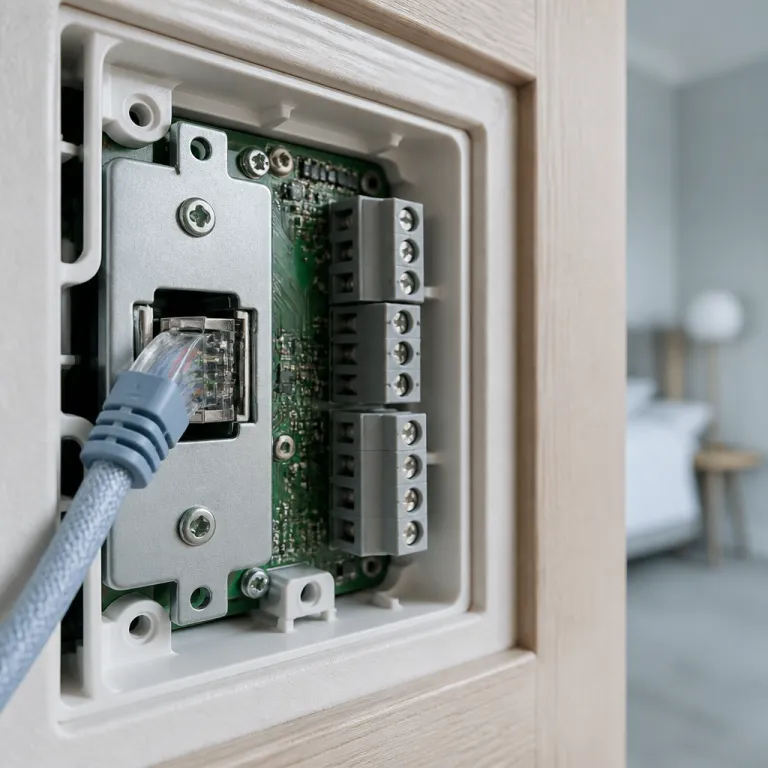
The shift to invisible smart hotel room technology
Smart hotel room technology in this decade is no longer about gadgets on the bedside table. The hospitality industry has moved from visible tech trophies to integrated systems that quietly shape the guest experience and hotel operations long before a guest touches a switch. For architects and designers, that shift means that every smart hotel project now lives or dies on coordination between architecture, FF&E, management systems and hospitality technology infrastructure.
Across hotels worldwide, technology is being specified to disappear into the room envelope while still delivering measurable revenue impact and higher guest satisfaction. Industry benchmarks from sources such as the Hotel Technology Index and Skift Research indicate that a large majority of hotels adopting smart technology report gains in operational efficiency, and projected artificial intelligence adoption growth in hospitality is accelerating annually according to InnLead.ai and comparable analytics providers. For asset managers and investors, that means smart rooms are no longer a marketing line but a core revenue management lever that must be evaluated alongside property management and building systems from the first feasibility study.
For the hotel IT department, which oversees smart room technology implementation, invisible tech-forward solutions change the way staff and vendors collaborate with the design équipe. The traditional separation between front desk operations, back-of-house systems and guest-facing digital layers is collapsing into a single data fabric that connects room controls, hotel technology platforms and management systems. In practice, that requires architects, consultants and technology vendors to treat the room as a networked node in a wider hospitality technology ecosystem, not an isolated interior design object.
The four core systems that define a smart room
Every credible specification for smart rooms now revolves around four core systems: HVAC automation, lighting scenes, motorised shading and entertainment. These systems share low-voltage infrastructure, structured cabling, control processors and integration with hotel tech platforms, which means that early coordination between MEP engineers, interior designers and IT management is non-negotiable. When these systems are aligned, the guest experience feels effortless and the room simply behaves intelligently without visible tech clutter.
HVAC automation in a smart hotel room uses occupancy sensors, door contacts and artificial intelligence–driven algorithms to adjust temperature in real time based on guest presence and building load. Typical deployments integrate with protocols such as BACnet or Modbus for building management, with room controllers communicating over IP or RS-485 to central management systems. Lighting scenes are layered across general, task and accent lighting, with pre-programmed settings for arrival, work, relax and night, all tied back to central management systems and the property management platform. Motorised shading links to façade orientation and solar gain data, allowing hotels to reduce peak loads while maintaining comfort and protecting FF&E from UV damage.
Entertainment is where invisible hotel technology has advanced fastest, with display tech designed to read as art or architecture rather than hardware. Hospitality-grade framed displays and in-room casting platforms, often certified by middleware providers such as Nonius TV+, exemplify display technology designed to disappear into the wall while still supporting casting, room service ordering and hotel app content. For design teams working on renovation strategies, this kind of integrated entertainment system frees the wall composition from the tyranny of the black rectangle and supports more coherent brand and guest experience design, as explored in this analysis of how hotel industry news reshapes architecture and renovation strategies.
AI sensors, preemptive comfort and the end of visible controls
Artificial intelligence in smart hotel room technology now sits mostly in the ceiling void and behind the headboard, not on the bedside table. AI-driven sensors monitor air quality, temperature, humidity and occupancy patterns to adjust the room before the guest notices discomfort, turning what used to be reactive service into proactive hospitality. For guests, the result is a room that feels consistently comfortable without constant interaction with thermostats, switches or a hotel app.
These sensors feed data into central management systems and property management platforms, where algorithms learn typical usage profiles for different guest segments and stay durations. When a returning guest checks in, the smart hotel can pre-condition the room to their preferred temperature, lighting scene and even entertainment profile, using real-time data from previous stays to personalise the experience. This is where hotel operations, revenue management and guest experience design intersect; a room that quietly adapts to the guest reduces complaints, increases guest satisfaction scores and supports higher average daily rate justification.
From a design and renovation perspective, this AI layer changes the way architects and bureaux d’études think about control points, wall clutter and FF&E integration. Physical switches can be reduced, consolidated or hidden, with digital control surfaces embedded into joinery or integrated into the television interface certified by platforms such as Nonius TV+. For owners evaluating long-term ROI, conferences like the Lodging Conference on the next era of hotel architecture and renovation increasingly frame AI-enabled smart rooms as a baseline expectation rather than a premium upsell, while also highlighting the need for clear data governance, encryption of in-room device traffic and transparent policies on microphones, cameras and sensor data retention.
Why voice stalled and what replaced it in smart rooms
Voice control arrived in the hospitality industry with great fanfare, but adoption in hotel rooms stalled once operators confronted privacy, reliability and training issues. Guests were often unsure which commands worked, staff struggled with multiple vendor ecosystems and management teams faced complex data governance questions around always-listening microphones. The result is that many hotels quietly removed or sidelined voice assistants in favour of more discreet, predictable interaction models.
Today, the most effective smart hotel room technology relies on a mix of context-aware automation, minimal tactile controls and optional digital interfaces rather than voice-first strategies. Guests can still use voice in some smart rooms, but it is now a secondary layer on top of robust default behaviours driven by sensors and management systems that do not require explicit commands. This shift has been reinforced by hotel IT departments and technology vendors who prefer deterministic systems that integrate cleanly with property management and revenue management platforms.
In parallel, mobile app–based control has matured, with progressive web apps and QR-based interfaces reducing friction and avoiding app store downloads. These digital layers allow guests to adjust lighting, temperature and room service preferences from their own devices, while the hotel retains control over branding, data capture and integration with hotel tech ecosystems. As one industry FAQ puts it without embellishment: “What is a smart hotel room? A room with integrated IoT devices for automation.” and “How do smart rooms enhance guest experience? By offering personalized control over room settings.” and “Are smart hotel rooms energy efficient? Yes, they optimize energy use based on occupancy.”
Network, PMS integration and the specifications architects rarely see
Most design briefs still under-specify the network infrastructure required to make smart hotel room technology work at scale. Bandwidth per room, Wi-Fi density, edge computing capacity and VLAN segmentation for building systems are often treated as IT line items rather than architectural constraints, yet they directly affect ceiling layouts, riser sizes and equipment room footprints. As a working guideline, many tech-forward hotels now plan for 50–100 Mbps of dedicated internet bandwidth per occupied room, Wi-Fi 6 or 6E coverage with at least one access point per two to three rooms, and separate VLANs for guest traffic, building systems and staff devices. For tech-forward hotels, the network is now as critical as water and power; without it, management systems, hotel technology platforms and guest-facing services simply fail.
Property management system integration is another invisible layer that architects and FF&E specifiers must understand to protect design intent. Smart rooms rely on real-time data from the PMS to trigger arrival scenes, energy-saving modes and housekeeping workflows, which means that APIs, data schemas and vendor roadmaps become part of the design risk profile. When PMS integration is weak, staff revert to manual workarounds at the front desk and in housekeeping, eroding both guest experience and the revenue assumptions that justified the investment in hospitality technology.
Specification documents are the bridge between the architect's spatial concept and the systems integrator's installation reality. A robust specification will define not only finishes and FF&E, but also device locations, control zones, cable pathways, management systems responsibilities and testing protocols for hotel operations. For independent properties and conference hotels, aligning these specifications with a coherent brand and guest experience strategy, such as the one outlined for an independent conference hotel at Sormarka in this strategic brand and guest experience design case study, is essential to avoid fragmented tech that undermines the spatial narrative.
Operating expenses, vendor lock in and renovation strategy
The hidden cost of smart hotel room technology rarely appears on the architect's drawings, but it dominates the asset manager's spreadsheets. Ongoing software licensing, firmware updates, cloud hosting and support contracts turn what looked like a capital expenditure into a substantial operating expense that must be modelled over the life of the system. When hotels underestimate these costs, management teams are forced to defer updates, which quickly erodes security, guest experience quality and integration with newer hospitality technology platforms.
Vendor lock-in is another structural risk that should be addressed at the specification stage, not during hotel operations. Closed ecosystems can limit integration with future management systems, constrain data access and make it difficult for staff to adapt workflows as technology trends evolve across the industry. For investors and directions techniques, insisting on open standards, documented APIs and clear data ownership clauses is now as important as specifying durable finishes or energy-efficient HVAC equipment.
Renovation cycles complicate this picture further, especially in markets such as Las Vegas where competitive pressure drives frequent refreshes of both design and tech. Smart rooms that were cutting edge a few years ago can feel dated if the digital layer is not maintained, even if the physical room remains in good condition. For decision makers, the practical question is no longer whether to invest in smart hotel technology, but how to structure contracts, specifications and management responsibilities so that guests continue to experience seamless service while the back-end tech stack evolves quietly in real time behind the walls.
Key figures shaping smart hotel room strategies
- Hotels adopting smart technology have reached 78% of the market according to InnLead.ai and corroborating hospitality technology surveys, signalling that smart rooms are now a mainstream expectation rather than a niche experiment.
- Projected artificial intelligence adoption growth in hospitality is reported at 60% annually by InnLead.ai and similar market trackers, which means AI-driven sensors and management systems will rapidly become standard in new build and major renovation projects.
- Typical smart room deployments follow a four-stage timeline: initial planning, system installation, staff training and guest usage, with each phase requiring coordinated input from architects, hotel IT departments and technology vendors.
- Energy management systems in smart hotels consistently reduce consumption by optimising HVAC and lighting based on occupancy, supporting both sustainability targets and improved GOP margins.
FAQ about smart hotel room technology and invisible systems
What defines a genuinely smart hotel room today ?
A genuinely smart hotel room integrates HVAC, lighting, shading and entertainment into unified systems that respond to occupancy and guest preferences without visible complexity. These systems connect to the property management platform and other management systems so that arrival, stay and departure states are automated. The guest experiences comfort and control, while most of the technology remains hidden in ceilings, risers and back-end hotel tech infrastructure.
How do smart rooms impact hotel operations and staff workflows ?
Smart rooms streamline hotel operations by automating many routine tasks that staff previously handled manually. Housekeeping can see real-time occupancy and cleaning status, engineering can monitor equipment performance through hospitality technology dashboards and the front desk can focus on service rather than key encoding or manual room status updates. This shift allows the équipe to reallocate time toward higher value guest interactions while maintaining tighter control over energy use and maintenance.
What role does the property management system play in smart room performance ?
The property management system acts as the central source of truth for guest profiles, stay dates and room assignments, which smart room systems use to trigger scenes and energy modes. When PMS integration is robust, the hotel can automate check-in states, late checkout logic and room service availability based on real-time data. Weak integration forces staff to rely on manual updates, undermining both guest experience and the efficiency gains promised by smart hotel technology.
Are smart hotel rooms mainly about guest facing apps and gadgets ?
Smart hotel rooms are less about visible gadgets and more about invisible infrastructure that supports consistent service. While mobile apps and digital interfaces can enhance guest experience, the real value lies in integrated systems that manage climate, lighting, shading and entertainment without constant input. For architects and investors, the priority is specifying resilient networks, interoperable management systems and clear operational responsibilities rather than chasing the latest device trend.
How should renovation projects approach legacy technology in existing rooms ?
Renovation projects should begin with an audit of existing systems, licences and vendor contracts to understand current capabilities and constraints. Design teams, hotel IT departments and technology vendors need to align on which components can be retained, which require firmware or software upgrades and which must be replaced to meet contemporary technology trends and guest expectations. A phased approach that protects revenue, minimises room downtime and maintains a coherent guest experience across legacy and upgraded rooms is usually the most effective strategy, supported by a concise technical appendix or specification checklist that covers cable types, controller locations, VLAN structures, security baselines and typical OPEX line items for smart room platforms.