From amenity to signature: positioning hotels with fireplaces in the room as brand markers
In upscale hospitality, in-room fireplaces are no longer a seasonal extra but a strategic brand asset. When a guest books a hotel room with a private fireplace, they are buying a story about warmth, intimacy and slow time that must align with the overall positioning of the property. For architects and interior designers, the challenge is to translate that narrative into a coherent spatial sequence from arrival to the guest room, with a burning fireplace as the emotional climax.
Properties such as Chatham Inn Relais & Châteaux or Saratoga Arms show how a single firelit suite can become the image used across campaigns, OTAs and social media. Their signature rooms with fireplaces are not generic layouts with a firebox added at the end; they are carefully curated suites where the fireplace, king bed, textiles and lighting work together as one composition. This approach turns selected rooms with fireplaces into a limited inventory of luxury experiences that support higher ADR and longer stay patterns; in many boutique properties, revenue managers report premiums of 15–35% above comparable non-fireplace categories during peak romantic or winter periods.
For asset managers, the business case is clear when the design is rigorous and the brand promise is precise. A fireplace-focused hotel that frames its fire feature as a romantic, special-occasion setting can justify premium pricing, especially when paired with fine dining or an inn spa offer. The key is to ensure that every guest room with a fireplace, from entry-level category to top suite, expresses the same design DNA, even if the fire technology or FF&E specification changes between rooms. A simple positioning statement — for example, “Every firelit room feels like a private salon” — can guide decisions from photography to amenity selection.
Architectural planning: integrating fire, views and circulation in guest rooms and suites
Planning hotels with fireplaces in the room starts at masterplan level, not at the FF&E schedule. The architect must decide which façades, corners and volumes can host rooms with both a fireplace and meaningful views, whether that is a city skyline, a country inn garden or a resort spa courtyard. In compact urban plots, such as the Greenwich Hotel in New York, the Fireplace Corner Suite demonstrates how a stone fireplace can anchor a living room while still preserving generous glazing and circulation.
In resort contexts, especially mountain or lake destinations from Connecticut to the Smoky Mountains near Pigeon Forge, the placement of fireplaces must coordinate with balconies, hot tub terraces and sometimes a shared fire pit on the ground level. A guest moving from a room with a burning fireplace to an outdoor fire pit and then to a swimming pool should experience a logical thermal and spatial gradient. This sequence reinforces the perception of a luxury hotel or resort as a complete fire-and-water retreat, rather than a collection of disconnected amenities. A simple planning diagram — for instance, a suite plan showing the line of sight from bed to hearth to terrace — can help teams test these transitions early.
Historic properties add another layer of complexity for technical directors and engineering consultants. When retrofitting a country inn or early twentieth-century building, flue routes, structural loads and heritage façades limit where a hotel with fireplaces in guest rooms can be created. Case studies of adaptive reuse, such as the transformation of heritage cultural buildings into hotels analysed in this article on a culturally embedded Curio opening, show how early coordination between conservation architects, MEP engineers and fire consultants is essential to avoid late compromises on room layouts and suite typologies. In practice, many teams now produce a combined heritage and services overlay drawing that maps every potential chimney, riser and vent before room keys are defined.
FF&E and material strategy: specifying fireplaces as tactile, multi sensory anchors
Once the architectural envelope is set, FF&E decisions determine whether hotels with fireplaces in the room feel genuinely luxurious or merely themed. The surround, hearth, mantel and adjacent joinery define how guests touch, sit and store objects around the fire, turning the fireplace into a social micro place within the room. Designers must balance durable materials for operational resilience with textures that read as warm and residential in both daylight and firelight.
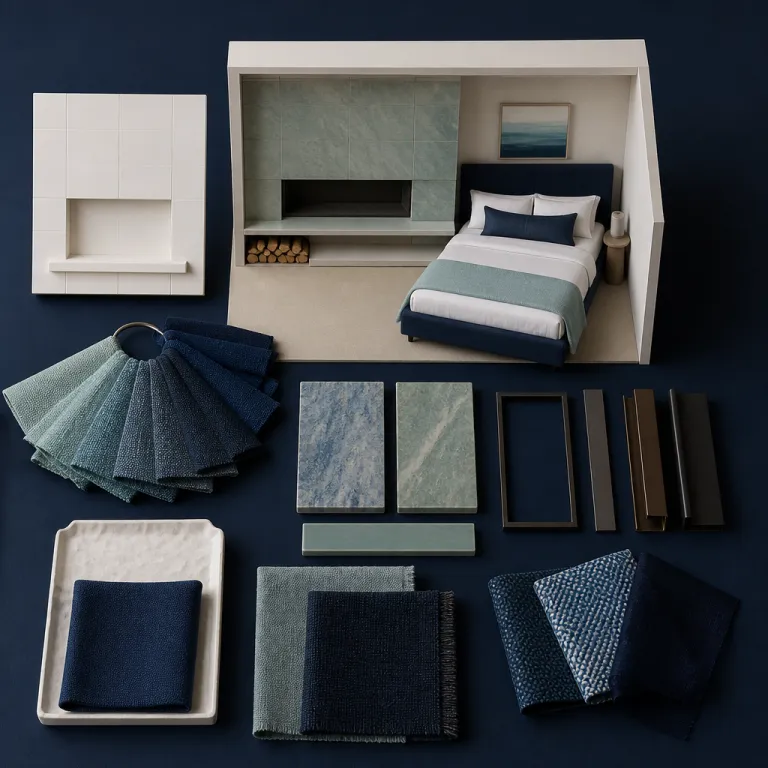
In a luxury suite, a stone or timber-clad burning fireplace can be paired with deep lounge seating, a king bed facing the flames and a small dining table to create a flexible living room that supports work, relaxation and in-room fine dining. In more compact rooms with gas fireplaces, such as the king rooms at Saratoga Arms or the Fireplace Room at the Hotel Carmel, the FF&E palette often shifts toward built-in benches, slimline desks and integrated media to keep circulation clear. For a fireplace hotel that wants to signal contemporary elegance, metal trims, large-format porcelain and concealed LED accents can frame the fire without visual clutter; sample mood boards that show these combinations under both daylight and evening lighting help owners understand the intended atmosphere.
Public areas must echo these cues so that the guest journey feels coherent from lobby bar to guest room with fireplace. When the bar or lounge is designed as a brand signal, as explored in this analysis of hotel bar design as brand anchor, the same stone, timber or metal language can reappear in the in-room fireplaces and in outdoor fire pit zones. Suppliers of fireplaces and FF&E should collaborate early with designers and technical directors to align clearances, maintenance access and safety signage so that the final result feels effortless for the guest yet remains practical for the operations team. A typical specification package now includes annotated elevations of the hearth, a cleaning and inspection schedule and a checklist of spare parts to be stored on site.
Technical systems, safety and operations: aligning romance with regulation
Behind every romantic image of hotels with fireplaces in the room lies a dense network of technical decisions. Technical directors and specialist consultants must arbitrate between wood-burning fireplaces, sealed gas units, electric inserts and bioethanol systems, each with different implications for ventilation, fire safety and maintenance. In many urban jurisdictions, true wood-burning fireplaces in guest rooms are no longer feasible, pushing designers toward high-efficiency gas or electric solutions that still deliver a convincing flame effect.
For properties in rural Connecticut or mountain regions where wood burning is permitted, the design of flues, fresh air intakes and ash handling becomes a core part of the building services strategy. A hotel with multiple rooms equipped with traditional fireplaces must plan vertical risers, roof terminations and access platforms from the earliest design stages. Asset managers should request life-cycle cost analyses comparing the operational expense of maintaining many individual fireplaces versus creating fewer, more dramatic suites and shared fire pit or lobby fire features; in internal benchmarks, operators often find that consolidating to 20–30% of keys with fireplaces can deliver 70–80% of the potential rate uplift while reducing maintenance hours per occupied room.
Operational protocols are as important as technical specifications. Hotels that position themselves as romantic getaways with fireplaces in the room need clear policies on when guests may operate the fire, how often housekeeping checks the units and how instructions are communicated in the room. A sample SOP might state: “Housekeeping verifies that the fireplace is off, cool to the touch and free of obstructions at every service; engineering performs a visual inspection of all gas units weekly and a full safety test monthly.” The FAQ-style guidance often shared with guests — such as “Availability varies; confirm with the hotel directly.” and “Not all rooms; specify fireplace preference when booking.” — should be translated into internal SOPs, training modules and PMS flags so that the promise of a firelit stay is always honoured without compromising safety. In many properties, a dedicated “Fireplace” attribute in the PMS is linked to rate codes and arrival reports so front desk teams can double-check allocations at check-in.
Guest journey, F&B and spa: orchestrating fire across the entire stay
Designing hotels with fireplaces in the room is not only about the guest room envelope; it is about choreographing an entire stay around the sensory presence of fire. From the first view of a lobby fireplace feature to the last glance at embers in a private suite, every touchpoint can reinforce the brand’s narrative of warmth, intimacy and care. This is where F&B, spa and activity programming become as critical as architecture and FF&E.
Fine dining concepts can be aligned with the fire story through open-hearth kitchens, tableside toasting rituals or seasonal menus that reference smoke and char in a subtle, refined way. When a guest books a room with a fireplace and a hot tub, they should be able to order a small-plate menu or a late-night drink that feels curated for that private living room moment, not just a generic room service tray. In resort spa environments, treatment rooms, relaxation lounges and even outdoor pools can integrate fire bowls or linear fireplaces to extend the emotional arc beyond the guest room. A simple guest-journey storyboard, from arrival drink by the lobby hearth to post-spa tea beside an outdoor fire pit, helps teams align these experiences.
Resorts near Pigeon Forge or other leisure destinations often combine a swimming pool, outdoor fire pit terraces and suites with fireplaces to create layered evening experiences for couples and families. A country inn with only a few rooms with fireplaces can still compete with larger hotels by designing intimate rituals such as s’mores by the fire pit, wine tastings beside the lobby hearth or spa packages that include timed access to a suite with a private burning fireplace. Cross-selling between room categories, F&B and spa becomes easier when the fire narrative is consistent and clearly communicated at every stage of the booking and on-site journey. Many operators now script pre-arrival emails that highlight fireplace suites, suggested dining times and spa slots, then brief front desk teams to offer targeted upgrades when firelit rooms remain unsold close to arrival.
Investment, ROI and renovation strategies for fire focused hospitality concepts
For investors and asset managers, the decision to position a property among hotels with fireplaces in the room must be grounded in data and a clear renovation roadmap. Industry research indicates that around two hundred hotels in the United States currently advertise in-room fireplaces, which means the segment is niche enough to differentiate yet broad enough to be recognised by guests. Properties like Ayres Hotel Redlands, with its Deluxe King Fireplace Room, show how a limited number of upgraded categories can lift overall rate structure without overcomplicating operations; internal case studies from similar properties often report 8–12 percentage-point occupancy advantages for fireplace suites on key weekends.
Renovation strategies should start with a segmentation of the existing inventory into standard rooms, potential rooms with fireplaces and high-value suites that can support more extensive works such as structural flues or enlarged bathrooms with hot tub features. A phased approach allows a hotel with constrained capital to create a few hero suites first, test demand for romantic packages and luxury experiences, then roll out additional rooms with fireplaces as ROI is proven. Articles on design decisions that define new openings, such as this analysis of three summer hotel projects, underline how early clarity on the guest promise accelerates both design and commercial performance. A simple investment matrix that plots capex per key against achievable ADR premium for each room type can help owners prioritise which units to convert.
Suppliers of fireplace technology, FF&E and spa equipment should position themselves as long-term partners rather than one-off vendors. By providing performance data, maintenance projections and flexible product families, they help designers and technical directors future-proof the fireplace hotel concept against regulatory shifts and evolving guest expectations. When renovation is handled as a holistic brand and experience project rather than a technical retrofit, the result is a portfolio of rooms, suites and public spaces where every fire feature feels both emotionally resonant and operationally sound. Over time, consistent guest feedback scores on warmth, comfort and atmosphere can be tracked alongside ADR and RevPAR to quantify the value of the fire-focused concept.
Key figures and benchmarks for hotels with fireplaces in the room
- Around 200 hotels in the United States currently promote in-room fireplaces as a core amenity, according to Travelmyth, indicating a defined yet still underexploited niche for differentiation in the upscale and luxury segments. Internal benchmarking across these properties suggests that fireplace suites often achieve higher review scores on atmosphere and romance than standard rooms.
- Properties that offer a small number of suites or rooms with fireplaces often use these categories as revenue drivers, with premiums that can reach significant percentages above standard rooms during peak romantic or winter seasons, especially when bundled with spa or fine dining packages. In practice, many operators target a 20–30% ADR uplift for firelit suites, supported by add-on experiences such as champagne on arrival or late check-out.
- Booking guidance from operators consistently highlights the need to “Book in advance, especially during peak seasons.” which confirms that demand for rooms with fireplaces is highly time-sensitive and can justify yield management strategies focused on key dates. Revenue teams frequently create special event calendars that flag Valentine’s Day, long weekends and local festivals as priority periods for fireplace-room inventory control.
- Operational FAQs from hotels emphasise that “Availability varies; confirm with the hotel directly.” and “Not all rooms; specify fireplace preference when booking.” which underlines the importance of clear inventory mapping and PMS integration for any fireplace hotel concept. A common best practice is to tag all firelit rooms with a dedicated attribute, link that attribute to specific rate plans and include a confirmation-line note such as “Fireplace confirmed” to avoid guest disappointment on arrival.
FAQ about designing and operating hotels with fireplaces in the room
Which hotels offer rooms with fireplaces and how are they designed ?
Hotels like Chatham Inn Relais & Châteaux, Saratoga Arms, the Greenwich Hotel, the Hotel Carmel and Ayres Hotel Redlands all offer rooms or suites with fireplaces, each integrating the fire feature into a broader design narrative. Their approaches range from traditional wood-burning fireplaces in intimate country inn settings to contemporary gas units in urban suites with strong views. For design teams, these examples illustrate how the fireplace can become either a rustic focal point or a minimalist architectural gesture, depending on the brand. Studying their room plans, photography angles and amenity lists can help new projects define their own fire-centred identity.
Are in room fireplaces available all year and in every room category ?
In most properties, in-room fireplaces are available year-round but only in selected categories, often labelled as fireplace rooms, suites or signature units. Operators stress that “Availability varies; confirm with the hotel directly.” because maintenance, local regulations or seasonal closures can affect access. Guests should always specify a fireplace preference when booking, and design teams should ensure that room naming and wayfinding make these distinctions clear. Many hotels also add a short note to confirmation emails explaining whether the fireplace is operational in summer months or restricted to cooler seasons.
What are the main technical constraints when adding fireplaces during renovation ?
The primary constraints are flue routing, combustion air supply, structural coordination and compliance with local fire and energy codes. In dense urban buildings, these factors often push designers toward sealed gas or electric fireplaces, while rural or mountain resorts may still support wood-burning solutions with appropriate engineering. Early collaboration between architects, MEP consultants and fire engineers is essential to avoid costly redesigns and to maintain the integrity of planned room layouts. A typical workflow includes a feasibility study, a schematic flue diagram and a code review before any guest room with a fireplace is shown in marketing materials.
How do fireplaces in rooms impact ROI and asset value ?
When positioned correctly, rooms with fireplaces can command higher ADR, drive package sales for romantic or seasonal stays and improve overall guest satisfaction scores. Asset managers often treat these categories as halo products that elevate the perceived value of the entire hotel, even for guests staying in non-fireplace rooms. The incremental investment in fire technology, FF&E and finishes is typically offset by rate premiums and improved occupancy during shoulder seasons. Tracking metrics such as ADR by room type, attachment rates for spa or dining packages and review sentiment around “cozy” or “romantic” helps quantify the contribution of firelit rooms to asset value.
What booking advice should hotels communicate to guests interested in fireplaces ?
Hotels should clearly state that not all rooms have fireplaces and encourage guests to book specific fireplace categories early, especially for weekends, holidays and peak winter periods. Pre-arrival communication should confirm whether the fireplace is wood-burning, gas or electric, outline any usage rules and highlight related amenities such as nearby fire pits, spa facilities or fine dining options. This level of transparency builds trust and ensures that the emotional promise of a firelit stay is met on arrival. Internally, a simple PMS flag such as “Fireplace requested” on the reservation, combined with a daily arrival report for front desk and housekeeping, helps teams deliver on that promise consistently.