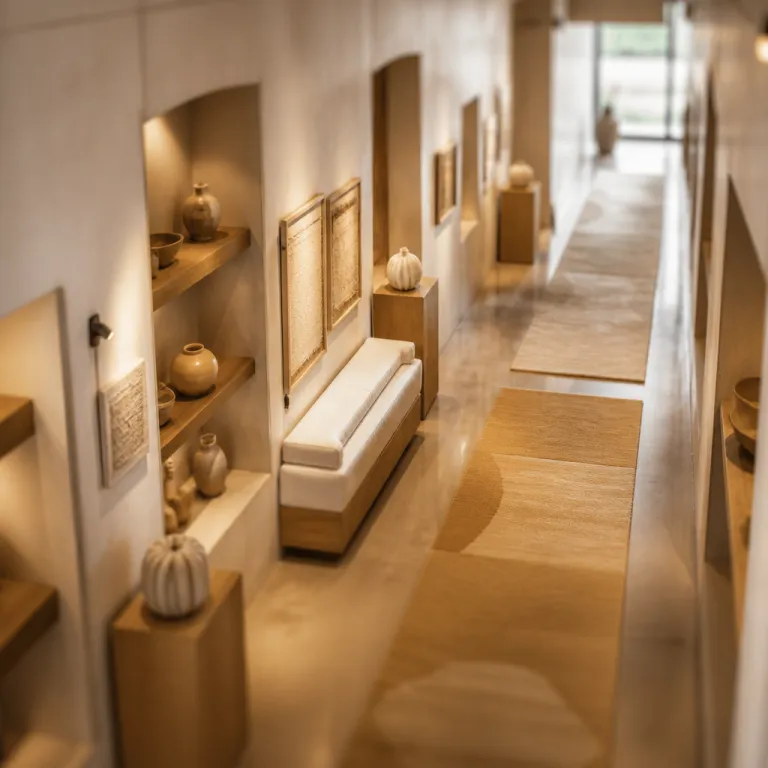
From framed decoration to spatial strategy: redefining the hotel art programme
Most hotel art programmes still behave like a late stage shopping list, where framed art and decorative pieces arrive after the last snagging walk through. When a hotel art programme embraces cultural curation as a design layer, the art collection starts to shape circulation, adjacencies and even back of house planning rather than simply filling empty walls. For hospitality leaders, that shift turns hotel art from sunk cost into a strategic asset that will influence guest experience, rate positioning and portfolio value.
The core difference between buying artwork and commissioning art as spatial intervention is authorship of the space itself. When architects and interior designers brief local artists early, contemporary works can become structural elements, such as a large scale ceramic screen that defines the lobby rather than a painting that politely hangs above a sofa. This is where a hotel art programme with serious cultural intent stops imitating a museum and instead uses contemporary art and art design to choreograph how guests move, pause, meet and work.
Look at Hotel Nelligan in Montréal, where the collaboration with lighting studio Lambert & Fils was integrated at the architectural level, not as a decorative afterthought. The artisan lighting works as both functional equipment and thoughtful art, aligning with the brick volumes and low ceilings to create a lobby that feels like a crafted urban living room rather than a generic hospitality atrium. That kind of hotel art strategy shows how a transforming hotel can use site specific pieces to anchor brand identity while still delivering the technical performance that directions techniques and asset managers require.
For VP level decision makers, the question is not whether to have an art collection, but how deeply the hotel art programme cultural curation is embedded in the design process. When cultural institutions commission site specific installations, they start with the building section and visitor journey, and hotels should adopt the same discipline. Treat the hotel as a living museum of local culture, where art collections and individual artwork pieces are commissioned to solve spatial problems, guide guests and articulate the narrative of place across every floor.
Artisans at the table: integrating cultural curation into the design team
In the most forward looking hotels, the art consultant and cultural curator sit alongside the architect, interior designer and brand team from the first feasibility workshop. That integrated équipe can align the hotel art programme cultural curation with zoning, MEP constraints and FF&E packages, so that art design decisions are as robust as fire strategy or acoustic performance. When artists are briefed at concept stage, their works can be engineered as part of joinery, glazing or lighting rather than fragile add ons that fight with sprinkler heads and exit signs.
Casa Cedo in Porto offers a precise example of this design level collaboration, where the reception desk merges with a retail cabinet that showcases ceramics by Ayala Braidman and artwork by Juliana Julieta. The result is a lobby that functions as both check in and curated gallery, turning a necessary hospitality touchpoint into a cultural and commercial platform for local artists. That hybrid model shows how hotels art programmes can generate incremental revenue while reinforcing a sense of place that no imported american art package could match.
For multi property hotel groups, the challenge is to scale this artisan collaboration without flattening it into a formula. One approach is to define a clear framework for cultural curation, specifying which spaces must host site specific commissions, which can rotate art collections and which should remain visually quiet for operational reasons. Within that framework, local cultural institutions, art schools and independent studios can be invited to propose artists whose contemporary art practice aligns with the brand, ensuring that each hotel remains rooted in its own city rather than a globalised aesthetic.
Brand and guest experience design debates increasingly hinge on how deeply cultural narratives are embedded in the built fabric, as explored in this analysis of community hall to hospitality benchmark transformations. In that context, a hotel art programme that relies on catalogue pieces will feel cosmetic, while one that commissions power art interventions can shift perception of an entire district. For investors and asset managers, this is not soft branding language but a lever that influences RevPAR, F&B capture and the likelihood that top rated cultural travellers will choose the property for their next trip.
The economics of cultural curation: from cost centre to revenue engine
Once art moves from decoration to design layer, the economics of the hotel art programme must be treated with the same rigour as any other capex line. Acquisition, commissioning, rotation, insurance and conservation all carry a coût that needs to be modelled across the asset life cycle, not just the opening year. A serious hotel art programme cultural curation strategy will define which works are owned, which are on loan from cultural institutions and which are part of rotating art collections that keep the narrative fresh for repeat guests.
Historic hotels have long understood that a strong art collection can justify a rate premium, but contemporary hospitality investors now expect clearer données on ROI. Properties that integrate large scale site specific installations into public spaces often see higher dwell times in the lobby and F&B zones, which translates into measurable uplift in bar and café revenue. When those spaces are programmed with studio visits, talks by local artists or collaborations with art schools, the hotel becomes a cultural venue that attracts both overnight guests and local residents.
The retail potential of cultural curation is still under exploited, despite models like the Anthologist at Erema Milos, where guests can purchase pieces that they encounter during their stay. When a hotel art programme is structured to allow sales of selected artwork, ceramics or textiles, each visit becomes a shoppable exhibition that extends the guest experience into the home. That approach requires clear agreements with artists, transparent pricing and inventory systems, but it can turn hotels art strategies into recurring revenue streams rather than static décor.
For luxury portfolios, the opportunity lies in treating art design as a branded service layer, similar to concierge or wellness programming, as discussed in this examination of how intimate firelit stays elevate FF&E and guest experience. A hotel that offers curated studio visits, private access to nearby museum exhibitions or partnerships with latin american or american art galleries can command both higher rates and deeper loyalty. The key is to ensure that every cultural offer is anchored in the physical environment, so that the power art moments guests encounter in corridors, suites and spa zones feel like extensions of the same narrative rather than disconnected perks.
Beyond the lobby: embedding cultural narratives in every guest journey
Most hotel art still clusters in the lobby and main circulation routes, leaving guest rooms, meeting spaces and wellness areas visually generic. A hotel art programme cultural curation strategy that aspires to be a true design layer must map the entire guest journey, from porte cochère to pillow, and assign a narrative role to each zone. That means thinking about how artwork in lifts, corridors, suites and even service areas can quietly reinforce the story of the place without overwhelming operational needs.
Kitirua Plains Lodge in Kenya demonstrates how woven grass artwork and mango wood furniture by local makers can define the identity of every space, not just the arrival sequence. The use of local materials and craft techniques turns each room into a micro museum of regional culture, while still meeting the durability and maintenance standards that hospitality operations demand. When local artists are commissioned to create site specific pieces for headboards, wardrobe fronts or bathroom screens, the boundary between FF&E and art begins to dissolve.
For urban hotels, corridors and lift lobbies are often the most under leveraged canvases for cultural curation. Rather than hanging generic contemporary art prints, consider commissioning a series of works that trace a narrative across floors, perhaps collaborating with art schools or emerging studios to create evolving art collections that change annually. Guests who stay multiple times will notice these shifts, turning each trip into a new chapter of the same story and encouraging repeat visit behaviour that directly benefits asset performance.
As design cycles accelerate, the properties that will remain top rated are those that treat cultural curation as a continuous practice, not a one off pre opening exercise, a point reinforced in this review of what award winning projects reveal about the next hospitality design cycle. That requires governance structures where art committees, brand teams and directions techniques meet regularly to review the art collection, assess conservation needs and plan new commissions. When that discipline is in place, hotel art becomes a living system that can respond to shifts in local culture, guest expectations and brand positioning without losing coherence.
Key figures shaping hotel art programmes and cultural curation
- According to a report by the Global Wellness Institute, properties with strong cultural and wellness programming, including curated art experiences, achieve on average 30 percent higher revenue per available room than comparable hotels without such offers, underscoring the financial impact of integrated cultural curation.
- Research from the American Alliance of Museums indicates that 76 percent of cultural travellers extend their trip by at least one night to engage with museum exhibitions or local art events, suggesting that hotel art programmes aligned with cultural institutions can directly influence length of stay.
- A survey by Skift and the International Luxury Hotel Association found that 73 percent of luxury guests value authentic local experiences more than traditional status markers, which supports investment in local artists, site specific commissions and regionally focused art collections across hotels.
- Data from Art Basel and UBS show that sales of contemporary art now represent more than 50 percent of the global art market by value, highlighting why contemporary art and thoughtful art design have become central to positioning luxury hotels as culturally relevant destinations.
- Studies by the Urban Land Institute reveal that mixed use developments with strong cultural components, including galleries and public art, can see asset value uplifts of 15 to 20 percent over comparable schemes, a benchmark that hotel investors can reference when modelling the ROI of ambitious hotel art programme cultural curation strategies.