Why hotel green walls become an asset management issue after year one
The real hotel green wall maintenance cost only becomes visible once the lobby has opened and the first photo shoots are over. When the initial investment has left the CapEx spreadsheet, the living wall quietly migrates into OpEx, where maintenance costs, plant mortality and irrigation failures start to shape the asset’s lifecycle profile. For asset managers and technical directors, this is the moment when a green wall stops being a render and becomes a building system with a measurable wall cost and a measurable impact on NOI.
Biophilic design is now a default move in hospitality, and living walls in lobbies, bars and commercial spaces are often positioned as wellness infrastructure rather than pure décor. That positioning is justified; indoor green walls, interior courtyards and natural materials are correlated in peer‑reviewed studies with better perceived indoor air quality and longer guest dwell time, which in turn supports a stronger investment ROI narrative. Yet those same living green installations are complex vertical garden systems, and walls require disciplined maintenance regimes that many hotel engineering teams are not staffed or trained to deliver.
From an asset management perspective, every square metre of living wall is a mini infrastructure project with its own lifecycle, failure modes and cost curve. The irrigation system, lighting, drainage and structural support all sit on the same balance sheet as chillers and elevators, but the ongoing upkeep of the vertical garden is often buried under “landscaping” or “FF&E care”. That accounting blind spot makes it difficult to benchmark maintenance costs against energy savings, guest satisfaction gains and the aesthetic appeal premium that biophilic spaces command in both leisure and corporate segments.
Quantifying hotel green wall maintenance cost in CapEx and OpEx models
For renovation and repositioning projects, the hotel green wall maintenance cost should be modelled with the same rigour as façade or HVAC upgrades. Industry surveys and supplier benchmarks in North America and Western Europe indicate that annual maintenance for hotel green walls can reach around 180 USD per square metre, based on data collected between 2019 and 2023 on commercial hospitality projects larger than 20 m². This indicative figure is derived from aggregated service contracts and facility management reports from specialist vertical garden providers, normalised for temperate climates and mid‑range labour rates. In practice, this means a 40 m² living wall in a lobby or restaurant can quietly add several thousand dollars to yearly OpEx. When you layer in plant replacement, pest control and irrigation system servicing, maintenance costs can rival the energy savings that the design narrative often promises.
In lifecycle terms, the initial investment in a green wall is only phase one of a longer project that spans design, installation, commissioning and long term care. During the first twelve months, living walls require intensive maintenance, with higher plant replacement rates and more frequent system inspections to stabilise the plants and the substrate. This is the period when the installing contractor’s warranty still applies, but it is also when the hotel’s own maintenance staff must learn how the system behaves in real operating conditions, from lobby humidity peaks to irregular guest traffic patterns around the wall.
Once the warranty expires, the hotel green wall maintenance cost shifts fully to the property, and the question becomes whether the original CapEx assumptions still hold. Asset managers should treat the living wall as a discrete line item in lifecycle and CapEx planning, with explicit maintenance budgets, scheduled irrigation system overhauls and contingency for unplanned cost spikes. A simple cost breakdown for a typical 40 m² installation might allocate roughly 30–40% of annual spend to routine labour, 20–25% to plant replacement, 10–15% to pest and disease management, 15–20% to irrigation and lighting system servicing, and 5–10% to HVAC‑related adjustments and monitoring. When evaluating historic hotel renovation before and after scenarios, properties that have integrated biophilic features into their asset strategy tend to show more realistic projections of costs and benefits over a ten to fifteen year horizon.
Engineering reality: irrigation, HVAC load and species selection in hotel spaces
Behind every photogenic living wall in a lobby or spa, there is an irrigation system, a drainage strategy and an HVAC configuration that will either support or undermine the installation. Green walls in air conditioned interior spaces introduce additional humidity and latent load, which can affect nearby supply diffusers, condensation risk on adjacent finishes and even guest comfort if not modelled correctly. For technical services teams and consulting engineers, the hotel green wall maintenance cost is inseparable from the cost of tuning air flows, exhaust and dehumidification around that vertical garden.
Plant selection is the second major driver of both performance and maintenance costs, especially in hotel environments where lighting, temperature and guest interaction are highly variable. Shade tolerant species with slower growth and lower water demand reduce irrigation frequency and pruning labour, while robust foliage helps maintain aesthetic appeal even when occupancy peaks stress the system. In contrast, high water demand plants or delicate species may look spectacular in design renders, but they increase the risk of plant loss, pest outbreaks and staining on the wall or floor surfaces below.
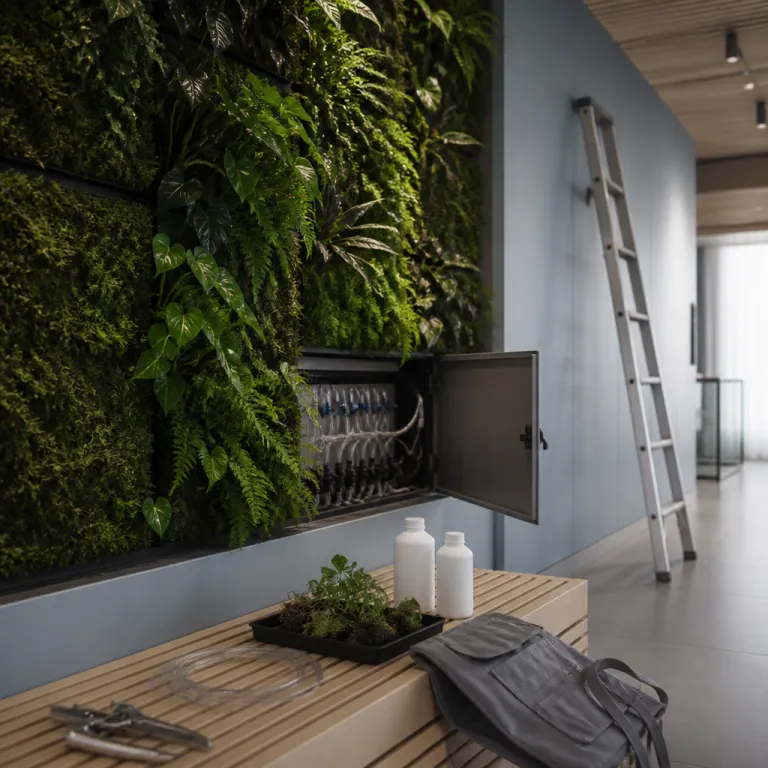
Engineering teams must also plan for access, because living walls in double height spaces or tight corridors can turn routine care into a logistical challenge. If the wall design does not integrate safe access points, removable panels and clear separation from guest circulation, every inspection of the irrigation system or lighting array becomes disruptive and expensive. Over time, these practical constraints feed directly into the hotel green wall maintenance cost, as more labour, specialised equipment and out of hours work are required to keep the plants healthy and the wall performing as intended.
Choosing between living walls and artificial green for different hotel typologies
Not every hotel needs a fully living wall to achieve a biophilic effect, and the trade off between living green and artificial green should be explicit in early design workshops. Artificial green walls offer predictable cost profiles with minimal maintenance, limited to periodic dusting and occasional panel replacement, which can be attractive for select service properties or high turnover commercial spaces. Living walls, by contrast, bring real plants, measurable air quality benefits and stronger wellness credentials, but they also lock the asset into ongoing maintenance and system care.
For full service and luxury hotels, the aesthetic appeal and narrative power of a true vertical garden often justify the higher hotel green wall maintenance cost, especially in flagship lobbies or signature restaurants. These spaces can leverage the biophilic story to support premium pricing, longer dwell times and stronger brand differentiation, which improves the long term investment ROI of the wall project. In limited service or roadside properties, a hybrid approach that combines smaller living wall moments with larger artificial green surfaces may deliver a better balance between guest perception and lifecycle costs.
Decision makers should also consider operational culture when choosing between living walls and artificial green installations. Properties with strong engineering teams, access to green wall specialists and a clear sustainability agenda are better positioned to manage the maintenance costs and technical complexity of living walls. Hotels with lean maintenance staff, high portfolio churn or outsourced facility management may find that the lower risk profile of artificial green walls aligns more closely with their asset strategy and their appetite for long term system commitments.
From case study to playbook: making biophilic walls work financially
To move beyond one off case study narratives, hotel groups need a repeatable playbook for managing hotel green wall maintenance cost across portfolios. That playbook should start with clear performance targets for each green wall, linking maintenance costs, energy savings, guest satisfaction scores and dwell time metrics into a single dashboard. When biophilic lobbies consistently generate higher dwell time, the incremental revenue from F&B and ancillary services can be mapped directly against the OpEx of the living wall and its supporting systems.
One practical approach is to treat each living wall as a micro asset with its own mini P&L, updated annually by the maintenance staff and reviewed by asset managers. This internal case study style reporting can track plant replacement rates, irrigation system interventions, pest incidents and any impact on HVAC energy consumption, creating a data set that informs future project decisions. In one documented 35 m² lobby installation in a European business hotel, for example, internal reporting over the first twelve months recorded a 12% increase in bar revenue and a 9% rise in average lobby dwell time, while HVAC energy use near the wall increased by roughly 3% due to added dehumidification demand. These figures, drawn from the property’s own metering and POS data, illustrate both upside and operating trade offs.
Governance is the final piece, because walls require clear ownership once the installing contractor steps away and the warranty period ends. Hotel maintenance staff act as day to day caretakers, while green wall specialists provide expertise on plant care and system maintenance, and this shared responsibility must be formalised in service level agreements and training plans. A typical SLA might specify weekly visual inspections, monthly irrigation checks, quarterly nutrient dosing and pest monitoring, and an annual system audit with performance reporting to ownership. When that structure is in place, the hotel green wall maintenance cost becomes a managed, predictable line in the lifecycle model rather than an unwelcome surprise that undermines the promise of biophilic design.
FAQ
What is the average annual maintenance cost for hotel green walls ?
What is the average annual maintenance cost for hotel green walls? Approximately $180 per square meter in recent hospitality projects, based on aggregated supplier contracts and facility management reports from 2019–2023 in temperate climates. This figure typically includes routine inspections, pruning, fertilisation, irrigation system checks and a baseline allowance for plant replacement, but it excludes major refurbishments or redesigns of the wall.
What factors influence green wall maintenance costs in hotels ?
What factors influence green wall maintenance costs? Plant selection, system type, climate, and maintenance frequency. In practice, this means that species choice, the complexity of the irrigation system, the local humidity profile and the availability of trained maintenance staff will all push the hotel green wall maintenance cost up or down over the lifecycle of the installation.
Are artificial green walls more cost effective than living walls for hotels ?
Are artificial green walls more cost-effective than living ones? Yes, they have lower maintenance costs over time. For hotels, artificial green walls remove the need for irrigation, fertilisation and plant replacement, but they also forgo the air quality benefits and wellness credentials associated with truly living walls.
Who should be responsible for green wall maintenance after installation ?
After the installation and warranty period, responsibility for green wall maintenance should be shared between in house hotel maintenance staff and external green wall specialists. The internal team handles routine care and monitoring, while specialists provide scheduled inspections, system tuning and strategic advice on plant health, pest management and long term performance.
How can hotels evaluate the ROI of a living wall installation ?
Hotels can evaluate the ROI of a living wall by comparing the full hotel green wall maintenance cost and energy impact against measurable uplifts in guest satisfaction, dwell time and revenue per available square metre in adjacent spaces. Tracking these metrics over several years, and benchmarking them against similar properties without green walls, allows asset managers to judge whether the living installation is performing as a financial asset or simply as an aesthetic feature.