The invisible interface principle in hotel room design
Every modern hotel room that forces guests to learn a new interface has already failed. When hotel room design leans on tablets, complex remotes or wall mounted touchscreens, the interior stops feeling like a guest room and starts behaving like a beta test lab. Guests arrive tired; they do not want a user manual for the room interior.
For architects, interior designers and directions techniques, the invisible interface principle should now sit alongside fire strategy and acoustic performance in every design guide. The idea is simple: the more visible the technology in hotel rooms, the higher the cognitive load, maintenance burden and obsolescence risk for the hotel interior. A guest room that hides its intelligence behind clean lines, intuitive switches and quietly responsive systems will outperform a modern hotel packed with screens on both guest satisfaction and long term ROI.
Touchscreens in a hotel room age badly because they are static while software, operating systems and guest expectations move fast. A tablet that once controlled lighting scenes and the view hotel curtains becomes a dead rectangle when the firmware is no longer supported, and then it becomes visual clutter that undermines the interior design. In contrast, a well planned room design that uses standard switches, discreet sensors and robust back of house control logic based on open protocols such as BACnet, Modbus or KNX can evolve without ripping out furniture or disturbing the art on the walls.
There is also a hygiene and durability argument that every asset manager understands immediately. Public facing screens in hotels attract fingerprints, dust and minor impacts, and in a luxury hotel context they quickly look tired against carefully detailed wood joinery and high value fabrics. When the guest room technology is embedded in the building systems instead, the hotel interior reads as calm, while the technology lead keeps control of upgrades in the rack room rather than on the bedside table.
Invisible controls respect the architecture of space and the craft of furniture. A room hotel with floor to ceiling windows, a strong city view and a restrained palette of wood and textiles does not need a glowing tablet to signal that it is a design hotel. It needs lighting that understands circadian rhythm, HVAC that reaches the setpoint before the guest arrives, and a room interior that feels effortless because the technology has been designed to disappear into the background.
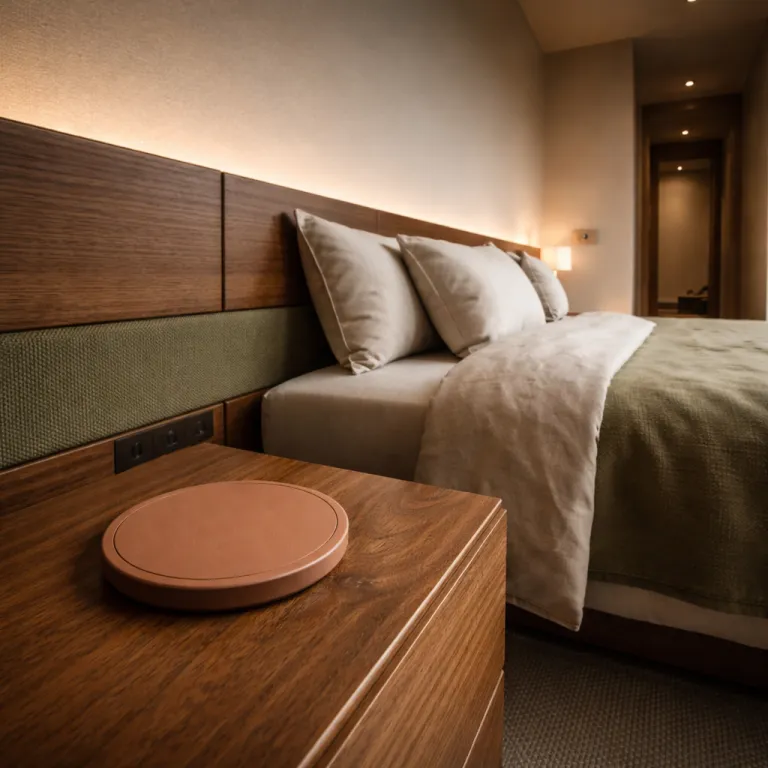
For the FF&E fournisseur and the bureau d’études, this shift changes specification logic. Instead of sourcing a branded bedside iPad dock, the furniture guide now focuses on headboards that integrate low profile scene buttons, wireless charging and cable management without visual noise. Typical specifications include low voltage keypads with engraved legends, IP rated components in wet areas and Zigbee or DALI gateways hidden in joinery. The community of design hotels that are winning repeat guests are those where the technology lead has argued successfully that great hospitality technology is the one the guest never consciously operates, and where the interior designer has protected the calm of the guest room from becoming a showroom of gadgets.
Voice, scene buttons and what survives real guest load
Once you accept that every touchscreen in a guest room is a design failure waiting to happen, the question becomes which interfaces actually survive real guest behaviour. Voice control, hardwired scene buttons and very light gestural interfaces are emerging as the only technologies that respect both the interior and the operational reality of hotels. They allow the room design to stay visually quiet while still delivering the modern expectations of guests who are used to smart homes.
Voice activated controls for lights, curtains and HVAC work when they are optional, not mandatory, and when the acoustic design of the hotel room supports clear recognition. In a small hotel with thinner partitions or a busy city view bleeding into the space, relying solely on voice is risky for both comfort and privacy. The resilient strategy is to pair voice with clearly labelled scene buttons at the bed and entrance, so that any guest can set "night", "work" or "relax" modes without hunting for individual switches in the dark.
Scene buttons are the unsung heroes of contemporary hotel interior design. They compress complex lighting and shading logic into one tactile point of contact, which means the interior designer can maintain clean lines on the walls and avoid the infamous "switch graveyard" that still appears in many luxury hotel rooms. For the directions techniques, these buttons also reduce maintenance calls, because guests are less likely to think something is broken when the interface is self explanatory.
Gestural interfaces, such as proximity sensors that bring up a soft night light when a guest steps out of bed, are another layer of invisible comfort. Typical devices include PIR occupancy sensors in ceilings, under bed presence detectors and door contacts linked to the building management system. They respect the architecture of the space by hiding hardware in skirtings or under furniture, and they work across different room types from compact city rooms to expansive suites with panoramic views. When paired with floor to ceiling curtains and ceiling windows, these subtle cues support orientation at night without washing out the carefully curated art or the texture of the wood finishes.
For brand teams still pushing for a bedside tablet, the technology lead needs language grounded in guest comfort and operational data. Remind them that "Minimalist designs, sustainable materials, smart room technology" are already recognised as current trends in hotel room design, and that smart room technology does not mean visible gadgets. A modern hotel can still feel like a boutique hotel with strong style and personality while hiding its intelligence in the backbone systems, as long as the interior designer and the IT director align early on the interface hierarchy and agree which functions sit on physical buttons, which are automated and which remain app based.
This is where cross functional collaboration becomes non negotiable. Interior designers, hotel owners and guests each bring different expectations to the guest room, and the design process timeline from initial consultation to evaluation must include the technology lead at every stage. Resources such as the operators checklist for refusing beige minimalism in hotel lobby design on Design for Travel show how a similar hidden control logic can be applied in public spaces, and the same discipline should now be standard in every room interior brief. A simple internal checklist covering control protocols, sensor locations, labelling standards and commissioning responsibilities often makes the difference between a calm room and a confusing one.
Pre arrival personalisation as the hidden design layer
The most powerful layer of hotel room design is the one the guest never sees being configured. Pre arrival personalisation of temperature, scent, lighting and even minibar content turns a standard guest room into a quietly tailored space without adding a single visible device. This is where the hotel tech and innovation lead can deliver disproportionate value to asset managers and investisseurs while keeping the interior visually restrained.
Data from PMS, CRM and loyalty profiles can inform a rules based engine that sets the room interior before the guest even reaches the floor. A frequent business traveller might arrive to a slightly cooler space with a focused lighting scene and a clear desk, while a leisure couple in a luxury hotel could walk into warmer tones, softer light and a minibar curated with local products. None of this requires a screen; it requires integration between building management systems, property systems and the design intent for each room type.
Pre arrival logic also extends to acoustics and privacy. In a view hotel with spectacular city views, the temptation is to leave curtains open for the Instagram moment, but many guests prioritise privacy over the first impression. A balanced strategy is to pre set sheer curtains in rooms with floor to ceiling glazing, so that the view is legible while the interior remains protected, and then allow the guest to reveal the full panorama with a single scene button.
Material choices support this invisible personalisation. A furniture package that uses wood with a warm undertone, tactile fabrics and strategically placed rugs can hold different lighting scenes without colour distortion, which is why resources on strategic use of Italian rugs in hotel design and renovation are increasingly relevant to technology leads as well as designers. When the physical envelope of the room is robust, the digital layer can modulate mood without fighting reflections, glare or colour shifts on surfaces.
For FF&E suppliers, this shift changes the brief from "smart furniture" to "furniture ready for smart behaviour". Bedside tables need integrated cable routing for sensors and low voltage power, wardrobes may hide occupancy sensors that inform housekeeping logic, and minibars can be specified with APIs that talk to inventory systems rather than with flashy glass doors. Typical procurement schedules now reference interface standards, preferred control buses and commissioning requirements alongside finishes. The furniture guide for a design hotel now reads as a coordination document between interior design, IT and operations, not just a catalogue of pieces.
Guests rarely comment on pre arrival personalisation explicitly, but they feel it in reduced friction and increased comfort. This is where the invisible interface thesis aligns perfectly with the mission of Design for Travel to support decision makers with actionable intelligence on hotel interiors worldwide, innovation, culture and luxury in hospitality design. When the room simply feels right on entry, the brand story, the art on the walls and the city views can do their work without being overshadowed by visible technology.
Capital, compromises and case studies of invisible tech
Muted technology often costs more upfront than visible gadgets, and that is the hardest argument for a CTO or IT director to win with a finance committee. A wall mounted tablet is a single line item that looks cheap in a spreadsheet, while integrated control systems, sensors and commissioning hours are spread across multiple trades. Yet when you model the full life cycle, the invisible interface almost always wins on total cost of ownership and guest satisfaction.
Consider the average hotel room size of around 28 square metres, where approximately 70 % of revenue comes from rooms according to industry benchmarks. In that volume of space, every additional device competes with art, furniture and views for attention, and every failure generates a service call that erodes margin. When technology is embedded in the backbone, upgrades can be staged floor by floor without touching the interior finishes, which protects both revenue and brand perception.
There is one argument the brand team almost always wins, and the tech lead has to accept it. Signature elements that photograph well, such as a sculptural luminaire, a bold piece of art or a dramatic window seat framing the city, are non negotiable in a competitive hotel market. The compromise is to ensure that these visual anchors are passive, while the active systems that control comfort remain invisible, so that the guest remembers the style and the view rather than the interface.
Two types of properties illustrate where invisible tech works. First, the urban boutique hotel with compact rooms and strong identity, where clean lines, ceiling windows and carefully curated furniture leave no tolerance for visual clutter. Second, the resort style luxury hotel with generous balconies and multiple views, where guests move between interior and exterior spaces and need seamless transitions in lighting and climate without touching a control panel every time.
There are also quiet failures that the industry rarely discusses. Properties that invested heavily in in room tablets a few years ago now face replacement cycles, security concerns and guest frustration when apps lag or crash, and many have started removing these devices during soft renovations. These same hotels are now looking at design ideas that route investment into robust Wi Fi, occupancy based HVAC and simple, well labelled switches, effectively retrofitting the invisible interface after learning the hard way.
One anonymised 220 room city hotel working with Design for Travel replaced ageing bedside tablets with scene buttons, occupancy based HVAC and pre arrival temperature logic. Over the first 12 months, guest complaints related to in room controls dropped by 38 %, energy use per occupied room fell by 11 %, and the property avoided a projected tablet replacement cost of over €250,000, according to the hotel’s internal post project review shared with the consultancy team. The baseline for this case study was the prior 12 month period, and the cost avoidance figure was calculated by comparing supplier quotations for like for like tablet replacements with the actual spend on sensors, control modules and commissioning.
For the technology lead, the path forward is clear and supported by both design and operational logic. "Choose hotels with well-designed rooms for a better stay", "Check online reviews focusing on room comfort", and "Consider room layout when booking for longer stays" are not just consumer tips; they are signals that guests judge hotels on comfort, not on visible gadgets. When interior designers, hotel owners and the wider community of design hotels align around this, the guest room becomes a calm, intelligent space where technology works hard in the background and the architecture, furniture and views take the credit.
Key figures shaping invisible technology in hotel room design
- Average hotel room size remains close to 28 square metres globally, which means every square metre of space and every visible device has a measurable impact on perceived comfort and layout efficiency (Hospitality Institute, global benchmark, 2022 summary report, internal dataset shared with Design for Travel).
- Rooms typically generate around 70 % of total hotel revenue, so any improvement in guest room comfort and operational efficiency has a disproportionate effect on overall profitability compared with similar investments in secondary spaces (Hospitality Institute, industry analysis, 2021 revenue study, aggregated across urban and resort portfolios).
- Minimalist designs, sustainable materials and smart room technology are consistently cited as leading trends in hotel room design, indicating that guests now associate comfort with calm interiors and unobtrusive intelligence rather than with visible gadgets (synthesis of hospitality design trend reports from major global operators and design firms compiled by Design for Travel).
- Design processes that follow a clear timeline from initial consultation through design development, implementation and evaluation are more likely to integrate invisible technology successfully, because technology leads are involved early enough to influence spatial planning and FF&E coordination (industry project delivery reviews compiled by Design for Travel and partner studios, 2019–2023).
- Space planning, furniture selection and lighting design remain the three core methods for creating functional, comfortable and aesthetically coherent hotel rooms, and each of these disciplines now needs to incorporate smart but hidden technology as a standard design parameter rather than as an afterthought (professional practice surveys of interior designers and hotel operators conducted by Design for Travel).
- Prioritise open, widely supported control protocols (BACnet, Modbus, KNX, Zigbee) over proprietary systems when specifying room controls.
- Standardise a small family of scene buttons and sensors across room types to simplify procurement, training and maintenance.
- Model total cost of ownership for tablets versus invisible controls, including replacement cycles, guest support time and commissioning.
- Embed the technology lead in concept design so that invisible interfaces are coordinated with architecture, FF&E and lighting from day one.
- Use pre arrival personalisation rules to deliver comfort and differentiation without adding visible devices to the guest room.