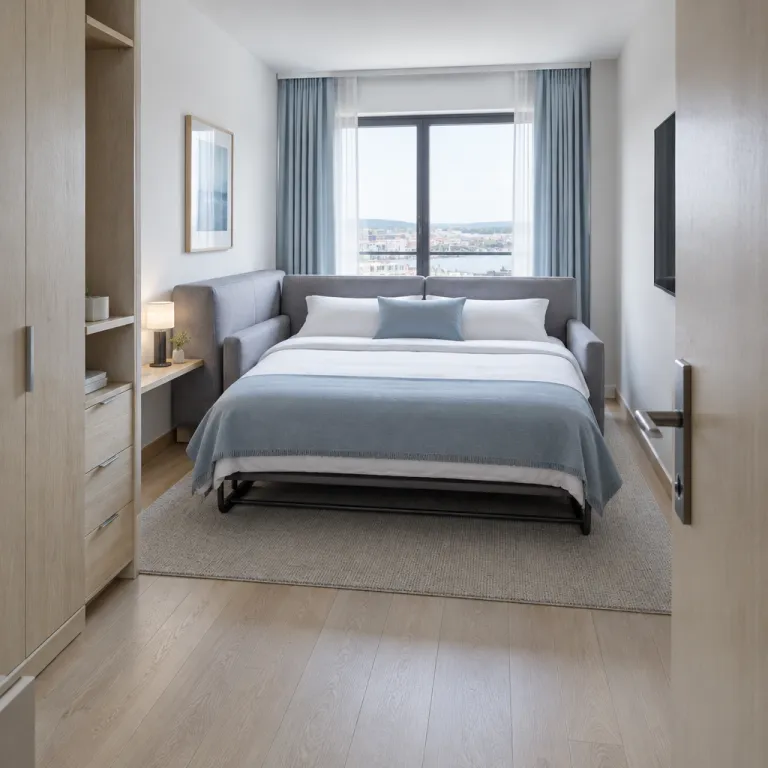
Why the Cassius D.E.L. sofa bed matters for high yield hospitality layouts
For hospitality projects chasing higher RevPAR in compact footprints, the Cassius D.E.L. sofa bed becomes a strategic tool rather than a simple piece of furniture. This sleeper sofa by Innovation Living transforms a standard room into a flexible living and sleeping volume, allowing operators to sell the same square metres under multiple use scenarios. In mixed typologies such as extended stay, branded residences, and upscale hostels, one Cassius sofa can unlock a second bed size without increasing the built area.
The product sits in the category of classic sofa archetypes reengineered for dual use, with a clear focus on comfort and durability under hotel grade traffic. Behind the calm Scandinavian sofa design, the internal structure uses the Excess Pocket Spring system, which combines higher coil density with foam casing to distribute weight evenly across the full bed cassius surface. For asset managers, this means a sleeper sofa that behaves like a real bed, reducing guest complaints and the hidden cost of early mattress replacement over time.
Dimensionally, the Cassius D.E.L. sofa bed offers a queen bed size of approximately 160 × 200 cm, while the overall sofa width is about 231 cm, which must be integrated carefully into room layouts. The maximum supported load of roughly 330 kg requires technical directions to verify slab capacity and subfloor build ups, especially in renovations of older buildings with uncertain structural data. When several units of the cassius sofa are specified on one floor, bureaux d’études should model cumulative payloads, circulation clearances, and the impact of the conversion height on adjacent furniture such as desks, side tables, and luggage benches.
Engineering comfort: Excess Pocket Spring and real bed performance in a sofa
Hospitality designers know that most sofa beds fail at one critical point, which is long term sleeping comfort that matches a dedicated bed. Innovation Living addressed this with the Excess Pocket Spring construction, where a dense pocket spring core is wrapped in foam to create a more forgiving seat and a more stable bed surface. The result is a cassius D.E.L. sofa bed that can support nightly use in serviced apartments and micro hotels without the typical complaints about bars, sagging, or uneven zones.
From a specification perspective, the pocket spring technology inside the Cassius D.E.L. sleeper sofa should be evaluated like any mattress system, with attention to coil count, zoning, and edge stability. The excess pocket configuration increases the number of springs per square metre, which improves micro adaptation to different body weights and sleeping positions on the bed cassius platform. For technical directors, this translates into fewer pressure points, better perceived comfort scores, and a more consistent guest experience between the sofa mode and the full bed mode.
Innovation Living positions the Cassius D.E.L. as a bridge between a classic sofa and a fully fledged bed, and this duality is crucial in spa suites, wellness rooms, and treatment lounges where furniture must support both seating and reclining rituals. When specifying spa treatment beds or esthetician tables, many teams already analyse ergonomics, height, and access in detail, and the same rigor should apply to a sofa bed that will host overnight guests. In high performance spa environments, lessons from designing a professional treatment bed and esthetician table in white for high performance hospitality spas can inform how the Cassius D.E.L. sofa bed is placed, lit, and serviced within a multi use suite.
From living room aesthetics to guest room ergonomics: design intelligence in compact spaces
The visual language of the Cassius D.E.L. sofa bed is rooted in Scandinavian living room design, yet its proportions and ergonomics are tuned for hospitality use. The generous seat depth reads as a relaxed living cassius silhouette in a lobby or serviced apartment, while still allowing an efficient circulation path when the bed is deployed. Architects should treat the sofa as a volumetric element that alternates between two footprints, mapping both the sofa and bed size on plans and in 3D coordination models.
When the Cassius D.E.L. converts from sofa to bed, the change in height and reach affects how guests move through the room at night, especially in narrow layouts. Corridor design research shows that a 30 second walk can shape perception of comfort, safety, and orientation, and the same principle applies at the micro scale between the door, the sofa bed, and the bathroom. Integrating the Cassius sofa into a coherent design sequence with lighting rhythm and wayfinding cues helps guests intuitively understand where to sit, where to sleep, and how to navigate around the extended bed cassius surface in low light.
For FF&E suppliers, the sofa design of the Cassius D.E.L. must be coordinated with side tables, floor lamps, and storage so that nothing obstructs the easy conversion mechanism. The Slyder system requires a clear arc of movement, and any misaligned coffee table or ottoman can turn a smooth easy conversion into a frustrating experience for housekeeping and guests. In mixed dance of functions between living, working, and sleeping, the Cassius D.E.L. sofa bed becomes a pivot point that orchestrates how the rest of the furniture performs throughout the day and night.
Materiality, colour stories, and the role of fabric libraries in specifying Cassius D.E.L.
Fabric selection for the Cassius D.E.L. sofa bed is not a purely aesthetic exercise ; it is a technical decision that influences maintenance cycles, perceived luxury, and acoustic comfort. Innovation Living offers multiple upholstery options, from light grey mélangé weaves to textured boucle fabrics that soften reverberation in hard surfaced rooms. For hospitality projects, specifying a melange light grey or a deeper grey taura tone can help mask wear while aligning with brand palettes and regional expectations.
Architects and designers increasingly rely on curated material libraries to compare fabrics, test cleanability, and evaluate how a grey Cassius D.E.L. sofa bed reads under different lighting temperatures. Physical swatches of boucle, flat weaves, and mixed fibre textiles allow teams to simulate real housekeeping scenarios, including stain removal and pile recovery after repeated seating. A detailed workflow from interior design samples to built hospitality spaces shows how structured material libraries can de risk FF&E decisions, especially when a single sleeper sofa model will be rolled out across dozens of properties.
When evaluating fabric options such as grey taura, dance natural, or dance blue families, specifiers must balance tactility, Martindale ratings, and colour fastness against the brand’s narrative. Boucle textiles on the Cassius sofa seat can signal residential comfort in long stay suites, while a tighter weave in light grey may be preferable in high turnover urban rooms. In every case, the Cassius D.E.L. sofa bed should be treated as a primary visual anchor, with surrounding finishes, lighting, and artwork choreographed to support its presence rather than compete with it.
Operational realities: conversion, housekeeping, logistics, and lead times
For technical directions and housekeeping équipes, the Cassius D.E.L. sofa bed is only successful if its easy conversion truly reduces labour friction. The Slyder mechanism allows staff to pull the seat forward and fold down the backrest in one fluid motion, turning the cassius sofa into a full bed without heavy lifting. Training videos and on site mock ups should be used to standardise the sequence, ensuring that linen changes, mattress rotation, and under seat cleaning can be completed within tight room turnaround times.
Innovation Living specifies that the Cassius D.E.L. supports a maximum load of about 728 pounds, which is critical data for bureaux d’études and asset managers assessing long term structural and warranty risks. Room payload calculations must consider not only the sofa bed itself but also concentrated loads when two adults sit on the edge or when luggage is placed temporarily on the bed cassius surface. In multi unit deployments, technical teams should verify that the floor build up, especially in renovations, can handle the aggregated weight of several sofa beds, wardrobes, and wet areas aligned along the same structural bay.
Lead times for the Cassius D.E.L. sofa bed typically range from two to three weeks for in stock quick ship configurations, and up to fourteen to sixteen weeks for made to order fabrics or colours. This timeline has direct implications for renovation phasing, cash flow planning, and opening dates, particularly when a large batch of sleeper sofas is on the critical path. Asset managers should integrate these weeks into their procurement Gantt charts, coordinate with the chosen shop or distributor, and maintain contingency plans in case a specific fabric becomes temporarily price unavailable due to supply chain constraints.
Investment logic: from CAPEX to guest satisfaction with Cassius D.E.L.
From an investment standpoint, the Cassius D.E.L. sofa bed allows a single room to serve as both a premium double and a small family unit, which can significantly improve revenue per available room over the asset’s life. By specifying a sleeper sofa that genuinely matches bed comfort, operators can confidently market higher occupancy scenarios without compromising guest satisfaction scores. The excess pocket spring system, combined with robust steel framing, reduces the risk of early failure that often plagues cheaper sofa bed alternatives.
For asset managers and investors, the key is to model the Cassius D.E.L. not as a decorative sofa but as a revenue generating bed asset with a defined depreciation schedule. When a room can flex between one and three guests thanks to a reliable sofa bed, the payback period on the additional FF&E outlay often shortens, especially in urban markets with strong weekend leisure demand. Mixed use properties, where living areas double as meeting or entertainment spaces, benefit from the Cassius sofa’s ability to shift between formal seating and informal sleeping without visual clutter.
Procurement teams should benchmark the Cassius D.E.L. against other classic sofa designs and sleeper sofas, comparing not only upfront cost but also warranty terms, serviceability of components, and the availability of replacement covers in fabrics such as light grey, melange light, or boucle. Innovation Living’s detachable covers and modular construction can extend the life of the frame, allowing operators to refresh the visual language without replacing the entire sofa bed. When the official price is temporarily listed as price unavailable in certain markets, it becomes even more important to request detailed quotations, including freight, installation, and potential customs duties, to capture the full cost of ownership.
Statistics and key figures for specifying Cassius D.E.L. in hospitality
- The Cassius D.E.L. sofa bed provides a sleeping surface of approximately 160 cm in width and 200 cm in length, aligning with standard European queen bed size and simplifying linen procurement across multi brand portfolios.
- The overall sofa width is about 231 cm, which requires at least 250 to 260 cm of clear wall length in guest rooms to allow for side tables, lighting, and safe circulation when the bed is extended.
- The maximum supported load of roughly 330 kg per unit means structural engineers must account for concentrated loads when several sofa beds are aligned along the same slab bay, particularly in conversions of historic buildings.
- Typical delivery times range from two to three weeks for in stock quick ship models and up to fourteen to sixteen weeks for customised fabrics, which can influence renovation phasing and soft opening dates.
- By replacing a standard sofa with a high comfort sleeper sofa such as the Cassius D.E.L., operators can often increase average room occupancy by one guest in selected categories, improving revenue potential without expanding the building envelope.
FAQ: Cassius D.E.L. sofa bed in hospitality projects
What size bed does the Cassius D.E.L. sofa bed provide for guests ?
The Cassius D.E.L. sofa bed offers a sleeping surface of about 160 × 200 cm, which corresponds to a queen bed size in most European specifications. This allows operators to use standard queen linens and duvets, simplifying inventory and housekeeping routines. For design teams, the bed size should be drawn accurately in plans to verify clearances to wardrobes, desks, and balcony doors.
How does the Excess Pocket Spring system affect guest comfort ?
The Excess Pocket Spring construction in the Cassius D.E.L. uses a higher density of individually wrapped springs combined with foam casing to create a more even and supportive surface. Compared with basic foam or pull out mechanisms, this excess pocket configuration reduces pressure points and improves long term resilience under hotel grade use. Guests experience the sleeper sofa much closer to a real bed, which supports better reviews and repeat stays.
What is the typical delivery time for the Cassius D.E.L. in hospitality orders ?
For standard fabrics and colours held in regional warehouses, delivery of the Cassius D.E.L. sofa bed usually falls in the range of two to three weeks after order confirmation. When designers specify special fabrics such as certain boucle weaves or non stock colours, lead times can extend to roughly fourteen to sixteen weeks. Project managers should integrate these weeks into their critical path schedules and coordinate with distributors to avoid delays to room handover.
How much weight can the Cassius D.E.L. sofa bed safely support in a hotel room ?
The Cassius D.E.L. is engineered to support a maximum load of about 728 pounds, or approximately 330 kilograms, distributed across the sleeping surface. This capacity comfortably covers two adults plus typical luggage loads placed temporarily on the bed. Structural engineers and technical directions should still verify that existing floors, especially in older buildings, can handle the combined weight of multiple sofa beds and other heavy FF&E items.
Is the Cassius D.E.L. suitable for nightly use in extended stay or serviced apartments ?
The combination of the Excess Pocket Spring mattress, robust steel frame, and hospitality grade fabrics makes the Cassius D.E.L. sofa bed suitable for regular nightly use in extended stay and serviced apartment concepts. When specified with durable textiles such as melange light grey or tightly woven boucle, the sofa can withstand frequent conversions between sofa and bed without visible degradation. Operators should still implement routine inspections and maintenance to preserve both mechanical performance and visual quality over the asset’s life.