Understanding the true cost for all the furnishing in a hotel
Every hospitality project team eventually faces the same question about the real cost for all the furnishing in a hotel. Behind a single guest room, there is a complex chain of design decisions, FF&E procurement, production, logistics, and installation that shapes both quality and long term performance. When architects and asset managers speak about furniture cost, they are actually speaking about risk, positioning, and future value.
For a typical hotel room, the furniture package usually represents one of the largest components of the FF&E cost per key. When you add case goods, room furniture, lighting, soft seating, and custom joinery, the furnishing cost per room can easily reach 35 to 45 % of the total interior budget. In star hotels and luxury properties, this share often increases because hotel furniture is more custom, more complex, and specified in higher commercial grade materials.
Professionals who manage hotel construction know that the cost for all the furnishing in a hotel is never just a line item. It is a strategic lever that influences brand perception, guest satisfaction, and operational efficiency over the full life cycle of the asset. Treating the hotel furniture budget as a design tool rather than a constraint allows design équipes to align room size, room renovation scope, and furniture hotel specifications with the positioning of the hotel or vacation rental portfolio.
“Furniture is not a decorative afterthought; it is a core driver of asset value and guest experience.”
From concept to budget : aligning design intent with furniture cost
During concept design, the narrative for each hotel room often runs ahead of the budget reality. Designers sketch generous guest room layouts, specify luxury materials, and imagine custom hotel millwork before the first FF&E cost check is done. Asset managers and directions techniques then need a clear framework to translate this creative ambition into a realistic furniture budget per room and per area.
For midscale hotels, the cost for all the furnishing in a hotel must be calibrated with brand standards and expected average daily rate. A focused approach to hotel design for the midscale segment shows how tighter budgets can actually sharpen design decisions and reduce unnecessary case goods or decorative elements. In this segment, commercial grade finishes, robust room furniture, and efficient hotel construction details often deliver better ROI than highly custom pieces that are expensive to maintain.
For star hotels and luxury resorts, the same logic applies but at a different scale of cost and expectation. The cost room envelope is higher, yet investors still expect disciplined control of furniture cost and FF&E cost across all guest room types and suites. The design team must therefore prioritise which elements of hotel furniture truly need to be custom, and which can be standardised across rooms, vacation rentals, and public areas without diluting the brand story.
Cost per key, cost per room : structuring the ff&e budget
Experienced asset managers rarely speak only about the global cost for all the furnishing in a hotel ; they break it down into cost per key and cost per square metre. This structure allows them to compare hotels, vacation rentals, and mixed use projects across different markets and brands. It also helps directions techniques to benchmark FF&E cost against previous hotel construction or room renovation programmes.
For a clear framework, many developers use a cost per key matrix similar to those discussed in analyses of hotel interior design cost per key. In this matrix, each guest room type has a defined furniture budget that covers case goods, seating, lighting, soft goods, and accessories, with separate lines for public areas and back of house. By assigning a specific furniture cost to each category, project teams can quickly test design options and understand how a change in room size or specification will impact the overall costs.
For star hotels and upper upscale brands, the FF&E cost per key can vary significantly between standard guest room types and suites. A compact hotel room in an urban property may have a lower cost room allocation but still require high quality commercial grade materials to withstand intensive use. In contrast, a large suite or branded vacation rental may justify a higher furniture hotel investment because it drives premium rates, longer stays, and stronger guest loyalty.
Materials, finishes, and production strategies that shape furniture budgets
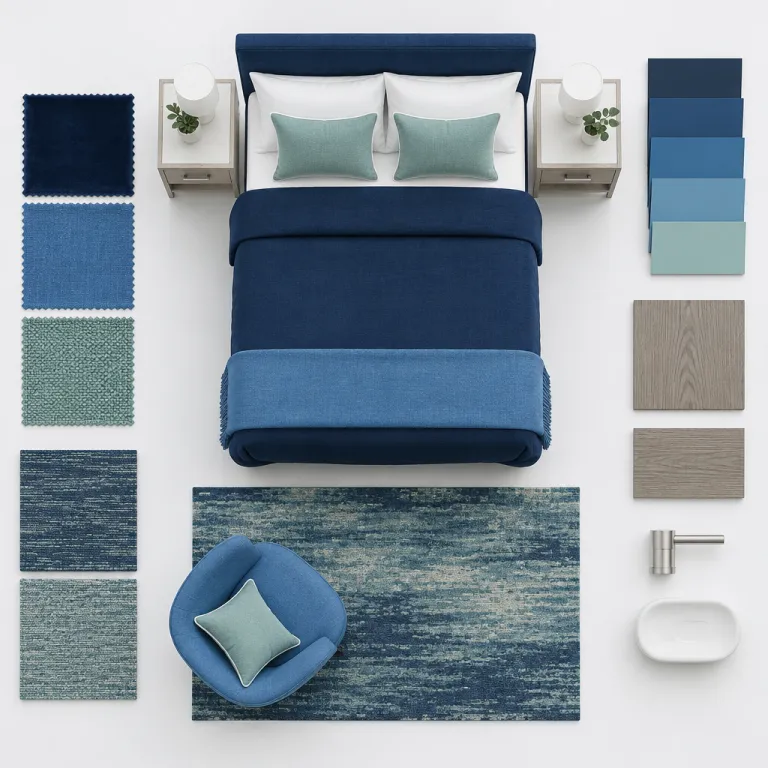
The choice of materials and finishes is one of the most powerful levers to control the cost for all the furnishing in a hotel without compromising perceived quality. A carefully curated palette of laminates, veneers, metals, and textiles can deliver a luxury look while staying within a disciplined furniture budget. The key is to align design intent, production methods, and installation logistics from the earliest project stages.
When specifying hotel furniture, designers must balance custom elements with standardised components that optimise production and reduce waste. Custom hotel case goods may be justified in a star hotel flagship, but in a portfolio of star hotels and vacation rentals, repeating a core set of room furniture modules can significantly reduce furniture cost and lead times. Coordinating these modules with room size and building structure also simplifies hotel construction and reduces on site adaptation.
Material strategies are explored in depth in resources about how materials, finishes, and FF&E strategies elevate hotel interiors, which show how thoughtful specification can enhance both guest experience and operational durability. For directions techniques, the objective is to select commercial grade finishes that maintain their appearance over a long term cycle, reducing the frequency and cost of room renovation. For suppliers, aligning production capabilities with these strategies ensures that the final furnishing installation meets both design and performance expectations.
Room typologies, room size, and the economics of guest experience
The geometry of the hotel room has a direct impact on the cost for all the furnishing in a hotel. A well planned room size allows efficient placement of case goods, circulation, and storage, which reduces custom fabrication and installation time. Poorly optimised layouts, by contrast, often require bespoke room furniture that increases both costs and complexity.
For guest room typologies, the balance between standardisation and differentiation is crucial. Standard rooms in business hotels or urban vacation rentals benefit from a consistent furniture hotel package that simplifies procurement and maintenance, while premium categories in star hotels may justify more custom hotel elements to signal exclusivity. The art lies in using a shared design language and materials palette so that even entry level rooms feel coherent with the overall brand narrative.
In mixed portfolios that include hotels and vacation rentals, asset managers must compare the furniture cost and FF&E cost across different operating models. A vacation rental unit may require more generous storage and kitchen related case goods, while a compact city guest room focuses on work surfaces and bedding quality. In both cases, the long term performance of commercial grade materials and the ease of room renovation should guide the specification strategy.
Lifecycle thinking : from installation to long term asset value
Professionals who manage hospitality assets know that the cost for all the furnishing in a hotel is only fully understood over the entire lifecycle of the property. Initial savings on low quality furniture can quickly evaporate if replacement cycles shorten and guest satisfaction drops. Conversely, a slightly higher initial furniture budget can protect RevPAR and brand positioning over many years.
Lifecycle thinking requires a rigorous evaluation of how hotel furniture will age under real operating conditions. Commercial grade finishes, robust joinery, and well engineered installation details reduce damage, noise, and maintenance interventions in every guest room and public area. This approach is particularly important in high traffic star hotels and in vacation rentals where turnover is intense and cleaning cycles are frequent.
For investors, the key metric is not only the initial furniture cost but the total cost of ownership per room over a defined period. When FF&E cost is amortised over a realistic renovation cycle, the value of durable materials and flexible room furniture layouts becomes evident. This is why many asset managers now integrate FF&E lifecycle models into their hotel construction and room renovation planning, ensuring that the cost room allocation supports both guest experience and long term asset value.
Practical levers to control furnishing costs without diluting design
Controlling the cost for all the furnishing in a hotel does not mean compromising on design quality. It means using precise levers at each stage of the project to align expectations, specifications, and procurement strategies. The most effective teams treat the furniture budget as a shared responsibility between designers, directions techniques, asset managers, and suppliers.
One lever is early value engineering that focuses on materials, production methods, and installation sequencing rather than simply cutting items. By rationalising case goods families, standardising hardware, and coordinating room size with modular furniture hotel solutions, project teams can reduce furniture cost while preserving the guest room experience. Another lever is to negotiate framework agreements with FF&E suppliers that cover multiple hotels or vacation rentals, which stabilises prices and improves production planning.
Digital tools now allow precise tracking of FF&E cost, furniture budget allocations, and installation progress across large hotel construction programmes. When these données are shared transparently between stakeholders, decisions about room renovation timing, custom hotel upgrades, or portfolio wide refreshes become more strategic. In the end, the most successful star hotels and branded vacation rentals are those where every piece of furniture, in every room, reflects a deliberate balance between design ambition, operational reality, and long term financial performance.
Key figures on hotel furnishing and ff&e economics
- In many international markets, FF&E cost typically represents 8 to 15 % of total hotel construction cost for midscale properties, and can reach 18 to 22 % for luxury star hotels, according to industry benchmarking by major hotel consultancies such as HVS and CBRE Hotels (see, for example, HVS “Hotel Development Cost Survey” and CBRE Hotels “Trends in the Hotel Industry”).
- Case goods and room furniture often account for 35 to 45 % of the FF&E budget in a standard guest room, while soft goods and decorative items usually represent 15 to 25 %, based on aggregated project data from global procurement firms including JLL Hotels & Hospitality and specialised FF&E sourcing reports.
- Average interior renovation cycles for guest rooms range from 7 to 10 years in midscale hotels and from 5 to 7 years in luxury hotels, which significantly influences the optimal furniture cost and material selection strategy, as highlighted in advisory publications by STR and international hotel asset management practices.
- Studies by international hotel advisory companies such as JLL and CBRE indicate that properties investing 10 to 15 % more in durable commercial grade materials at the outset can reduce cumulative replacement and maintenance costs by up to 25 % over a full renovation cycle.
- Portfolio analyses of mixed hotel and vacation rental assets, reported in HVS and STR performance reviews, indicate that units with well planned room size and flexible furniture layouts can achieve up to 5 % higher occupancy and better guest ratings, which supports a higher initial furniture budget per key.
As a simple illustration, a 150 key midscale hotel with an FF&E cost per key of 8,000 € would allocate around 1.2 million € to furniture and equipment. If 40 % of this amount is dedicated to case goods and room furniture, a 10 % increase in durability focused investment (about 48,000 €) can, according to these benchmarks, generate savings of more than 100,000 € in avoided replacements over a full renovation cycle.
FAQ about the cost for all the furnishing in a hotel
How is the furniture budget typically structured in a hotel project ?
The furniture budget is usually divided by area and by key, with separate allocations for guest rooms, corridors, public spaces, and back of house. Within each guest room, the budget is further broken down into case goods, seating, lighting, soft goods, and accessories. This structure allows project teams to compare costs across room types and adjust specifications without losing overall control.
What drives the biggest variations in furniture cost between hotels ?
The main drivers are positioning, room size, level of customisation, and material selection. Luxury and star hotels often require more custom hotel furniture, richer materials, and more complex installation details, which increase both FF&E cost and labour. In contrast, standardised midscale hotels and vacation rentals can leverage modular designs and commercial grade finishes to keep the cost per room under tighter control.
How can designers reduce costs without lowering perceived quality ?
Designers can focus on smart material choices, modular case goods, and consistent hardware families that simplify production and installation. Concentrating visual impact on a few key elements, such as the headboard wall or a signature desk, allows other pieces of room furniture to remain more standard. Coordinating these decisions early with suppliers and directions techniques prevents late changes that usually increase costs.
What is the role of room renovation cycles in FF&E planning ?
Room renovation cycles determine how long the furniture must perform before replacement or major refresh. Shorter cycles may justify more fashion driven design and lighter materials, while longer cycles require robust commercial grade finishes and timeless forms. Asset managers use these cycles to calculate the total cost of ownership and to decide how much to invest in the initial furniture hotel package.
Are vacation rentals managed differently from hotels in terms of furnishing budgets ?
Vacation rentals often have different usage patterns, with longer stays and more domestic activities such as cooking and laundry. This means more emphasis on storage, kitchen related case goods, and durable surfaces, while some traditional hotel furniture elements may be simplified. However, the same principles of lifecycle cost, guest experience, and brand consistency apply across both hotels and vacation rentals when planning the cost for all the furnishing in a property.