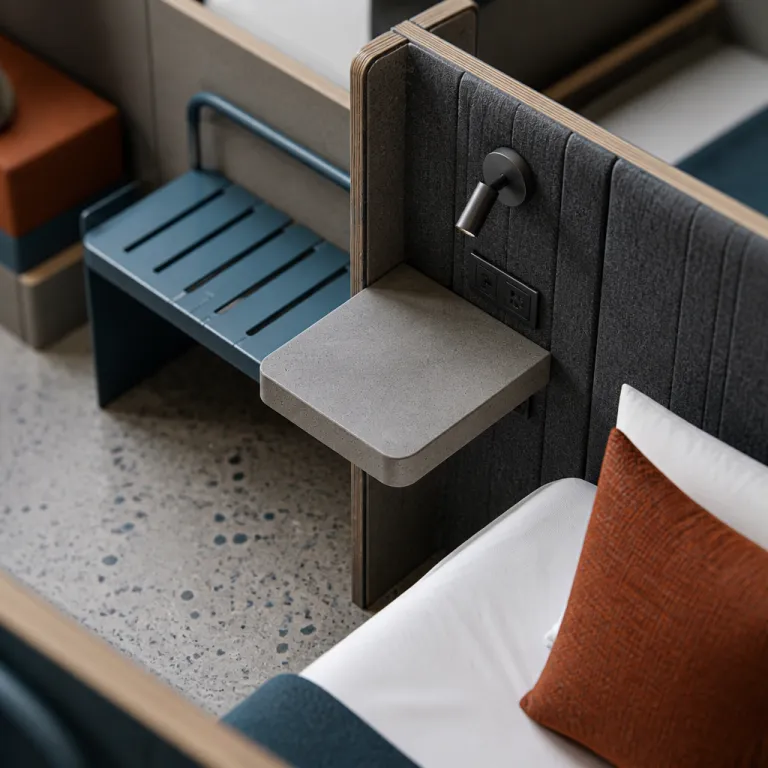
From brand DNA to furniture strategy in the Holiday Inn Express model
Holiday Inn Express furniture is not an aesthetic afterthought; it is the physical translation of a very precise midscale brand promise. For architects, interior designers, technical directors, asset managers and hotel investors, the inn and its express positioning within IHG define strict performance expectations for every chair, table and side table specified. The hotel furniture strategy must therefore align with the global IHG Smart Decor concept, which promotes clean lines, neutral palettes and a disciplined formula for comfort and efficiency, as outlined in IHG’s public brand standards summaries and design briefs.
The Holiday Inn brand has been built on standardized guest room layouts, and the inn express concept extends this logic to every piece of express furniture in guest rooms and public areas. Design manuals, preferred supplier partnerships and quality control tools guide how hospitality furniture is engineered, from the center table in the lounge to the dining chair in the breakfast area. This standardized scheme protects the brand while still leaving room for regional interpretation through finishes, stone effects, textiles and lighting, a balance repeatedly referenced in IHG design guide overviews and renovation case studies shared at industry conferences.
For FF&E suppliers and hotel design consultants, the challenge is to add measurable value without diluting the recognizable Holiday Inn Express narrative that guests associate with the hotel. Holiday Inn Express operates thousands of hotels globally, so each item of capital expenditure on furniture must support durability, operational efficiency and guest satisfaction. As one asset manager quoted in an internal IHG refurbishment review noted, “every lounge chair, business center workstation and guest room desk has to earn its place as a long term asset, not a disposable object,” capturing the investment mindset that underpins the furniture and lighting ecosystem.
Formula blue as a design framework for furniture and lighting
The formula blue design scheme is more than a color story; it is a spatial and operational framework that shapes how Holiday Inn Express furniture performs. In this formula, blue accents guide guests intuitively through the hotel, while neutral hotel furniture and stone inspired surfaces create a calm backdrop for short stay travel. For designers, the formula blue approach clarifies where to invest in statement pieces, such as a sculptural lounge chair, and where to prioritize robust, quiet background items like side tables and center tables that can be refreshed through finishes rather than full replacement.
In public zones, the lounge and dining areas must flex between breakfast, informal co working and evening social use, so the furniture collection holiday brief emphasizes stackable dining chairs, modular tables and movable lounge furniture. Lighting design follows the same logic, with layered ambient and task lighting supporting both express guest productivity and relaxation, as explored in specialist resources on modern hospitality lighting design and IHG lighting guideline summaries. This integration of furniture and lighting ensures that the business center, lobby and inn suites zones feel coherent throughout the day, even as layouts are adjusted to respond to occupancy patterns.
Guest rooms and suites apply the formula blue palette more sparingly, using blue textiles, artwork and sometimes a blue accent chair to signal the brand without overwhelming compact spaces. Here, the express choice of furniture focuses on integrated storage, efficient work surfaces and ergonomic seating that supports both short bursts of laptop work and longer relaxation. For asset managers, this formula blue framework simplifies renovation cycles, because furniture, lighting and finishes can be upgraded in layers while preserving the core brand geometry and layout, reducing disruption and keeping standardized room types aligned with current guest expectations.
Guest room furniture performance : ergonomics, durability and standardization
In a typical Holiday Inn Express guest room, every piece of furniture must justify its footprint in terms of ergonomics and operational efficiency. Beds use standardized Inn Collection specifications with memory foam and pocketed coils, while the work area combines a compact table or desk with an ergonomic chair designed for short stay business use. The objective is clear; rooms are standardized to ensure consistent guest experience, and that consistency extends to wardrobes, luggage benches, side tables and lighting controls, all documented in IHG room layout diagrams and furniture schedules.
“Expect modern, functional furniture.” and “Rooms designed for comfort and efficiency.” and “Consistent quality across locations.” are not marketing slogans but operational benchmarks that guide FF&E specifications. For hotel design consultants, this means validating that every guest room and all guest rooms across a portfolio can be cleaned quickly, maintained easily and refreshed on a predictable cycle. Circadian friendly lighting, as outlined in technical briefs on lighting specifications for electrical engineers and IHG electrical design notes, increasingly interacts with furniture placement, especially around headboards, desks and lounge chairs where task and ambient lighting overlap.
Durability is non negotiable, because Holiday Inn Express hotels operate with high occupancy and intense turnover of express guests. Furniture edges, stone look surfaces and hardware must withstand repeated impacts from luggage, while fabrics on chairs and sofas in inn suites must resist staining and abrasion. A frequently cited internal case study from an IHG regional refurbishment program shows that a standardized desk and chair package with a slightly higher upfront cost reduced replacement frequency by one full renovation cycle, improving lifecycle cost without changing the guest facing design and reinforcing the value of standardized hotel furniture across the IHG portfolio for procurement and ROI modeling.
Public areas, business center and the evolving lounge typology
The contemporary Holiday Inn Express lobby has shifted from a traditional reception hall to a multi use lounge that blends check in, business center functions and informal dining. This evolution places new pressure on holiday inn express furniture to be mobile, reconfigurable and acoustically considerate. Lounge chairs, center tables and side tables must support laptop work in the morning, casual meetings at midday and relaxed socializing in the evening without constant staff intervention, while still aligning with the brand’s recognizable formula blue cues.
Designers now treat the lounge as a flexible hospitality laboratory, where furniture layouts can be tested and refined across multiple hotels within the brand. A well planned scheme will combine high back lounge chairs for acoustic privacy, communal tables with integrated power for co working and smaller dining tables that can be grouped or separated as demand shifts. For technical directors, the business center is no longer a closed room but a zone within the lounge, defined by furniture, lighting and sometimes stone or timber screens rather than full height partitions, allowing the space to evolve as guest behavior changes.
Comparisons with other midscale brands such as Hampton Inn, Quality Inn and Hilton Garden highlight how strongly furniture strategy shapes perceived value. While each hotel brand has its own aesthetic, the express choice at Holiday Inn Express favors clean lines, robust materials and intuitive layouts over decorative excess. For FF&E suppliers, this means proposing hospitality furniture that can migrate between properties, allowing IHG and its partners to rebalance inventories and extend the life of well performing pieces, a practice referenced in several IHG procurement presentations and supplier briefing documents.
Benchmarking Holiday Inn Express furniture against peer brands
For asset managers and investors, benchmarking holiday inn express furniture against competitors is essential to validate both CAPEX and long term maintenance assumptions. When compared with Hampton Inn or Quality Inn, the Holiday Inn Express model leans more heavily on standardized guest room layouts and a tightly controlled furniture palette. Hilton Garden properties, by contrast, often introduce more localized design gestures and a broader range of seating typologies in public areas, as described in publicly available brand fact sheets and design overviews from the respective hotel groups.
IHG’s focus on standardized design, quality materials and regular updates allows the inn express portfolio to maintain a consistent hospitality experience across thousands of hotels. This consistency is particularly visible in the way guest rooms integrate desks, ergonomic chairs and storage, answering the recurring question; do rooms include workspaces, and are Holiday Inn Express rooms standardized. For designers, this benchmark data supports more informed decisions about where to deviate from the standard, for example by upgrading a lounge chair specification or introducing a new stone finish in the lobby while still respecting the underlying room modules.
Midscale hotel furniture design is often constrained by budget, yet these constraints can sharpen creativity, as explored in analyses of midscale hotel design under budget pressure and in IHG’s own renovation case studies. Within this context, the collection holiday narrative at Holiday Inn Express uses formula blue accents and carefully chosen express furniture pieces to signal quality without inflating costs. For hotel design consultants and FF&E suppliers, the lesson is clear; align with the brand’s operational DNA first, then layer in localized enhancements that respect the standardized backbone and can be justified through measurable guest satisfaction or maintenance gains.
Digital tools, specifications and the future of express furniture
The next phase of Holiday Inn Express furniture development will be shaped by digital specification tools and data driven asset management. Design teams increasingly expect to download complete furniture and lighting packages, including BIM objects, performance data and maintenance guidelines, directly from IHG and approved suppliers. This digital exp of information allows architects, interior designers and hotel design consultants to coordinate early with technical directors and asset managers on structural loads, power integration and cleaning protocols, reducing errors between concept design and on site installation.
For FF&E suppliers, the ability to add granular performance data to each chair, table, dining chair and lounge chair model will become a key differentiator. Hospitality furniture for inn suites and standard guest rooms will be evaluated not only on purchase cost but on lifecycle cost, repairability and recyclability, in line with IHG sustainability objectives referenced in corporate responsibility reports. A typical BIM package for a guest room might include 3D geometry, material schedules, fire ratings, installation instructions and recommended cleaning products, giving all stakeholders a shared reference for long term performance and simplifying future refurbishment planning.
Cross brand learning will also intensify, with insights from Hampton Inn, Quality Inn and Hilton Garden informing future express choice decisions at Holiday Inn Express. The boundary between guest room and public space furniture will blur, as more modular pieces migrate between the lounge, business center and suites to respond to changing guest behaviors. For all stakeholders, from designers to asset managers, the opportunity lies in treating holiday inn express furniture as a strategic lever for guest satisfaction, operational efficiency and brand loyalty rather than a simple procurement line, supported by data from digital asset registers and post stay guest feedback.
Key figures and strategic statistics for Holiday Inn Express furniture
- Holiday Inn Express operates approximately 2 826 hotels worldwide, which makes standardized hotel furniture specifications critical for procurement efficiency and brand consistency across regions (source; IHG brand fact sheets and 2023 system size disclosures, including the IHG Annual Report and Form 20 F).
- The brand’s Smart Decor concept, with its focus on clean lines and neutral palettes, has been progressively implemented since the early expansion of the inn express portfolio, supporting a measurable uplift in guest satisfaction scores in post renovation properties according to internal IHG reporting and selected case studies shared at investor presentations and design conferences.
- Standardized Inn Collection beds with memory foam and pocketed coils are specified across guest rooms to reduce variability in sleep quality, a key driver of repeat stays and express guest loyalty in the midscale segment (source; IHG brand standards documentation and public Holiday Inn Express bedding descriptions on brand information materials).
- Global partnerships between IHG corporate, furniture manufacturers and design firms enable volume purchasing of hospitality furniture, which can reduce unit costs by double digit percentages compared with one off boutique procurement, while maintaining strict durability standards (source; IHG procurement overviews and supplier program summaries).
- The emphasis on durable materials and regular updates in Holiday Inn Express furniture specifications is designed to extend furniture lifecycles beyond typical midscale norms, improving ROI on FF&E CAPEX and reducing waste over successive renovation cycles, as highlighted in IHG sustainability and development presentations.
FAQ ; Holiday Inn Express furniture, design and specifications
What type of beds does Holiday Inn Express use in guest rooms ?
Holiday Inn Express specifies Standard Inn Collection beds with memory foam and pocketed coils across its guest rooms. This standardized approach ensures a consistent sleep experience for express guests, regardless of the hotel location. For asset managers, it also simplifies procurement and maintenance planning, because the same core specification appears in IHG brand standards and supplier catalogs.
Are Holiday Inn Express guest rooms standardized across the portfolio ?
Yes, Holiday Inn Express rooms are standardized to ensure consistent guest experience, and this includes furniture layouts, workspaces and storage solutions. The brand’s design manuals define how beds, desks, chairs and side tables are arranged to balance comfort and operational efficiency. Local adaptations typically focus on finishes, artwork and minor furniture variations rather than structural changes, a principle reiterated in IHG design guide summaries for developers.
Do Holiday Inn Express rooms include dedicated workspaces for business travelers ?
Do rooms include workspaces; yes, rooms feature desks and ergonomic chairs as a core part of the furniture package. These work areas are designed to support short stay business use, with accessible power, task lighting and sufficient surface area for laptops and documents. In many properties, the workspace can also function as a compact dining table for solo travelers, reflecting the multifunctional approach described in Holiday Inn Express room type descriptions.
How does Holiday Inn Express ensure durability in its furniture specifications ?
The brand emphasizes durable materials, robust joinery and rigorous quality control processes in all hotel furniture specifications. Partnerships with experienced furniture manufacturers and design firms allow IHG to test products under high use conditions typical of midscale hospitality. Regular updates to the specifications ensure that new materials and construction methods are incorporated as they prove their performance, with changes documented in revised brand standards and communicated through supplier briefings.
What role do design manuals play for architects and FF&E suppliers working with Holiday Inn Express ?
Design manuals issued by IHG provide detailed guidance on layouts, furniture types, finishes and performance criteria for Holiday Inn Express projects. Architects, interior designers and FF&E suppliers use these manuals as a baseline, then coordinate with technical directors and asset managers to address local building codes and operational constraints. This structured approach keeps the brand recognizable while allowing controlled flexibility in execution, and gives all stakeholders a verifiable reference when evaluating furniture proposals and mock up rooms.