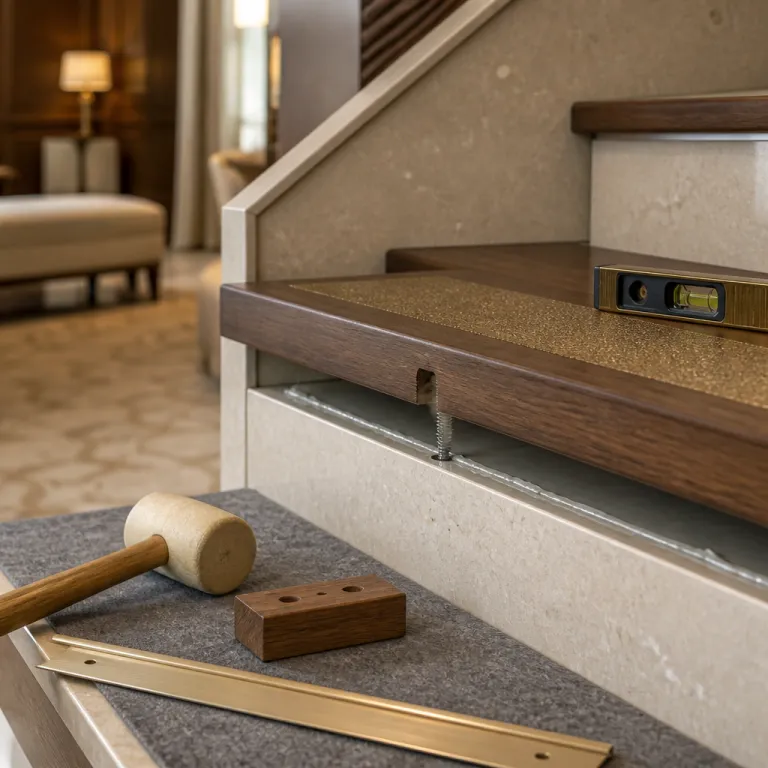
Why commercial stair treads are now a strategic design decision
In contemporary hospitality projects, commercial stair treads have moved from technical afterthought to strategic design lever. When a single stair connects lobby, F&B, spa, and meeting levels, every step becomes a touchpoint that shapes guest perception and long term asset value. A carefully specified stair tread solution protects the base stair structure, stabilises lifecycle costs, and quietly reinforces the brand narrative.
For architects and designers, the stair is no longer just a code compliant escape route; it is a sculptural element that must perform under heavy duty traffic while remaining visually coherent with FF&E and finishes. Asset managers and investisseurs now scrutinise the quantity price relationship of each stair tread product, weighing initial price wide against maintenance, slip resistance performance, and replacement cycles. Technical directors and bureaux d’études, in turn, focus on how rubber stair systems, vinyl stair options, or precast concrete treads integrate with structural steps, nosings, and adjacent floor finishes without compromising safety or breaching code requirements such as ADA 2010 Standards §504 (Stairways) and IBC provisions on stair geometry.
Manufacturers in the United States such as Newbold Stone, VPI Flooring, and American Floor Mats illustrate how commercial grade stair treads can align safety, durability, and design. Newbold Stone’s precast concrete stair tread ranges suit outdoor stair runs in exposed climates, while VPI’s Smart Step rubber and vinyl stair solutions address indoor outdoor transitions with refined profiles. American Floor Mats completes the picture with modular treads pack offers, allowing operators to adjust quantity and surface grip specifications per stair flight rather than over specifying a single pack for the entire building.
Material choices for hospitality stairs: rubber, vinyl, concrete, and timber
Material selection for commercial stair treads in hotels and resorts must reconcile tactile comfort, slip resistance, and acoustic control. Rubber stair treads offer a soft underfoot feel and strong grip on the surface, which is particularly valuable on back of house stairs where staff move quickly with loads. Vinyl stair treads, by contrast, provide a thinner profile and broad colour range, making them suitable for public steps where a refined aesthetic is required but budgets remain tight.
Precast concrete stair treads from manufacturers such as Newbold Stone are especially relevant for outdoor stair runs, rooftop terraces, and pool access stairs. These heavy duty elements protect structural stairs from weathering, while the right slip treads profile and nosing detail reduce the risk of slip stair incidents in wet conditions. Where designers wish to reference local craft, concrete treads can be combined with regional stone or timber details, echoing the sourcing logic explored in guidance on regional stone, local timber, and artisan tile.
Many hospitality projects still feature visible wooden steps in heritage staircases, which raises specific FF&E and renovation questions. A wooden step may be visually warm yet vulnerable to wear, so applying a commercial grade rubber stair tread or a slim vinyl stair tread can protect the timber while preserving the original profile. In such cases, the design team must balance the quantity price of each tread pack against the need for custom fabrication, ensuring that the final product respects conservation constraints, offers easy clean maintenance, and maintains consistent slip resistance across all stairs.
| Material | Typical slip rating* | Indicative service life** | Approx. unit cost (USD) |
|---|---|---|---|
| Rubber stair tread | COF ≥ 0.6 wet (ASTM D2047 / ANSI A137.1) | 10–15 years in back of house | $35–$70 per step |
| Vinyl stair tread | COF ≈ 0.5–0.6 wet with textured surface | 7–12 years in guest areas | $25–$55 per step |
| Precast concrete tread | COF ≥ 0.6 wet with broom or shot finish | 15–25 years outdoors | $60–$120 per step |
| Timber step with overlay | Depends on overlay (rubber/vinyl nosing) | 5–10 years before refinishing | $40–$90 per step |
*Representative values based on typical manufacturer data sheets; always verify current test reports for specific products against ASTM, ANSI, or ISO methods. **Service life assumes correct installation and maintenance in hotel environments.
Balancing safety, code compliance, and guest experience
Hospitality operators cannot afford ambiguity around safety on stairs, especially in high traffic lobbies, conference centres, and rooftop venues. Commercial stair treads are central to preventing slip and fall accidents. The National Safety Council notes that falls are a leading cause of nonfatal injuries in the United States, and U.S. Bureau of Labor Statistics data consistently ranks slips, trips, and falls among the top causes of workplace incidents. Industry practitioners often reference internal estimates of around 1 000 000 stair-related incidents annually to frame risk exposure, but such figures should be treated as indicative rather than precise and always cross-checked against current NSC and BLS publications.
Rubber and vinyl stair treads with engineered slip resistance profiles help maintain traction even when guests track in moisture from outdoor stair areas or pool decks. For indoor outdoor transitions, designers often select a commercial grade tread with a continuous ribbed surface that channels water away from the main step zone, reducing the chance of a slip stair event. When paired with contrasting colour inserts on the leading edge of each step, these treads also improve visual legibility for guests with reduced vision, supporting compliance with ADA 2010 Standards §302 (Floor Surfaces) and §504, as well as local building codes that reference ASTM E303, ANSI A137.1, or comparable slip resistance benchmarks.
Guest experience, however, extends beyond safety metrics and regulations. A well detailed stair with quiet, easy clean treads can make vertical circulation feel intuitive and comfortable, encouraging guests to use stairs instead of lifts for short trips. Designers working with warm minimalism palettes can integrate low profile rubber stair or vinyl stair solutions that echo the restrained materiality described in guidance on specifying timber, bouclé, and honed stone, ensuring that safety features do not visually dominate. The result is a stair where every step feels intentional, from the grip of the surface to the way the tread aligns with adjacent floor finishes.
Lifecycle costing, quantity strategies, and procurement for stair treads
For asset managers and investisseurs, the financial performance of commercial stair treads is measured over the full lifecycle of the stair, not just at installation. A low initial price per stair tread can quickly be offset by frequent replacement, disruptive works, and guest complaints about worn surfaces. A more robust commercial grade product with proven slip resistance and easy clean properties often delivers better ROI over ten to fifteen years of operation.
Procurement strategies should therefore consider quantity price structures and wide quantity discounts offered by manufacturers and suppliers. When specifying for a portfolio of hotels across the United States, consolidating orders for rubber stair and vinyl stair systems can unlock more favourable price wide conditions, especially when combined with free shipping thresholds on shipping orders. Some suppliers structure treads pack offers so that a single pack covers a defined number of steps, which simplifies budgeting and reduces on site waste.
Modularity also matters, particularly in mixed use hospitality assets where stair configurations may change over time. Selecting a stair tread product that can be cut to fit both narrow service stairs and wide feature stairs allows technical teams to maintain a single stock of replacement treads. This approach aligns with broader FF&E strategies around modular hospitality furniture and reconfigurable assets, as explored in guidance on how operators configure, reconfigure, and recover their investment. In practice, a coherent procurement plan for stair treads reduces complexity, stabilises maintenance budgets, and ensures that every step remains safe and visually consistent across the property.
Design detailing: profiles, nosings, and integration with FF&E
The architectural character of a stair is defined as much by its detailing as by its overall form. Commercial stair treads must therefore be considered alongside balustrades, handrails, wall finishes, and adjacent FF&E to avoid a disjointed result. A carefully chosen tread profile can visually slim a heavy concrete stair or, conversely, give more presence to a lightweight steel stair in a grand lobby.
Profile selection starts with the geometry of the step and the performance requirements of the space. In back of house stairs, a deep ribbed rubber stair tread with pronounced nosing maximises grip and slip resistance, even when staff move quickly with trolleys or trays. In guest facing stairs, designers may prefer a smoother vinyl stair tread with a subtle texture, relying on colour contrast and integrated inserts to signal the edge of each step without compromising the refined aesthetic.
Integration with FF&E is particularly sensitive where stairs intersect with lounge seating, bar counters, or reception desks. The surface colour and sheen of the stair treads should complement nearby textiles and timber tones, avoiding glare that could obscure the step edge. When working with wooden steps in heritage or boutique properties, a slim commercial grade tread can be recessed into the timber, preserving the original profile while adding a discreet slip treads layer. This level of detailing reassures guests subconsciously that every step has been considered, from the tactile feel underfoot to the way the stair connects different hospitality zones.
Indoor outdoor transitions, maintenance, and operational realities
Few areas in a hotel test materials as rigorously as indoor outdoor stair transitions. Rain, pool water, sand, and food service all converge on these steps, challenging both the surface finish and the cleaning regime. Commercial stair treads specified for such locations must combine robust slip resistance with genuinely easy clean properties, or operational teams will struggle to maintain standards.
For outdoor stair runs leading to terraces or beach clubs, heavy duty precast concrete treads or dense rubber stair systems are often the most resilient choice. Their textured surface provides reliable grip even when wet, while the mass of the product resists impact from luggage, furniture moves, and occasional service vehicles. Where design intent calls for a more refined look, a vinyl stair tread rated for indoor outdoor use can be paired with drainage details and regular maintenance protocols to preserve both safety and appearance.
Operationally, housekeeping and engineering équipes benefit from stair treads that can be cleaned quickly without specialist chemicals or tools. A consistent product across multiple stairs simplifies training and reduces the quantity of cleaning agents required, supporting sustainability goals. Suppliers that offer clear installation guidance, transparent reviews, and responsive support on shipping orders and free shipping thresholds help technical directors plan interventions with minimal disruption. As one concise manufacturer FAQ puts it, “They provide slip-resistant surfaces, reducing the risk of falls,” a statement that is typically backed by laboratory testing to ASTM, ANSI, or ISO slip resistance standards.
Key figures and safety benchmarks for commercial stair treads
- Slip and fall incidents on stairs in the United States are estimated at around 1 000 000 cases per year in industry discussions; this figure is a working assumption rather than an official statistic, but it underlines why specifying commercial stair treads with proven slip resistance is a core risk management task for hospitality assets. For formal benchmarking, operators should consult current National Safety Council and Bureau of Labor Statistics reports on falls.
- In high traffic hotels, a well detailed heavy duty stair tread system can extend replacement intervals from roughly 5 years to 10 years or more, which effectively halves material waste and labour interventions over the life of the stair when compared with lighter duty products, assuming correct installation and maintenance aligned with manufacturer guidance.
- Portfolio wide procurement of rubber stair and vinyl stair products can, based on typical supplier schedules, reduce unit price by approximately 10–20 % when quantity price and wide quantity discounts are negotiated, improving ROI without compromising safety or design quality.
- Indoor outdoor stair locations typically experience two to three times more surface contamination than fully indoor stairs according to housekeeping logs in many resorts, which makes easy clean tread surfaces and robust slip treads profiles essential to maintain safe grip between scheduled cleaning cycles.
FAQ: commercial stair treads in hospitality projects
What materials are most suitable for commercial stair treads in hotels ?
Common materials for commercial stair treads in hospitality include rubber, vinyl, metal, and precast concrete, each offering different balances of slip resistance, durability, and aesthetic flexibility. Rubber stair treads suit back of house and high traffic service stairs, while vinyl stair treads work well in guest facing areas where colour control and slim profiles matter. Concrete treads are typically reserved for outdoor stair runs and exposed locations where heavy duty performance is required.
How do stair treads improve safety for guests and staff ?
Stair treads improve safety by providing a controlled, slip resistant surface on each step, especially at the nosing where most foot contact occurs. Textured profiles, contrasting inserts, and consistent grip across the surface reduce the likelihood of slip stair incidents in both dry and wet conditions. In hospitality environments, this directly lowers the risk of guest injuries and associated liability claims when combined with handrails, lighting, and code compliant stair geometry.
Are there specific regulations that apply to commercial stair treads ?
Yes, commercial stair treads must comply with accessibility and building safety regulations such as ADA requirements in the United States and relevant local codes in other jurisdictions. These regulations typically address dimensions of steps, nosing profiles, visual contrast, and minimum slip resistance values. Design teams should coordinate early with bureaux d’études and code consultants to ensure that the selected stair tread product meets all applicable standards, referencing ADA 2010 Standards §302 and §504, IBC stair provisions, and any local adoption of ASTM, ANSI, or ISO slip resistance test methods.
How should asset managers evaluate the price and lifecycle cost of stair treads ?
Asset managers should look beyond the initial price per stair tread and assess total lifecycle cost, including installation, maintenance, and replacement intervals. A higher quality commercial grade tread with strong slip resistance and easy clean characteristics may reduce accidents, shorten cleaning times, and extend service life, improving overall ROI. Evaluating quantity price options, wide quantity discounts, and logistics such as free shipping on large shipping orders also helps optimise budgets.
What maintenance practices keep commercial stair treads performing well ?
Effective maintenance combines regular cleaning with periodic inspections of the tread surface, edges, and adhesion to the stair substrate. Using cleaning agents compatible with rubber stair and vinyl stair materials preserves slip resistance and prevents premature wear. Engineering équipes should schedule targeted replacements of individual treads pack sections where wear is concentrated, rather than waiting for full stair failure, to maintain consistent safety and appearance.