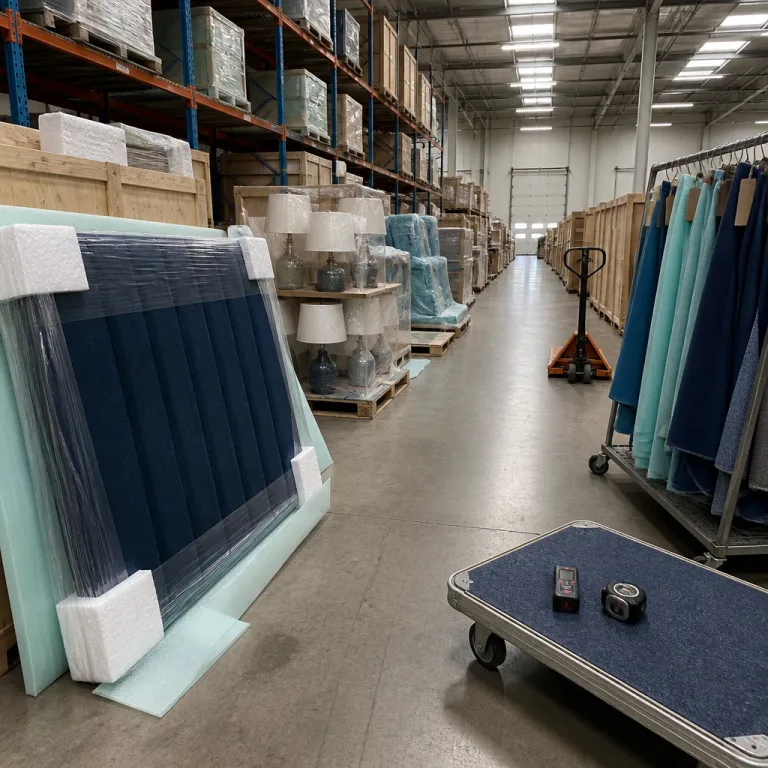
When hotel FF&E lead time starts driving the design, not the other way round
Hotel FFE procurement lead time is no longer a back of house concern; it is now a primary design constraint that shapes every hospitality project from the first moodboard. Custom casegoods produced overseas routinely sit in the 16 to 22 week window, while domestic hotel furniture production averages 8 to 12 weeks, and those durations quietly dictate when design intent must be frozen. For a 14 month hotel project, that means the real design deadline arrives around month four, when procurement teams need locked specifications to protect the critical path.
Interior designers and technical directions who still treat ff&e as a late stage package are the ones absorbing the cost of rushed purchasing, compromised furniture fixtures and emergency substitutions. The procurement process has become a parallel design track, where each project phase must align with manufacturing slots, shipping capacity and installation windows rather than just architectural milestones. In practice, the invisible lead times for hotel ff&e now decide which custom furniture items survive value engineering and which standard fixtures equipment lines get pulled in to save time.
Every actor in hospitality feels this shift, from asset managers watching contingency evaporate to procurement managers renegotiating purchase orders when a supplier misses a delivery. The dataset is clear that design approval alone can consume 2 to 4 weeks, ordering another 1 to 2 weeks, manufacturing 8 to 16 weeks and shipping 2 to 8 weeks, before a final 1 to 4 weeks of installation closes the loop. When you overlay that timeline on a hotel opening date, ff&e procurement lead times stop being an operational detail and become a board level risk metric.
On the ground, procurement teams now sit in the same early workshops as the architect and interior designer, challenging ambitious joinery or bespoke hotel furniture concepts with hard data on manufacturing capacity and logistics. A procurement agent with real time visibility on supplier production can flag that a particular veneer or metal finish will push the lead time beyond 22 weeks, forcing a design decision before the concept is even signed off. This is where management software for ff&e os&e finally earns its licence fee, turning scattered emails about furniture fixtures into structured data that can be interrogated for risk.
For VP level hospitality executives, the question is no longer whether procurement will keep up with design, but whether design will respect the procurement process enough to protect opening dates and brand standards. When procurement managers say “What is FF&E? Furniture, Fixtures, and Equipment.” they are really reminding the room that every chair, headboard and minibar is a micro project with its own lead time and quality risk. Treating hotel ff&e as a strategic asset rather than a late stage shopping list is now the only way to reconcile design ambition with construction schedules and investor expectations.
The month four lock: how 16-22 week lead times rewire project timelines
On a typical 14 month hotel project, the most important date is not handover, but the quiet moment in month four when ff&e items must be frozen to respect the 16 to 22 week manufacturing and shipping window. That is the point where design intent stops being fluid and becomes a contractual commitment embedded in purchase orders, production drawings and logistics plans. Ignore that lock and the project will pay for it later in rush surcharges, downgraded furniture and compromised guest experience.
Breaking down the procurement process exposes where the real time disappears, and why procurement teams keep asking for earlier decisions on hotel furniture and os&e. Design approval consumes 2 to 4 weeks as samples circulate, mockups are reviewed and brand teams debate finishes, while ordering and purchasing administration add another 1 to 2 weeks before a single piece of furniture fixtures hits the production line. Manufacturing then occupies 8 to 16 weeks, followed by 2 to 8 weeks of shipping and customs, before installation teams need 1 to 4 weeks on site to align fixtures equipment with MEP and joinery.
For senior management, the cost of late specification changes is no longer anecdotal; it is a measurable erosion of ROI across the hospitality portfolio. Restocking fees on cancelled ff&e items, air freight premiums to claw back lost time and contractor delay penalties can collectively exceed the original design fee on a single hotel. Strategic furniture procurement for design led hospitality projects now means mapping every long lead item against the construction programme and treating each change request as a financial decision, not just a creative tweak.
Domestic sourcing at 8 to 12 weeks looks like an easy fix on paper, but the reality is more nuanced for any project that spans multiple properties or brands. Local manufacturers may shorten the headline lead time, yet capacity constraints, holiday shutdowns and bespoke finishing can erase that advantage when procurement teams try to scale orders across several hotels. In some cases, a well organised overseas supplier with predictable 16 to 22 week lead times and strong management software integration will outperform a domestic workshop that accepts the work but cannot maintain consistent delivery.
For design directors, the implication is clear; the hotel FFE procurement lead time must be embedded in the concept narrative from day one, not retrofitted at tender. Early identification of long lead items, parallel design and procurement processes, pre approval of samples and regular schedule updates are no longer best practice slogans, but survival tools. When you brief your team on a new hospitality project, the Gantt chart for ff&e procurement should sit alongside the brand book and the architectural plans, not buried in a back office folder.
Asset managers and investors who understand this month four lock are starting to ask sharper questions about how design and procurement work together to protect opening dates. They want to see data on historical lead times, supplier performance and change order frequency, not just moodboards and renderings. In that context, a disciplined approach to hotel FFE procurement lead time becomes a competitive advantage, signalling to the market that your group can execute complex renovations and new builds without sacrificing either design quality or schedule.
Compliance, sustainability and the new risk profile of FF&E procurement
Compliance has quietly become one of the most significant drivers of hotel FFE procurement lead time, especially in markets where fire safety and accessibility standards are non negotiable. Every piece of hotel furniture must now align with CAL TB 117-2013 fire safety, ADA accessibility parameters and BIFMA X5.5 for casegoods, and that testing alone can add 3 to 4 weeks if not planned into the procurement process. When those compliance checks collide with 16 to 22 week manufacturing windows, the risk of missing an opening date escalates rapidly.
Procurement teams who treat compliance as a late stage box ticking exercise are the ones forced into last minute substitutions that dilute design intent and brand positioning. A procurement agent who understands the full lifecycle of fixtures equipment will push for pre approved materials, certified finishes and repeatable constructions that can move through testing without surprises. Strategic FF&E procurement for hotels from design intent to flawless installation now means building compliance milestones into the same management software that tracks purchase orders and delivery dates.
Sustainability adds another layer of complexity to hotel ff&e, but it also offers a route to more predictable lead times when handled correctly. FSC certified woods, low VOC finishes and recyclable metals are no longer niche options; they are baseline expectations for many hospitality brands and investors, and they influence which manufacturers can realistically support your project. WELL Building Standard guidance is increasingly referenced in specifications, and that pushes procurement teams to vet suppliers not just on cost and time, but on material health and worker conditions.
For resort and coastal properties, the material palette narrows further, with marine grade aluminium and certified sustainable teak emerging as the gold standards for exterior furniture fixtures. Those materials carry their own lead times, often at the upper end of the 16 to 22 week range, especially when combined with custom finishes or integrated lighting. A procurement aware design approach means selecting those materials early, aligning them with structural and MEP decisions, and locking them into purchase orders before value engineering pressure forces inferior substitutes.
Data from recent projects shows that increased use of local suppliers, adoption of digital procurement tools and emphasis on sustainable materials can collectively reduce schedule volatility, even if they do not always shorten the absolute lead time. Real time tracking systems for os&e ff&e shipments, integrated with logistics tracking and customs brokers, give procurement teams the visibility they need to re sequence work on site when a container slips by a week. In that environment, hotel FFE procurement lead time becomes a managed variable rather than an unpredictable threat.
For C suite leaders, the message is blunt; compliance and sustainability are no longer optional badges, they are structural forces that reshape the procurement process and the risk profile of every hospitality project. Investing in an ff&e partner who can navigate CAL TB 117-2013, ADA, BIFMA and WELL while maintaining design quality is as critical as selecting the right architect. When you evaluate management software platforms, the priority should be their ability to handle compliance documentation, sustainability certifications and real time logistics data, not just their user interface.
As one industry FAQ puts it with disarming clarity, “Why are FF&E lead times long? Due to manufacturing, shipping, and approval processes.” and “How to reduce FF&E procurement delays? Early planning and parallel processing.” Those simple statements capture the reality that no amount of wishful thinking will compress a 16 to 22 week manufacturing cycle if compliance and sustainability are treated as afterthoughts. The only credible strategy is to integrate those constraints into design and procurement from the first briefing, and to measure teams on how well they anticipate rather than react.
Procurement-aware design: aligning creative ambition with operational reality
The most progressive hospitality groups now brief their interior designers with a clear mandate; design intent must be procurement aware from day one, or the project will not meet its commercial targets. That means the creative team understands hotel FFE procurement lead time, knows which ff&e items are long lead and accepts that certain bespoke gestures are only viable if locked early. It is not about limiting creativity, but about channelling it into forms that respect the 16 to 22 week reality of furniture and fixtures equipment production.
In practice, procurement aware design starts with a joint workshop where architects, designers, procurement managers and asset managers map the project schedule against key decision points. They identify which furniture fixtures, lighting and os&e categories carry the highest lead times, and they agree on a phased approval strategy that allows parallel design and procurement work. This is where tools like detailed FF&E schedules, supplier databases and procurement management software stop being administrative overhead and become strategic instruments.
For example, a design team might prioritise custom headboards, casegoods and lobby seating for early sign off, while leaving more flexible os&e selections such as accessories and small items for later in the process. That sequencing allows procurement teams to place purchase orders on the critical hotel furniture packages while the designers continue refining artwork, textiles and decorative lighting. It also creates space to align technical specifications such as circadian lighting requirements with broader building strategies, as explored in depth in guidance on circadian lighting specifications for electrical engineers.
Hospitality executives should also scrutinise how their organisations handle change once the month four lock has passed, because that is where many projects quietly lose both time and money. A disciplined change control process that quantifies the impact of each design revision on lead times, delivery dates and contractor sequencing will deter casual tweaks that erode the schedule. When procurement teams can show in real time that a new finish or profile will push a key item beyond the 22 week window, decision makers are forced to weigh aesthetic gains against operational risk.
Vendors and ff&e partners have a role to play here, especially those who can provide transparent data on their own capacity and logistics. Some suppliers now offer digital tools that allow hotel clients to effectively schedule a demo of their production and tracking systems, giving procurement managers confidence in how furniture fixtures will move from factory to site. While brands like Curve Hospitality operate in this space with a focus on integrated ff&e os&e solutions, the underlying principle is universal; better data means better design decisions.
For multi property portfolios, the next frontier is standardising certain ff&e items and procurement processes without flattening brand differentiation. That might mean a shared back of house os&e ff&e catalogue with proven lead times and quality, while front of house hotel furniture remains more tailored to each concept. Executives who can strike that balance will see fewer schedule shocks, more predictable capex and a clearer line of sight from design ambition to operational performance across their hospitality assets.
Key figures on FF&E procurement lead times in hospitality
- Custom casegoods produced overseas typically require 16 to 22 weeks from approved drawings to delivery on site, which means specifications must be locked around month four of a 14 month hotel project to avoid schedule risk (source: Sara Hospitality, industry guidance on hotel FF&E procurement).
- Domestic US production for hotel casegoods averages 8 to 12 weeks, yet overall project timelines may not shorten if local manufacturers face capacity constraints or if shipping and installation windows are not aligned with construction milestones (source: Sara Hospitality, comparative lead time data).
- A standard FF&E procurement cycle can be broken into 2 to 4 weeks for design approval, 1 to 2 weeks for ordering, 8 to 16 weeks for manufacturing, 2 to 8 weeks for shipping and 1 to 4 weeks for installation, illustrating how easily total lead time can exceed 20 weeks if any stage slips (source: aggregated project datasets from procurement specialists).
- Independent benchmarks indicate that custom furniture lead times of around 8 weeks and imported stone lead times of around 10 weeks are common even outside hospitality, underlining that long lead items are a structural feature of construction supply chains rather than a hotel specific anomaly (source: Procurist and Hotel Design UK, sector reports).
- Projects that adopt early identification of long lead items, parallel design and procurement processes, pre approval of samples and regular schedule updates report reduced project delays and cost overruns, confirming that process discipline can mitigate but not eliminate the 16 to 22 week lead time problem (source: industry best practice summaries from procurement consultants).