From flexible promise to measurable performance in public spaces
Modular hotel furniture has moved from niche experiment to default brief in many hotel lobbies. For a general manager responsible for a 100 to 500 room property, the question is no longer whether modular furniture belongs in the lobby, but whether these flexible solutions actually generate measurable revenue and operational efficiency over their full life cycle. The gap between the render and the finished lobby appears precisely where modular furniture design meets staffing patterns, event calendars, and the real cost of moving units across public spaces.
Manufacturers such as Haworth, Steelcase, MillerKnoll and other global contract brands now position each modular seating element as a strategic asset rather than a decorative object. Their modular hotel furniture ranges are sold on the promise of adaptable room design, modular seating that shifts from co-working to cocktail, and seating systems that can be re-skinned with new fabric instead of fully replaced. Yet for many hotels, especially a small hotel or independent boutique hotels, the premium price of modular sofas and sectional seating only pays back if the team actually reconfigures the guest rooms and public areas often enough to drive incremental revenue.
Across the market, industry commentary and supplier estimates suggest that more than 27,000 hotel rooms already operate with some form of modular furniture in place. That figure signals a structural shift in how hospitality furniture is specified, but it also hides a wide variance in how often a room layout or lobby space is truly changed during the year. For asset managers and investors, the critical design trends question is not whether modular hotel furniture looks modern in a lobby, but how many events, co-working passes, or F&B covers it can unlock before the next renovation cycle.
The three configurations that actually earn their keep
Across properties that use modular hotel furniture seriously, three repeatable configurations consistently show a clear ROI. The first is the event setup, where modular sofas, seating islands and loose lounge pieces convert a lobby or pre-function space into a 60 to 120 person event room without external rental costs. In these hotels, the GM can respond to a last-minute request for a product launch or local corporate gathering by reconfiguring in-house assets overnight, instead of turning away the sale or paying a premium price for hired seating.
The second configuration is the daytime co-working layout, which has become a standard in the modern hotel lobby. Here, modular furniture systems combine sofa elements, individual seating and high tables so that one guest room style of comfort is extended into the public interior spaces, with power access and acoustic zoning. When the furniture planning is handled with the same rigor as back-of-house workflows, a lobby can host paying co-working guests, casual laptop users and in-house guests simultaneously, turning underused rooms adjacent to reception into revenue-generating spaces.
The third configuration is the evening social mode, where the same modular sofas and seating units pivot towards the bar, terrace or restaurant. In this scenario, a luxury hotel or design-led small hotel uses modular hotel furniture to compress or expand the bar footprint depending on season, weather and occupancy, while maintaining a coherent interior design language. For architects and lighting designers, this is where modular furniture intersects with architectural lighting strategies, as shown in analyses of next-generation hospitality lighting design, because the perceived intimacy of each cluster depends as much on the beam spread as on the sofa depth.
Procurement, price premiums and the real amortisation curve
When a GM or asset manager evaluates modular hotel furniture, the first friction point is almost always price. A well engineered modular sofa system with commercial grade fabric, integrated power and durable connectors can cost roughly 15 to 30 percent more than a comparable fixed sofa specified in standard FF&E packages, according to typical procurement benchmarks from global hotel brands and purchasing agents. That premium grows when a project team requests custom design details, such as non-standard seating depths, bespoke stitching or integrated planters that align with a specific interior design narrative.
Lead times also shape the business case, especially when renovation windows are tight and hotel rooms must return to inventory quickly. Data from hospitality procurement specialists indicates that custom casegoods and seating produced overseas often require 16 to 22 weeks, while domestic manufacturing in markets such as the United States can reduce that to 8 to 12 weeks, but usually at a higher unit price. For modular hotel projects, manufacturers like Steelcase and Haworth use modular manufacturing and digital design tools to standardise internal structures while customising visible elements, which helps stabilise both quote accuracy and delivery risk.
The amortisation logic becomes compelling when modular furniture is tied directly to incremental revenue from events, co-working passes and F&B. A lobby that can host two additional paid events per month because of fast reconfiguration, or that extends dwell time through carefully planned modular seating and lighting, can often recover the modular premium within three to five years in internal feasibility studies. For example, a 100 square metre lobby that adds two 80-person events per month at a conservative net contribution of $1,500 each generates $36,000 annually; if the modular upgrade premium is $90,000, the payback period is approximately 2.5 years before maintenance. This is where GMs should align with designers and FF&E suppliers on clear KPIs, linking each modular furniture unit to a forecast of additional covers, higher average check, or improved guest satisfaction scores, rather than treating investments in hotel furniture as purely aesthetic decisions.
Durability, maintenance and the hidden cost of flexibility
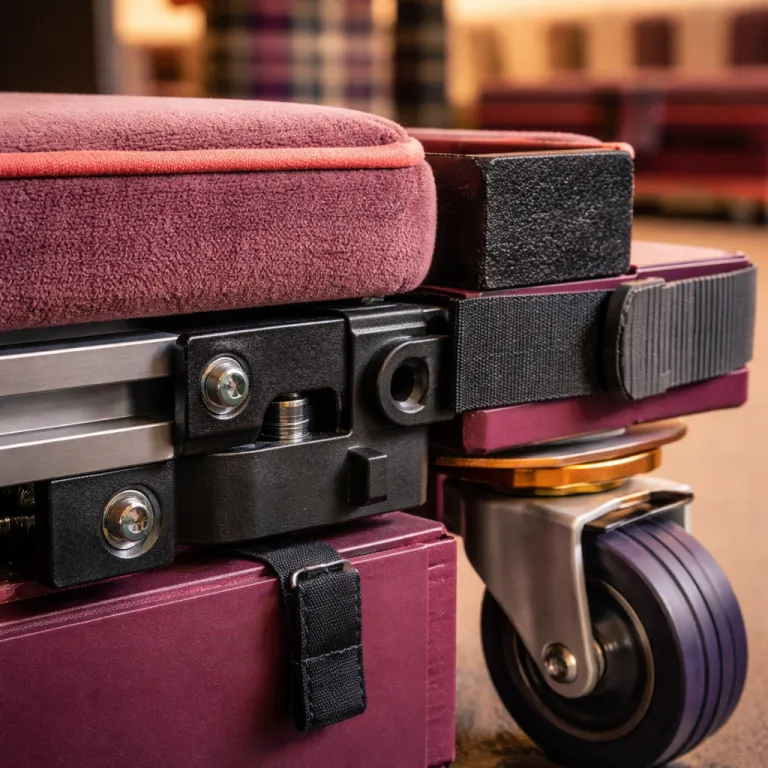
The operational reality of modular hotel furniture only becomes visible after the first twelve to eighteen months of use. In high-traffic hotels, especially airport properties and busy boutique hotels, modular seating is moved several times per week, which stresses joints, connectors and fabrics in ways that standard testing protocols rarely simulate. The promise that modular furniture offers easy maintenance and supports the circular economy is valid, but only if the specification anticipates hotel-grade abuse from luggage wheels, food service and constant rearrangement.
Manufacturers such as MillerKnoll and Haworth respond with precision engineering, reinforced frames and replaceable components, so that a damaged arm or seat unit can be swapped without discarding the entire sofa. Their teams often use data-driven material selection to balance tactile comfort with stain resistance, specifying fabrics and finishes that can withstand repeated cleaning cycles in public spaces without visible degradation. For a GM, the key maintenance question is whether the housekeeping and engineering teams can handle basic reconfiguration and minor repairs in house, or whether every request for change requires external technicians and unplanned downtime in guest rooms or lobby zones.
There is also a staffing cost to flexibility that many feasibility studies ignore. Every time a lobby shifts from co-working to event mode, someone must move each modular furniture unit, adjust lighting scenes and reset the bar or buffet layout. Over a year, those labour hours accumulate into a real line item that should be weighed against the incremental revenue from events and social activations, especially in a small hotel with lean teams. A simple model multiplies staff hours per reconfiguration by the hourly rate and number of resets per month to reveal the true annual cost. When the operational model is clear and these labour costs are tracked alongside maintenance and revenue, modular hotel furniture becomes an asset that supports both guest experience and staff efficiency, instead of a beautiful but underused kit of parts.
Design trade offs, brand character and when modular is not enough
From a pure design perspective, modular hotel furniture rarely achieves the sculptural precision of fully bespoke millwork or fixed banquettes. Many architects still argue that the most memorable hotel rooms and public interiors rely on tailored joinery, integrated lighting and custom seating that cannot be disassembled into units. They are not wrong; the lobby that photographs well because the terrazzo grain aligns with the bar front and the ceiling height feels effortless is usually anchored by fixed elements, with modular furniture playing a supporting role rather than defining the entire space.
Studios such as Goodesign demonstrate that sustainable, adaptable modular furniture can still carry a strong design identity when the system is conceived holistically from the start. Their work shows how modular sofas, tables and lighting can create coherent interior design narratives across multiple rooms and spaces, while still allowing operators to respond to changing guest behaviour and design trends over time. In parallel, luxury hotel brands increasingly combine a fixed architectural spine with modular seating clusters, using lighting and biophilic elements to tune dwell time and perceived intimacy, a strategy explored in depth in analyses of the biophilic dwell time premium and its revenue impact.
For GMs and asset managers, the strategic question is where to place the line between fixed and flexible. High-touch areas that define brand character, such as reception backdrops, signature bars or key hotel room suites, often justify bespoke furniture design and integrated hospitality joinery solutions that will not move for a decade. Peripheral zones, pre-function corridors and secondary lounges are ideal territories for modular hotel experiments, where flexible solutions can be tested, measured and iterated without compromising the core identity of the modern hotel.
How often to reconfigure, and how to measure payback
Across properties that report strong returns from modular hotel furniture, reconfiguration is not an occasional gesture but a scheduled operational routine. Some urban hotels with active event calendars reset their lobbies and adjacent rooms several times per week, while resort properties may shift layouts seasonally to follow outdoor weather patterns and guest flows. The key is to align the rhythm of change with real demand, rather than moving modular furniture simply because it is possible.
Weekly reconfiguration tends to make sense in city-centre hotels where local corporate clients and community groups generate a steady request stream for small events, talks and product launches. In these cases, each modular furniture unit is effectively part of the events inventory, and the GM can track payback by linking event revenue, bar sales and co-working passes directly to the use of public spaces. Seasonal reconfiguration is more appropriate for resort or leisure-focused boutique hotels, where the same modular sofas and seating clusters migrate between indoor lounges and terraces as guest behaviour shifts between day and night.
To measure payback rigorously, operators should track a small set of clear KPIs tied to modular furniture usage. These include revenue per square metre in lobby and F&B spaces, average dwell time for both in-house and external guests, the ratio of event days to total days for each reconfigurable room, and the number of reconfigurations per month. When these metrics are reviewed alongside maintenance costs, staff hours and guest satisfaction scores, the business case for modular hotel furniture becomes transparent, allowing future quotes and procurement decisions to be based on evidence rather than trend-driven enthusiasm.
FAQ
What is modular hotel furniture in practical terms ?
Modular hotel furniture is furniture designed with interchangeable components that can be rearranged to create different configurations in hotel rooms and public spaces. In practice, this means sofas that split into smaller seating units, tables that join to form communal surfaces, and storage elements that stack or separate as needed. The goal is to give hotels the ability to adapt room design and lobby layouts quickly without buying entirely new furniture.
Why should a hotel invest in modular furniture instead of fixed pieces ?
Hotels choose modular furniture because it offers adaptability, efficient use of space and easier maintenance over time. When used strategically, modular hotel furniture allows a lobby or lounge to serve as co-working space by day, event venue in the evening and relaxed social area at night, all with the same core units. This flexibility can generate additional revenue from events and F&B while delaying the need for full renovations.
How sustainable are modular furniture systems for hotels ?
Many modular furniture systems are designed with sustainability in mind, using recyclable materials and construction methods that support the circular economy. Because components such as arms, legs or seat pads can be replaced individually, hotels avoid discarding entire sofas or chairs when only one part is damaged. This approach reduces waste and can extend the life cycle of hotel furniture significantly compared with conventional fixed pieces.
Can modular hotel furniture be customised to match a brand’s interior design ?
Modular hotel furniture can usually be customised in terms of fabric, finishes, dimensions and configuration to align with a specific interior design concept. Manufacturers like Haworth, Steelcase, MillerKnoll and similar contract specialists work closely with architects and designers to adapt standard modular solutions to each project’s aesthetic and operational needs. This allows hotels to maintain a strong brand identity while still benefiting from the flexibility of modular systems.
How often should a hotel reconfigure its modular furniture to justify the investment ?
The ideal reconfiguration frequency depends on the property’s market, event demand and staffing capacity. Urban business hotels with active event calendars may reconfigure several times per week, while resort or leisure properties might adjust layouts seasonally. The investment in modular hotel furniture is usually justified when reconfiguration directly supports additional event bookings, higher F&B revenue or improved guest satisfaction that can be tracked over several years.