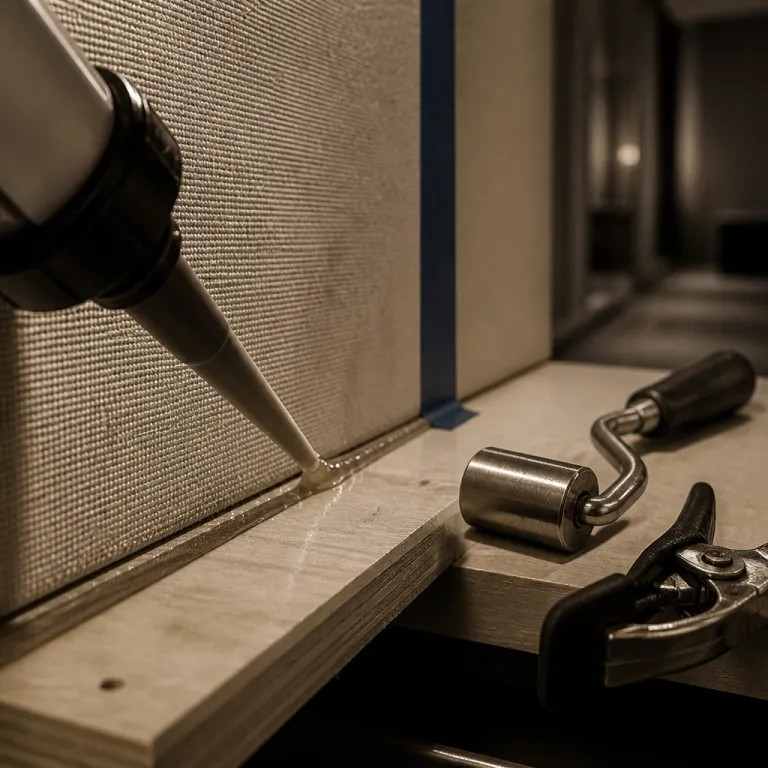
Solvent based adhesive in hospitality projects: where strength meets specification
Every hospitality project eventually reaches a quiet but decisive moment at the bonding table. The choice of solvent based adhesive or alternative adhesive systems will define how finishes age, how FF&E behaves, and how maintenance budgets evolve. For architects, hospitality designers, technical directors, asset managers, investors, FF&E suppliers, and consulting engineers, this is no longer a purely technical decision but a strategic one that affects guest experience and ESG reporting.
Solvent based adhesive is a glue where a polymer is dissolved in a volatile organic solvent, then applied as a thin film by brush, roller, or spray. As the solvents evaporate, the adhesive forms a dense bond with high strength and reliable performance across metals, plastics, timber, and composite substrates. This curing mechanism explains why solvent based systems remain common in joinery shops, upholstery workshops, and on hotel renovation sites that demand quick turnaround and predictable handling characteristics.
Manufacturers and distributors of solvent technologies now segment their offer by industries, from hospitality fit out to marine and transport. End users in hotels value the fast drying time, typically between 5 and 15 minutes for many contact adhesives according to representative manufacturer datasheets, and the generous coverage often reported as 3–6 m² per litre for brush or roller application on non-porous substrates. These figures matter when a technical team must calculate labour, ventilation needs, and the environmental impact of repeated applications in hundreds of guestrooms.
Balancing bonding performance, health risks, and environmental impact
Technical directors often ask whether a solvent based adhesive is still the most appropriate choice for a given scope. The answer depends on how you balance bonding performance, programme constraints, health risks, and long term environmental responsibilities. In occupied hotels or phased refurbishments, this balance becomes particularly delicate and directly influences phasing, guest displacement, and air quality strategies.
Traditional solvent formulations deliver excellent strength, even under extreme temperatures or high humidity, which is why these adhesives offer reliable bonds for headboards, banquettes, and wall panels. However, the same volatile organic compounds that enable quick drying also generate VOC emissions that pose health concerns for workers and guests. For example, the EU Decopaint Directive (2004/42/EC) sets VOC limits for certain building adhesives in the range of 300–500 g/L, while California’s SCAQMD Rule 1168 caps many indoor adhesive categories between roughly 50 and 250 g/L, illustrating the regulatory pressure on high solvent content products.
Compared with water based adhesive technologies, classic solvent based products usually cure faster and tolerate more challenging substrates, but they also release higher levels of organic compounds into the air. These volatile organic compounds, often grouped under the term VOCs, can pose health issues when ventilation is poor or when applications are repeated across large surfaces. For asset managers and investors, the environmental impact of these emissions now feeds directly into ESG reporting and brand positioning, especially where green building certifications reference indoor air quality benchmarks such as ISO 16000 or EN 16516.
When specifying adhesives for carpet underlays or acoustic pads, many consulting engineers now cross reference flooring choices with guidance on hospitality carpet pad performance and sustainability. The same logic should apply to every adhesive, whether it is a high solids solvent based product or a newer eco friendly water based formulation. A coherent specification reduces cumulative risks and simplifies air quality compliance across the entire project, from guestrooms to back of house corridors.
Choosing adhesive systems for FF&E and interior finishes
Specifiers rarely choose a single adhesive for an entire hotel; instead, they assemble a family of systems aligned with each application. The art lies in choosing adhesive combinations that respect design intent while managing programme, cost, and maintenance. This is where close dialogue between hospitality designers, manufacturers, and distributors becomes essential, supported by test samples and mock-ups rather than assumptions.
For upholstered wall panels, banquettes, and headboards, a high performance solvent based adhesive often secures foam to plywood or metal frames with excellent bond strength. In these FF&E applications, the glue must resist shear forces from guests leaning, cleaning cycles with detergents, and occasional exposure to extreme temperatures near façades or HVAC outlets. Here, solvent formulations with reduced VOC emissions can offer a safer compromise, especially when applied in controlled workshop conditions rather than in guestrooms, where ventilation and exposure times are harder to manage.
Timber veneers, bouclé textiles, and honed stone elements specified in warm minimalism schemes require equally thoughtful bonding strategies. When design teams work with palettes similar to those discussed in analyses of timber, bouclé, and honed stone in hospitality, they must ensure that solvent based formulations do not stain, telegraph, or yellow sensitive finishes. Water based adhesives can be advantageous on light fabrics or porous substrates, while solvent based products may still be preferred where maximum strength and rapid handling are critical and where test panels confirm that the adhesive will not migrate or discolour.
For stone thresholds, metal trims, and mixed material junctions, adhesives with hybrid chemistries sometimes outperform both pure water based and traditional solvent based options. These systems offer strong bonds with lower levels of volatile organic compounds, reducing environmental and health risks without sacrificing performance. Specifiers should request comparative data that clearly shows how each adhesive behaves, including peel strength, heat resistance, and open time, ideally expressed in standardised test methods such as ASTM D903 for peel or EN 14293 for wood flooring adhesives.
From specification to site: managing solvents, vocs, and worker safety
Once a specification leaves the design studio, the reality of site conditions takes over. Technical directors and main contractors must translate elegant bonding diagrams into safe, repeatable applications across dozens of trades. This is where the handling of solvents and control of VOC emissions become operational issues rather than abstract sustainability goals, and where method statements and risk assessments must be aligned with the adhesive schedule.
Solvent based adhesive systems rely on the evaporation of solvents to cure, which means that every litre applied releases volatile organic compounds into the workspace. In confined hotel corridors or windowless back of house areas, these VOCs can accumulate quickly and pose health concerns for installers. Proper ventilation, personal protective equipment, and strict adherence to safety datasheets are non negotiable when working with any solvent rich formulation; many safety data sheets reference occupational exposure limits derived from standards such as OSHA PELs or EU Indicative Occupational Exposure Limit Values.
Manufacturers now invest heavily in low VOC and partially solvent free options that still deliver the required bonding strength. Development timelines show a clear shift from traditional high solvent content adhesives to more eco friendly technologies that reduce environmental impact and health risks. For end users in hospitality, this innovation translates into safer refurbishment programmes, fewer complaints about odours, and a smoother path to green building certifications that reward reduced VOC emissions and robust indoor air quality management.
On site, training remains critical because even the best solvent reduced product can pose health issues if misused. Distributors and manufacturers should offer toolbox talks that explain correct glue application thickness, flash off times for solvents, and ventilation strategies tailored to each hotel zone. When asset managers insist on such protocols, they protect both their investment and the well being of the teams delivering the project, while also documenting due diligence for health and safety audits.
Lifecycle thinking: adhesives, refurbishment cycles, and asset value
Hospitality assets live through multiple refurbishment cycles, and every adhesive decision leaves a trace. A strong bond that resists extreme temperatures and cleaning chemicals may seem ideal today, yet it can complicate future strip outs and generate additional waste. Lifecycle thinking encourages specifiers to weigh immediate performance against long term flexibility, including the cost and disruption of removing tightly bonded finishes.
Solvent based adhesive often excels in first fit applications where speed and strength dominate, such as bonding laminates to casegoods or fixing acoustic panels in ballrooms. However, when these adhesives offer near permanent adhesion, removing finishes without damaging substrates can become labour intensive and costly. Water based or hybrid systems sometimes provide a more reversible bond, especially when combined with mechanical fixing strategies that share the structural load and allow partial disassembly during later refurbishments.
From an ESG perspective, the environmental impact of adhesives extends beyond initial VOC emissions. Strong, durable bonds can extend the service life of FF&E, reducing the frequency of replacements and the embodied carbon associated with new production. At the same time, high solvent content products may increase hazardous waste streams during demolition, particularly when compared with low VOC or solvent free alternatives that are easier to separate from substrates or that contain fewer regulated organic compounds.
Asset managers and investors should therefore integrate adhesive strategy into their long term capital planning. When evaluating options, they can request data on recyclability, ease of disassembly, and compatibility with circular economy models in hospitality. This approach aligns technical decisions about glue and solvents with broader brand commitments to eco friendly operations and responsible renovation, and it provides a documented rationale for auditors and sustainability rating agencies.
Practical specification framework for solvent based and water based systems
To move beyond generic debates, project teams benefit from a clear framework for choosing adhesive systems. Such a framework should align with room typologies, programme constraints, and the specific health and environmental objectives of the brand. It also needs to be simple enough for contractors and suppliers to apply consistently, ideally through standardised schedules and checklists.
One practical approach is to classify all bonding needs by exposure and reversibility. High exposure zones such as lobbies, spas, and F&B outlets may justify a robust solvent based adhesive where strength and moisture resistance are critical, provided that installation occurs off site or under strict ventilation. Low exposure or frequently refurbished areas, including standard guestrooms, often favour water based or hybrid options that reduce VOC emissions and simplify future upgrades, especially where furniture and finishes are replaced on a predictable cycle.
Another axis of decision making concerns substrate sensitivity and finish value. Premium veneers, delicate textiles, and specialist acoustic materials may require water based adhesives with lower solvent content to avoid staining or dimensional changes. In contrast, back of house areas or technical rooms can tolerate more aggressive solvent formulations, as long as health risks are controlled and environmental impact is documented through VOC content declarations and safety data sheets.
Design managers can embed these rules into specification templates and into tools such as hotel room design specifier working lists for openings and refurbishments. By doing so, they ensure that every adhesive, whether solvent based or water based, is chosen with a clear rationale. Over time, this consistency strengthens relationships with manufacturers and distributors, who can then tailor their adhesive ranges to the precise needs of hospitality projects and provide targeted training and documentation.
Collaboration with manufacturers and distributors for safer, higher performance bonds
No specification for solvent based adhesive should be written in isolation from the supply chain. Manufacturers, distributors, and end users each hold part of the data needed to balance performance, safety, and sustainability. Effective collaboration turns this fragmented knowledge into a coherent bonding strategy for the entire portfolio, reducing the risk of ad hoc substitutions on site.
Manufacturers bring laboratory data on bond strength, open time, and resistance to extreme temperatures across different industries. Distributors understand logistics, batch consistency, and how adhesives offer practical advantages or pose health challenges on real sites. End users in hospitality contribute feedback on odour perception, cleaning compatibility, and how different systems age under continuous guest traffic, providing a reality check on theoretical performance claims.
Joint workshops can compare solvent based, water based, and hybrid options on a matrix that includes performance, environmental impact, and total cost of ownership. Such sessions should explicitly address volatile organic compounds and the specific health risks associated with each adhesive family, referencing VOC content ranges, typical open times, and recommended PPE. When all parties agree on what constitutes the best choice for each application, the resulting specifications are both safer and more robust and can be rolled out consistently across multiple properties.
For consulting engineers and technical directors, this collaborative model also simplifies compliance with evolving regulations on VOC emissions and organic compounds. Instead of reacting project by project, they can maintain a curated library of approved glue systems, each with clear guidance on solvents, applications, and risk controls. In a sector where guest expectations and sustainability standards keep rising, this disciplined approach to bonding is no longer optional; it is a strategic necessity.
Key figures on solvent based adhesive in hospitality interiors
- Typical drying time for many solvent based adhesive products used in interior fit out is reported by manufacturers in the order of 5–15 minutes for contact bonding, which allows rapid handling and reduces programme delays compared with slower curing systems such as some water based dispersions.
- Coverage rates for brush or roller applications are commonly expressed as several square metres per litre; representative datasheets indicate 3–6 m²/L on non-porous substrates and lower values on absorbent materials, meaning that a single container can treat multiple guestrooms in a standard refurbishment when applied correctly.
- Global development trends show a steady shift towards low VOC and solvent free options, driven by stricter indoor air quality regulations and green building certifications in major hospitality markets, including schemes that reference EN 13999 or ISO 11890 for VOC determination.
- In many jurisdictions, VOC emissions limits for interior adhesives have tightened significantly over the past decade, with rules such as EU 2004/42/EC and California SCAQMD Rule 1168 setting category-specific caps that have pushed manufacturers to reformulate solvent based systems with reduced volatile organic compounds.
- Hospitality refurbishment cycles often range between 7 and 12 years for guestrooms, which amplifies the long term environmental impact of each adhesive choice across multiple generations of FF&E and finishes and makes early decisions on solvent content and reversibility particularly consequential.
FAQ about solvent based adhesive in hospitality projects
What are solvent based adhesives and how do they work ?
Solvent based adhesives are formulations where polymers are dissolved in organic solvents, applied as a liquid film, then cured as the solvents evaporate. This process creates a strong bond with good performance on metals, plastics, timber, and composites. The fast drying behaviour makes them attractive for time sensitive hospitality fit outs where short open times and rapid handling are essential.
Which materials in hotels are most suited to solvent based adhesive ?
These adhesives are often used for laminates on casegoods, foam to frame bonding in upholstered furniture, and fixing wall panels or trims where high strength is required. They perform well under moderate moisture and temperature variations, which suits many back of house and public area applications. Sensitive finishes or very light textiles may still benefit from water based or hybrid systems that reduce the risk of staining and odour.
Are there environmental and health concerns with solvent based products ?
Yes, because the solvents release volatile organic compounds into the air during curing, which can pose health risks for installers and affect indoor air quality if ventilation is poor. Regulations now limit VOC emissions, and many manufacturers offer low VOC or partially solvent free options. Proper PPE, extraction, and adherence to safety datasheets are essential on site, and project teams should verify that selected products meet relevant VOC content limits.
How do solvent based adhesives compare with water based alternatives ?
Solvent based systems usually cure faster and bond a wider range of challenging substrates, especially in demanding applications or extreme temperatures. Water based adhesives tend to have lower VOC emissions and can be more eco friendly, but may require longer drying times and careful substrate preparation. The best choice depends on the specific application, programme constraints, and sustainability targets, and should be supported by test data from manufacturers.
What should specifiers consider when choosing adhesive for a hotel project ?
Specifiers should evaluate substrate type, exposure to moisture and heat, reversibility needs for future refurbishments, and the project’s environmental objectives. Comparing options on strength, open time, VOC content, and compatibility with finishes helps identify the most appropriate system. Collaboration with manufacturers, distributors, and site teams ensures that the selected adhesive performs as intended throughout the asset’s lifecycle and remains compliant with evolving VOC and indoor air quality regulations.