From static BMS to anticipatory AI hotel environmental controls design
AI hotel environmental controls design is shifting the conversation from reactive comfort to anticipatory performance. In a well planned hotel, the building now adjusts before the guest feels warm, cold, or dazzled by morning light, and that shift has deep implications for architecture, technical planning, and FF&E specification. For the hospitality industry, this is no longer a software add on but a structural decision that belongs in the earliest design brief.
Predictive HVAC, lighting, and shading systems use occupancy patterns, weather data, and booking curves to pre condition each room and public space. Instead of waiting for a guest to touch the thermostat, machine learning models forecast demand for cooling or heating at portfolio level, then stage chillers, pumps, and air handling units in real time to minimise energy consumption. The same artificial intelligence layer can coordinate façade shading, interior blinds, and dimmable luminaires so that the guest experience feels effortless while the back of house energy management stays aggressively efficient.
For architects and designers working on hotel design, this means the environmental concept is no longer a neutral background to the interior narrative. The AI hotel environmental controls design strategy defines where you can afford double height volumes, how deep you can push floorplates before daylight and cooling loads become a risk, and which eco friendly materials make sense when you model long term operational costs. In mixed use hotels where food and beverage, co working, and events share plant and systems, the integration between spatial planning and AI driven controls becomes a primary design driver rather than a late engineering tweak.
Hotel owners and asset managers are treating AI hotel environmental controls design as a core lever for sustainability and customer loyalty. HVAC typically accounts for the majority of total hotel energy use, and AI driven centralised management can reduce that energy by tightening setpoints, shortening run times, and smoothing peaks without sacrificing guest satisfaction. For investors reviewing a portfolio level business case, the combination of lower energy consumption, better reporting, and higher guest satisfaction scores is now competing directly with more visible FF&E upgrades for capital.
How predictive systems reshape ducts, sensors, and the architect’s drawings
Once environmental systems become predictive and data driven, the architect’s drawings stop being neutral containers for someone else’s technology. Ductwork sizing, riser locations, and ceiling voids must now anticipate that AI hotel environmental controls design will run variable air volume at different speeds across the day, based on forecast demand rather than fixed schedules. That means more attention to pressure drops, acoustic separation, and maintenance access at the technical design stage, not during commissioning.
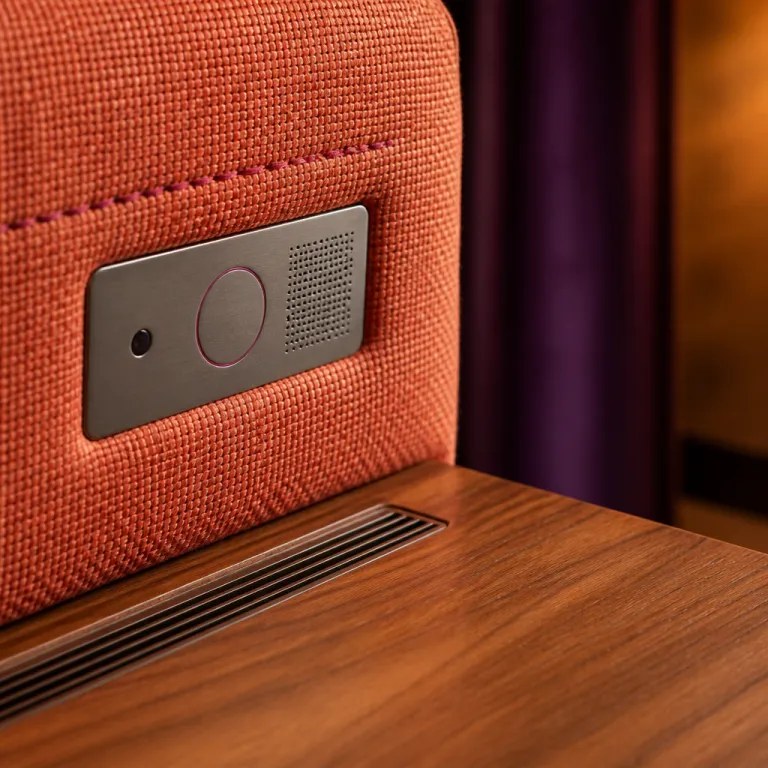
Occupancy sensors, thermostats, and window contacts used to be scattered where coordination allowed ; now their placement is a design decision that shapes the quality of the guest experience. To feed machine learning models with reliable data, sensors must read the actual occupied zone in the room, not the corridor or the curtain cavity, and that requirement affects joinery, headboard design, and even artwork placement. When you specify a sleek wall panel, you are also specifying the interface through which the guest will override or accept AI recommendations, so ergonomics and legibility become as critical as finish and colour.
Control panel specification is no longer a simple choice between glass and plastic. The AI hotel environmental controls design layer needs panels that can surface actionable insights to staff, accept firmware updates, and integrate with the property management system, while still feeling intuitive to a jet lagged guest. In technical terms, the design brief must now define integration protocols, API requirements, and cybersecurity standards alongside stone thickness and façade modules, because the hotel’s operational resilience depends on those systems talking to each other.
Structural decisions also shift when AI is expected to orchestrate energy management across hotels in the same brand. Central plant rooms, vertical shafts, and façade build ups must be detailed so that sensors, meters, and actuators can be replaced without tearing apart finished interiors, which is a very different mindset from traditional one off hotel projects. For teams used to focusing on lobby drama, it is worth revisiting how structural choices shape perception and performance, as explored in this analysis of hotel architecture and structural decisions that frame guest expectations.
Balancing AI optimisation, guest comfort, and the right to override
AI optimisation wants to shave kilowatts ; the guest wants instant response. That tension sits at the heart of AI hotel environmental controls design, and it is resolved in the interface, not in the plant room. If architects and designers leave that interface to a late stage vendor, they also leave guest satisfaction and customer loyalty on the table.
From a hospitality management perspective, the question is simple but uncomfortable : when should the guest be able to override the AI, and how far ? A fully locked system may deliver perfect sustainability metrics and beautiful reporting dashboards, but it will also generate angry social media posts if the room feels stuffy or the lighting scenes feel theatrical when the guest wants calm. On the other hand, unlimited manual control can destroy the energy model, forcing chillers and boilers to chase extreme setpoints and undermining the long term business case for AI.
The most resilient hotels are designing a hierarchy of control rather than a binary choice. The AI layer pre conditions the room based on guest preferences, loyalty profile, and forecast demand for the building, then offers a narrow but meaningful range of manual adjustments that snap back to efficient baselines after a defined duration. In practice, that might mean a temperature slider with a limited band, a few clearly labelled lighting scenes, and a shading control that respects façade level energy management rules while still giving the guest a sense of agency.
This is where FF&E and interface design meet operational workflows. The same wall panel that dims the lights can also surface food and beverage offers tuned to the time of day, or invite a quick review of the stay that feeds back into the CRM and loyalty programme, but only if the layout is calm and legible. Bathroom controls are a particular flashpoint, and the lessons from high performing bathroom design as a brand signal apply directly here : the guest should never have to think about how to get comfortable water, light, and air.
From single property tuning to portfolio level intelligence and failure modes
Once AI hotel environmental controls design is embedded, the real value emerges at portfolio level rather than in a single flagship. Centralised hotel energy management systems become the operational backbone, connecting thermostats, occupancy sensors, lighting, and the property management system into a unified view. That backbone allows owners to benchmark energy consumption, guest experience metrics, and maintenance events across hotels, then adjust design standards for future projects with hard data instead of anecdotes.
Machine learning thrives on scale, and multi property hospitality groups are already using it to forecast demand for cooling, heating, and even food and beverage production. By correlating weather patterns, booking pace, and social media sentiment, they can tune setpoints, kitchen extraction, and back of house ventilation before the first guest checks in. Generative design tools are starting to feed on the same data, proposing room layouts, façade configurations, and shading strategies that balance eco friendly performance with operational efficiency and brand specific guest preferences.
However, every AI model is a hypothesis about behaviour, and sometimes it is wrong. Failure modes must be designed as carefully as the ideal workflows, which means clear fallbacks when sensors fail, when data feeds are interrupted, or when the algorithm misreads occupancy and leaves a room unconditioned. Graceful degradation looks like a simple manual mode for staff, local thermostats that still function without the cloud, and reporting that flags anomalies without overwhelming the technical équipe with noise.
For asset managers and investors, the risk is not just technical but contractual. Design briefs now need to specify service levels for AI vendors, data ownership, and upgrade paths, because the building’s performance will depend on software that evolves faster than concrete or joinery. This is the same strategic thinking that underpins flexible mixed use development models, as explored in the analysis of why flexible hotel programming is becoming the default development model, and it should be applied with equal rigour to environmental systems.
Key figures shaping AI environmental controls in hospitality
- HVAC typically accounts for the majority of total hotel energy use, and studies of hotel sustainability trends show that AI driven centralised management can reduce that share significantly by tightening setpoints and shortening run times while maintaining comfort (source : Verdant / Copeland, global hotel portfolio analysis).
- Across many hospitality portfolios, energy consumption per occupied room can vary by more than 30 %, and AI hotel environmental controls design helps narrow that gap by standardising best practice setpoints and schedules across hotels while still allowing local adaptation (source : internal benchmarking reports from international hotel groups).
- Guest experience research consistently shows that temperature, air quality, and lighting are among the top drivers of guest satisfaction scores, often outranking some visible FF&E upgrades, which reinforces the ROI case for investing in intelligent energy management systems at the design brief stage (source : aggregated guest review analytics from major online travel agencies).