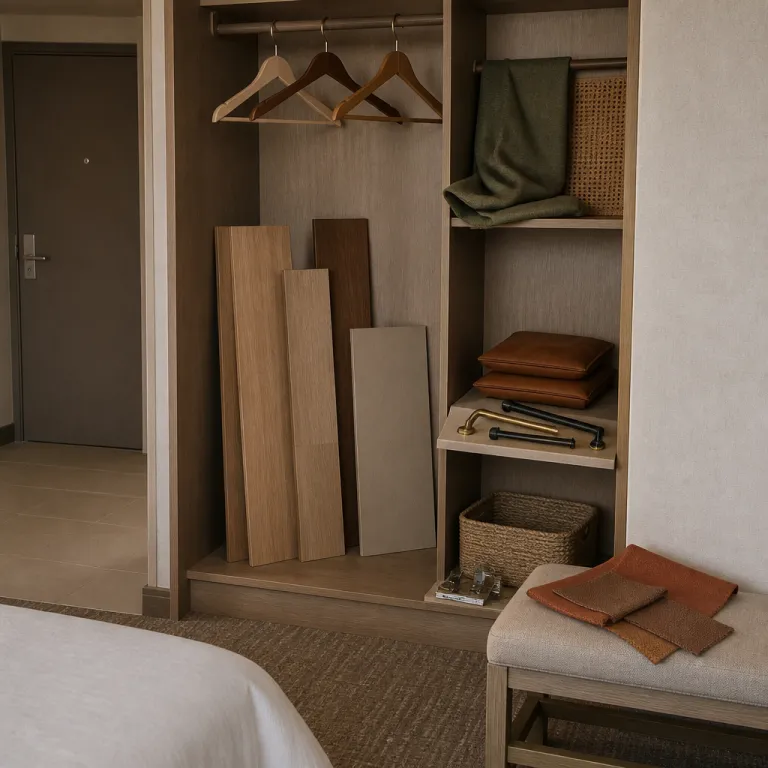
From overnight to seven nights: calibrating hotel guest room storage design by stay length
Hotel guest room storage design now sits on the same strategic level as bed specification and bathroom layout. When the average room must flex between a one night corporate guest and a seven night small guest family stay, the storage architecture becomes a revenue tool rather than a decorative afterthought. Storage is no longer about a generic closet in the guest room ; it is about calibrated capacity that makes the room feel aligned with the booking pattern you actually sell.
For a one night stay, the minimum viable storage in compact rooms is a 500 mm deep open wardrobe, a luggage rack, and a drawer nightstand that can hold tech, medication, and a laptop. Three night stays push different bedroom ideas into play, because guests feel more comfortable when they can unpack folded items into at least two drawers and hang five to seven garments without crushing them. Once you cross into seven night territory, the guest bedroom must offer enough room furniture and storage volume for a capsule wardrobe, sports gear, and work items, or the guest experience will suffer and the room feel will slide from considered to improvised.
Design teams who map storage to length of stay see measurable gains in guest experience scores and repeat bookings. Hotel managers report that guests who can unpack fully in hotel rooms tend to extend stays and rate overall comfort higher, because the hotel room starts to feel like a functional micro apartment rather than a transient box. Asset managers should therefore treat hotel guest room storage design as a RevPAR lever, not a soft amenity, because the right room design supports longer average duration without increasing gross floor space.
Open wardrobe or closed closet: space, maintenance and the psychology of unpacking
The open wardrobe versus closed closet debate is no longer only about aesthetics ; it is about how you create a room feel that either invites unpacking or quietly discourages it. Open systems maximise perceived space in small guest rooms, because the eye reads the full depth of the wall rather than a solid door plane. They also reduce hardware costs and simplify maintenance, but they expose every hanger, bag, and piece of room furniture clutter to the corridor when the guest leaves the door ajar.
Closed closets, by contrast, give the guest bedroom a calmer color palette and hide visual noise, which can make guests feel more at home during longer stays. They allow you to add internal lighting, a safe, and a luggage rack without visual overload in compact rooms, but they demand high quality hinges and sliding hardware to survive heavy use. Poorly specified doors that bind or misalign quickly become a maintenance headache and a daily friction point for every hotel guest who tries to access storage in tight rooms.
Different traveller segments read these choices as signals about expected behaviour in hotel rooms. Road warriors often prefer open wardrobes because they rarely unpack fully and want fast access to a suit, while leisure guests staying seven nights expect a closed closet that supports full unpacking and a more residential guest experience. For long stay and senior travellers, enclosed storage combined with supportive furniture and thoughtful lighting, as explored in this analysis of supportive furniture in hospitality interiors, can materially improve comfort and perceived value.
The luggage bench: the most under specified piece of room furniture
Across many hotel rooms, the luggage bench is still treated as an afterthought, even though it is the first storage touchpoint every guest uses. The dataset confirms that the recommended luggage bench height is around 400 mm, which aligns with ergonomic reach from a standard bed and reduces strain for guests lifting heavy cases. When the luggage rack or bench is too low or too high, guests feel it immediately in their backs and knees, and they start using the bed as a makeshift platform, which accelerates mattress wear and complicates maintenance.
Depth and weight capacity matter just as much as height in hotel guest room storage design. A bench depth of 450 to 500 mm comfortably holds a large suitcase without overhang, while a structural design rated for at least 40 to 50 kg prevents flexing and long term damage in guest rooms with high turnover. Positioning is critical ; place the luggage bench opposite the foot of the bed or adjacent to the wardrobe door, so that guests can open cases fully without blocking circulation or access to the bathroom in compact rooms.
For extended stay room design, consider integrating the luggage rack into a multi level furniture element that combines a drawer nightstand, open shelving, and a hanging rail to create a single, efficient storage wall. This approach frees floor space guests can actually use, while keeping the hotel room visually calm and the color palette uninterrupted. As corridor sequences become more curated, as explored in this piece on the hotel corridor as a design sequence, the transition from corridor to guest room should reveal a luggage solution that feels intentional, not improvised.
Drawers, safes and modular systems: small decisions that transform the guest experience
Drawer quantity and depth are among the cheapest levers in hotel guest room storage design, yet they strongly influence how guests feel about longer stays. A minimum of two deep drawers at 180 to 220 mm height in each guest room allows a couple to unpack folded items, while a third shallow drawer in the drawer nightstand can hold tech, documents, and personal items. When drawers are absent or too small, guests feel forced to live out of suitcases, and the room ideas that looked clean on paper translate into daily frustration in real rooms.
The safe specification is another persistent friction point in many hotel rooms. Units that are too small for a laptop, placed on the floor of a closet, or hidden behind awkward hardware send a clear message that the hotel guest was not considered in the design process. Position the safe at waist height within the wardrobe or integrated room furniture, ensure the door opens fully without clashing, and choose a model with intuitive controls, because “Why is storage important in hotel rooms? It enhances guest comfort and organization.”
Modular furniture systems allow the same guest rooms to flex between short and long stays without physical reconfiguration. A vertical grid of panels can support adjustable shelves, hanging rails, and closed boxes, so that operators can add or remove elements between seasons while keeping the guest bedroom visually coherent. For properties balancing transient and extended stay demand, this modular approach to room design protects capital expenditure, improves maintenance access, and lets guests feel that the space was tailored to their stay length rather than forced into a single rigid layout.
Lighting, color and furniture detailing: making storage feel like part of the room, not an afterthought
Even the best planned storage fails if it feels visually disconnected from the rest of the hotel room. Integrating wardrobe volumes, a luggage rack, and a drawer nightstand into a single, continuous furniture language helps the guest experience feel seamless rather than piecemeal. The color palette should link the guest room storage wall to the bed headboard and room furniture, so that compact rooms read as calm, coherent spaces instead of a collage of unrelated elements.
Lighting is a critical but often neglected part of hotel guest room storage design. LED strips inside wardrobes, motion activated lighting under the bed, and focused task lighting over the luggage bench all help guests feel oriented and reduce night time accidents, especially in small guest rooms. These lighting decisions also support housekeeping and maintenance, because staff can inspect storage areas quickly and identify wear or damage before it affects guests.
Hardware detailing completes the picture ; robust hinges, soft close runners, and handles that work for different hand sizes all contribute to how guests feel about quality. When storage doors rattle, drawers stick, or finishes chip, guests subconsciously downgrade their perception of the entire hotel, including the bed comfort and bathroom fit out. For operators aligning FF&E strategy with sleep quality and stay length, storage should be considered alongside mattress specification, as explored in this analysis of the mattress as a driver of FF&E strategy and guest experience, because both elements define whether the room feels worth the rate.
FAQ
Why is storage so important in hotel guest rooms for extended stays ?
Storage in a hotel guest room allows guests to unpack, organise belongings, and stop living out of a suitcase, which is essential beyond a two or three night stay. When storage is generous and well located, guests feel more at home and rate overall comfort higher. This directly supports longer stays, better reviews, and stronger revenue performance for the property.
What is the ideal closet depth and luggage bench height in hotel rooms ?
The ideal closet depth in hotel rooms is approximately 500 mm, which comfortably accommodates standard hangers and garments without crushing them. The recommended luggage bench height is around 400 mm, allowing guests to lift and access suitcases without excessive bending. These dimensions balance ergonomics, space efficiency, and ease of maintenance in both small and large rooms.
How should safes be integrated into hotel guest room storage design ?
Safes should be sized to fit at least a 15 inch laptop and key travel documents, not just small valuables. Position them at waist height inside the wardrobe or integrated furniture, so guests do not need to kneel on the floor to use them. Clear instructions and intuitive controls reduce front desk questions and improve the overall guest experience.
Are open wardrobes or closed closets better for compact guest rooms ?
Open wardrobes make compact rooms feel larger and are easier to maintain, but they expose visual clutter and require careful lighting and detailing. Closed closets hide belongings and support a calmer bedroom feel, which suits longer stays, yet they need high quality hardware to withstand heavy use. The best choice depends on your target stay length, brand positioning, and housekeeping strategy.
How can modular furniture help hotels serve both short and long stay guests ?
Modular furniture systems use panels, rails, and interchangeable components to create wardrobes, shelves, and luggage areas that can be reconfigured without major works. Hotels can add drawers, adjust hanging space, or integrate extra storage boxes as demand for longer stays grows. This flexibility protects FF&E investment while keeping the guest room design coherent for different guest profiles.