When the most expensive chandelier becomes an asset strategy
The most expensive chandelier in a portfolio is no longer just décor. For hospitality asset managers and investisseurs, a single crystal chandelier can operate as a financial instrument, a storytelling device, and a measurable driver of room rate uplift. In luxury hotels where every square metre must justify its cost, high value chandeliers are evaluated like art pieces, with clear acquisition strategies and defined ROI horizons.
High profile auction results for historic lighting, including 18th century gilt bronze and cut glass chandeliers attributed to designers such as William Kent and sold through Christie’s in London, have shaped how the market perceives value. Public sales reported in the multi‑million‑dollar range suggest that a heritage lighting fixture can influence asset pricing and collector demand. For owners, these widely cited benchmarks have reframed chandeliers from simple lighting to collectible assets that can sit on the balance sheet alongside museum grade works. (Figures and attributions in this article are drawn from auction catalogues, secondary market summaries, and specialist press rather than a single primary Christie’s release, and should be treated as indicative commentary rather than definitive valuation data.)
Hospitality groups now analyse whether an expensive chandelier in a lobby, bar, or signature dining room can justify higher ADR and stronger customer rating metrics. When a glass chandelier or crystal chandelier becomes the visual focal point of the interior design narrative, it can support premium positioning for suites, event spaces, and adjacent living rooms. The key is to treat these lighting fixtures as part of a long term brand equity plan, not as isolated FF&E line items.
From lobby icon to guest journey : integrating luxury chandeliers into interior design
For interior designers working in hospitality, the most expensive chandelier is never chosen in isolation. It must align with the interior design concept, the circulation flows, and the ergonomics of the rooms that sit beneath its light. A poorly scaled light chandelier in a double height lobby can feel theatrical yet still fail if it ignores sightlines, acoustic behaviour, and maintenance access.
In a flagship dining room, a clear crystal chandelier can anchor the table layout, define the central axis, and subtly guide guests from bar to banquette. Designers often pair brass or gold plated metalwork with clear glass elements to balance warmth and sparkle, especially when the surrounding color palette is restrained. When multiple chandeliers are used in sequence, their design language must remain coherent while their sizes and lighting levels adapt to the different rooms and functions.
Senior guests and long stay travellers are increasingly sensitive to glare, contrast, and visual comfort in living rooms and suites. This is where the dialogue between statement lighting fixture and supportive furniture becomes critical for both comfort and perceived luxury. For teams planning holistic upgrades, resources on supportive furniture in hospitality interiors help align seating heights, table finishes, and chandelier positions so that the most expensive chandelier enhances wellbeing rather than overwhelming the space.
Materiality, crystal craft, and the engineering behind expensive chandeliers
When specifying the most expensive chandelier for a hotel, material choices are as strategic as the visual concept. Clear crystal, cut glass, and hand blown glass each interact with light differently, affecting both perceived luxury and maintenance cycles. A crystal chandelier with dense prisms will refract more light but also reveal dust faster, which has direct implications for operational budgets and access systems.
Manufacturers such as Baccarat have elevated crystal chandeliers into icons of French savoir faire, with pieces like the Solstice Comète model often referenced in luxury hospitality briefs. Their use of clear crystal, gilt bronze, and precisely engineered armatures demonstrates how traditional craft can coexist with modern lighting technology. For design teams, the challenge is to balance the desire for the best artisanal detail with the constraints of ceiling load, seismic codes, and integration with digital lighting controls.
Contemporary brands such as Boca Lobo push the narrative further with sculptural pieces like the Supernova chandelier, which reinterpret the idea of an expensive chandelier as a luminous art object. These modern chandeliers often combine gold plated finishes, irregular glass forms, and programmable LEDs to create a dynamic focal point in lobbies or signature living rooms. For those tracking innovation in hospitality lighting, major lighting trade shows provide a concentrated view of how the most experimental lighting fixture concepts can be adapted to real world hotel operations.
Structural integration, safety, and maintenance for the most expensive chandelier
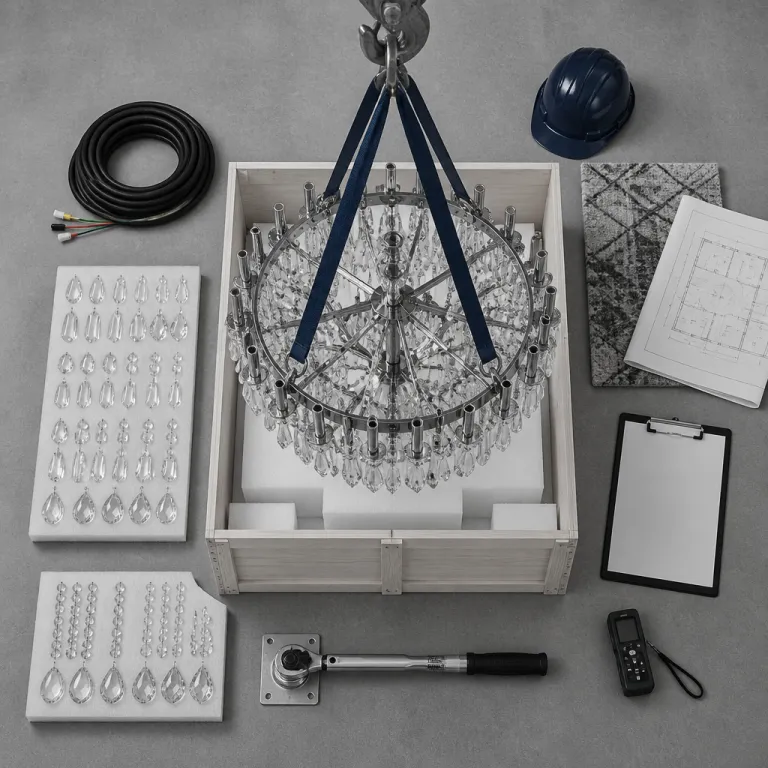
Once a hotel commits to installing the most expensive chandelier in its portfolio, the engineering conversation becomes non negotiable. Directions techniques and bureaux d’études must validate slab capacity, anchoring systems, and vibration behaviour long before any crystal arrives on site. In heritage properties, this often means reinforcing existing structures or introducing discreet steel frames to carry the weight of large chandeliers.
For multi level lobbies and stair voids, the relationship between the chandelier and vertical circulation is crucial for both safety and spectacle. A glass chandelier suspended above a grand stair can dramatise the ascent, but it must respect clearance envelopes, evacuation routes, and fire safety regulations. Design teams often coordinate chandelier geometry with the detailing of stair treads and balustrades, and resources on designing commercial stair treads that elevate hospitality interiors can help align lighting, structure, and guest protection.
Maintenance planning is equally critical when dealing with expensive chandeliers in high ceilings or atria. Motorised winch systems, modular crystal strands, and robust access platforms reduce downtime and protect both staff and the lighting fixture itself. Asset managers increasingly request lifecycle cost analyses that compare the long term maintenance of traditional crystal chandeliers with that of more compact modern lighting solutions, especially when multiple rooms share a single central plant for lighting control.
Brand storytelling, guest perception, and measurable returns
In luxury hospitality, the most expensive chandelier often becomes the unofficial logo of the property. Guests photograph it, share it, and use it as a shorthand for the hotel’s level of luxury and attention to detail. This emotional connection can be translated into measurable outcomes when higher customer rating scores correlate with spaces anchored by strong lighting design.
Interior designers curate the choreography of light so that the chandelier acts as a focal point without overpowering the rest of the interior design. Warm gold or brass finishes can soften the sparkle of clear glass, while carefully tuned color temperatures ensure that food in the dining room and fabrics in adjacent rooms appear rich and inviting. When chandeliers are dimmed intelligently across the day, they support circadian comfort and extend the perceived usability of living rooms, bars, and lounges.
From an investment perspective, expensive chandeliers can justify premium pricing for suites that overlook a dramatic lobby or for event spaces framed by a signature light chandelier. Asset managers track whether weddings, corporate events, and high profile launches gravitate towards rooms that feature the most iconic lighting fixture. Over time, this data helps validate whether the initial cost of an expensive chandelier has translated into higher occupancy, stronger F&B revenue, and improved brand positioning within competitive luxury sets.
Learning from record sales : what the Givenchy Royal Hanover chandelier means for hotels
The auction of the Givenchy Royal Hanover chandelier at Christie’s in London is frequently cited in design media as a reference point for discussing the most expensive chandelier ever sold. This historic piece, attributed to William Kent, combined gilt bronze structure with intricate cut glass elements and is commonly reported as having achieved a sale price in the multi‑million‑dollar range. That public auction illustrated how lighting fixtures can cross the boundary between functional objects and museum calibre assets, although exact figures and dates should always be checked against the original Christie’s catalogue or press release.
The sale process, which used a detailed auction catalogue and a competitive bidding system, also highlighted the importance of provenance, documentation, and expert appraisal. For hoteliers and investisseurs considering antique chandeliers or rare crystal pieces, similar due diligence is essential to protect value and support future resale or refinancing scenarios. One frequently quoted secondary‑source summary frames the Q&A as follows : “What is the most expensive chandelier ever sold? The Givenchy Royal Hanover Chandelier, sold for $9 million in 2011. Who designed the Givenchy Royal Hanover Chandelier? William Kent. Where was the Givenchy Royal Hanover Chandelier sold? At Christie's Auction House in London.” These figures should be treated as industry lore and secondary commentary rather than definitive primary data.
While few hotels will acquire a chandelier at that price point, the lessons scale down to more accessible expensive chandeliers from brands such as Baccarat or Boca Lobo. Clear documentation of materials, finishes such as gold plated or gilt bronze, and lighting performance helps maintain asset value over time. For design teams, referencing such landmark sales can also support narratives around heritage, craftsmanship, and the long term cultural significance of a carefully chosen crystal chandelier in a flagship hospitality project.
Key figures and benchmarks for luxury chandeliers in hospitality
- Industry commentary often cites the Givenchy Royal Hanover chandelier, attributed to William Kent and sold at Christie’s in London, as a benchmark for the most expensive chandelier ever sold in the auction market, with a reported price of around 9 million USD. Readers should verify exact numbers against primary Christie’s documentation, as this figure is drawn from secondary‑source summaries.
- In many luxury hotel renovations, signature chandeliers and other feature lighting fixtures typically represent between 8 % and 15 % of the total FF&E lighting budget, according to internal project benchmarks shared by hospitality design studios rather than a single published dataset.
- Post renovation studies in upscale hotels often show ADR increases of 5 % to 12 % when lobbies and dining rooms receive upgraded crystal chandeliers and coordinated lighting design, compared with properties that only refresh soft furnishings. These ranges are indicative, based on internal financial reporting samples, and should be validated against each property’s own performance data.
- Maintenance plans for large glass chandeliers in atria usually schedule deep cleaning cycles every 6 to 12 months, with access equipment and labour representing up to 30 % of the total lifecycle cost of the lighting installation, based on facilities management estimates and internal cost tracking rather than formal academic studies.
- Guest feedback analyses frequently indicate that spaces with strong chandelier centred lighting concepts achieve customer rating scores that are 0.2 to 0.4 points higher on a 5 point scale than comparable rooms without a clear lighting focal point. These figures are aggregated from internal review platform dashboards and should be read as directional benchmarks, not universal rules.
FAQ : most expensive chandelier projects in hospitality
What is currently recognised as the most expensive chandelier ever sold ?
The most expensive chandelier widely recognised in the auction market is the Givenchy Royal Hanover chandelier, attributed to William Kent and reported as having sold at Christie’s in London for around 9 million USD. This historic piece combined gilt bronze structure with elaborate cut glass elements and has become a reference point for valuing exceptional chandeliers. Its sale reinforced the idea that certain lighting fixtures can function as collectible assets rather than standard FF&E, although exact figures should always be checked against primary Christie’s records and treated with caution when cited.
How should hotels justify investing in an expensive chandelier ?
Hotels justify an expensive chandelier by linking it directly to brand positioning, guest experience, and revenue generation. A well placed crystal chandelier in a lobby or dining room can support higher room rates, attract premium events, and strengthen the property’s visual identity. Asset managers typically evaluate these investments through projected ADR uplift, F&B revenue, and long term customer rating improvements, often supported by case studies from comparable luxury properties and internal performance benchmarks.
What materials are most suitable for luxury chandeliers in high traffic hospitality spaces ?
For high traffic areas, designers often favour clear crystal or high quality cut glass combined with robust brass, gold plated, or gilt bronze structures. These materials balance visual impact with durability and can be maintained effectively when access systems are planned from the outset. In more contemporary interiors, hand blown glass with integrated LED lighting offers a modern aesthetic while reducing energy consumption and heat output.
How do interior designers integrate a statement chandelier without overwhelming the room ?
Interior designers start by calibrating scale, mounting height, and light output so that the chandelier becomes a focal point rather than visual noise. They coordinate finishes and color temperatures with surrounding materials, ensuring that furniture, artwork, and architectural details still read clearly. Layered lighting, including wall lights and concealed sources, allows the chandelier to shine while maintaining overall comfort in living rooms, bars, and suites.
What operational issues should directions techniques anticipate with very large chandeliers ?
Directions techniques must anticipate structural loads, access for cleaning, lamp or LED replacement, and integration with central lighting control systems. Large chandeliers often require motorised winches, dedicated maintenance platforms, and clear safety protocols to protect both staff and guests. Planning these elements early in the design and rénovation process prevents costly retrofits and ensures that the most expensive chandelier remains safe, efficient, and visually pristine over its full lifecycle.