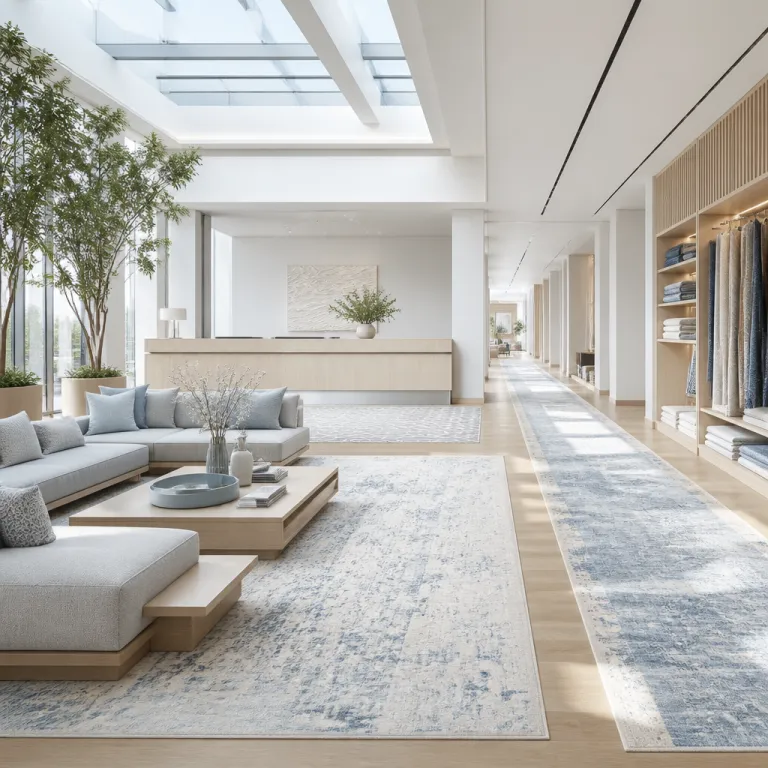
When the floor becomes the artwork: why the most expensive rugs and carpets matter in hotels
For high end hospitality projects, the most expensive rugs and carpets are no longer decorative afterthoughts but strategic FF&E assets. When a single Persian carpet is sold at auction for tens of millions of dollars, its presence in a lobby or suite instantly reframes the entire architectural narrative and guest perception of value. In this context, every rug, from antique silk rug masterpieces to contemporary handmade rugs, must be evaluated as both art object and balance sheet item.
Record breaking sales of expensive rugs have pushed design teams to treat textile floors as museum grade pieces rather than soft finishes. The Clark Sickle Leaf Carpet, a seventeenth century Persian carpet sold at Sotheby’s in New York, is widely cited as one of the most expensive carpets ever sold at public auction, and its reported price has become a benchmark for how far collectors will go for rarity and provenance. When a rug sold at a headline making price enters hospitality spaces, it demands architectural framing, controlled circulation, and lighting worthy of a museum in Persia or Isfahan.
For asset managers and investors, the shift is clear: the most expensive rugs and carpets now sit closer to art than to standard FF&E. A single leaf carpet or silk rug with a traceable origin in Persia can influence the overall valuation of a flagship property more than many structural upgrades. This is why design directors, technical consultants, and FF&E specialists must understand auction dynamics, carpet making history, and the language of art collectors when specifying any expensive carpet or Persian carpet for a hospitality project.
From auction house to lobby floor: integrating museum grade rugs into FF&E sourcing
When a hospitality project aspires to integrate the most expensive rugs and carpets, the sourcing journey often starts at the auction house rather than the contract showroom. Public auctions in New York or London, where a Persian carpet is sold at a record price, have become scouting grounds for visionary hospitality designers and asset managers. The Clark Sickle Leaf Carpet, the Kirman “Vase” carpet, and the Pearl Carpet of Baroda illustrate how a single rug sold at a landmark auction can redefine what is considered possible in hotel FF&E.
For procurement teams, this means building relationships with auction specialists, art advisors, and museums that deaccession carpets woven in the seventeenth century. Provenance research, expert appraisals, and detailed auction catalogues become as critical as technical performance data when a carpet sold at a high price is considered for a lobby, presidential suite, or executive lounge. The Clark Sickle Leaf masterpiece, linked in the literature to the collection of industrialist William Clark and often described as one of the most expensive Persian carpets ever sold at auction, shows how a single sickle leaf motif can carry enormous symbolic and financial weight.
Strategic FF&E procurement for hotels must therefore integrate art market intelligence alongside traditional supplier negotiations and logistics. Teams who already work with structured processes for strategic FF&E procurement from design intent to flawless installation are best positioned to handle the complexity of expensive rugs. They can align the timing of an auction, the due diligence on a Persian or Isfahan silk rug, and the construction programme so that a museum worthy carpet woven in Persia arrives safely and is installed without compromising either conservation or project deadlines.
Valuation, provenance, and risk: what design and asset teams must know about expensive rugs
When a hospitality group considers the most expensive rugs and carpets, valuation is never just about the initial price. Antique Persian carpet pieces from the seventeenth century, especially those with sickle leaf patterns or links to documented historical collections, behave more like blue chip art than standard FF&E. The Clark Sickle Leaf Carpet, the Kirman “Vase” carpet, and the Pearl Carpet of Baroda illustrate how rarity, condition, and provenance can push the price of a single rug far beyond conventional investment thresholds.
For asset managers and technical directors, this raises questions about insurance, depreciation, and long term risk. A silk rug or leaf carpet that once formed part of a major private or institutional collection may require museum level climate control, restricted foot traffic, and specialist conservation protocols. When such a carpet is woven from silk and metal threads, or when it incorporates Baroda pearl and jewelled elements like the Pearl Carpet of Baroda, the risk profile is closer to that of a painting than to a typical carpet woven for hospitality use.
Regulatory and sustainability frameworks now add another layer of complexity for design offices and investors. Teams working under CSRD and PEFCR reporting obligations must show how rare handmade rugs, expensive carpet acquisitions, and art grade carpets fit into long term environmental and social strategies. Guidance on CSRD and PEFCR implications for the hotel balance sheet helps clarify how to report the impact of sourcing antique rugs from Persia or Isfahan, while still recognising their cultural and financial value.
Designing around a masterpiece: architectural integration of the most expensive rugs and carpets
Once a property acquires one of the most expensive rugs and carpets, the architectural narrative must pivot around that piece. A Persian carpet with a sickle leaf design, a Rothschild Tabriz carpet, or a Baroda Pearl Carpet of Baroda cannot simply be dropped into a standard lobby layout. The rug becomes a focal artwork, and the surrounding architecture, lighting, and circulation must be re scripted to protect it while still allowing guests to engage with its art and history.
Architects and hospitality designers often treat such carpets as they would a sculpture or painting in a museum. They may raise the rug on a low plinth, use glass or discreet barriers, or define a no shoes zone to limit wear on the silk rug fibres and the delicate carpet woven structure. When a rug sold at a high auction price carries motifs linked to Persia, Isfahan, or broader religious narratives associated in some sources with the Prophet Muhammad, the design response must also respect cultural sensitivities and interpretive storytelling.
Material choices around these expensive rugs require equal care, especially in high traffic hospitality environments. Subfloors, adhesives, and adjacent finishes must be compatible with conservation requirements, which is why many technical teams now study high performance adhesive strategies for hospitality interiors before finalising details. By aligning carpet making knowledge, conservation science, and FF&E engineering, design teams can ensure that a Clark Sickle Leaf type carpet or a Rothschild Tabriz piece remains stable, legible, and visually dominant for decades.
Balancing heritage and performance: specifying rugs and carpets for operational hospitality spaces
Not every project can or should install the most expensive rugs and carpets in operational zones, yet the design language of these masterpieces can still guide specification. Many hospitality brands now commission contemporary handmade rugs that reinterpret Persian carpet motifs, sickle leaf patterns, or Isfahan colour palettes in more robust constructions. This approach allows designers to echo the aura of expensive rugs while maintaining the durability and cleanability required for heavy traffic areas.
Technical directors and design offices must translate auction level aesthetics into performance driven specifications. Fibre selection, pile height, and backing systems must support acoustic comfort, fire regulations, and maintenance regimes, even when the visual reference is a Clark Sickle Leaf Carpet or a Rothschild Tabriz design. In suites or executive lounges, a single silk rug or leaf carpet may be reserved for low traffic zones, while adjacent carpets woven from wool or blends handle the operational load.
Suppliers of FF&E and carpet making specialists play a crucial role in this balancing act. They can develop collections inspired by Persia, Baroda Pearl legends, or museum grade carpets, yet engineered for hospitality cleaning cycles and stain resistance. By clearly separating true museum pieces from high quality references, asset managers can protect capital while still leveraging the storytelling power of the most expensive rugs and carpets across a portfolio.
Investment logic and storytelling: how expensive rugs support brand positioning
For luxury and upper upscale hotels, the decision to acquire the most expensive rugs and carpets is rarely about decoration alone. A single Persian carpet with a documented history, such as a Clark Sickle Leaf type piece or a Rothschild Tabriz carpet, can anchor an entire brand narrative around connoisseurship and cultural depth. When guests understand that a rug sold at a major auction once hung in a significant collection, their perception of the property’s value shifts immediately.
Marketing teams increasingly collaborate with architects and hospitality designers to build stories around these expensive rugs. Interpretive plaques, guided art tours, and in room content can explain how a carpet woven in Persia in the seventeenth century travelled through collections, why its sickle leaf or leaf carpet motifs matter, and how its price compares to other art assets. Phrases such as “The Clark Sickle-Leaf Carpet sale price was 33.7 million USD”, “The Kirman 'Vase' Carpet sale price was 9.6 million USD”, and “The Pearl Carpet of Baroda sale price was 5.5 million USD” are drawn from published auction results and should be cross checked against the relevant Sotheby’s catalogues and sale archives before being used in guest facing material.
For investors and asset managers, these figures support a clear investment thesis. Antique handmade rugs and silk rug masterpieces have shown strong appreciation over the last century, especially when linked to Persia, Isfahan, or royal patrons associated with the Baroda Pearl story. By integrating a small number of truly most expensive rugs and carpets into flagship properties, while using high quality references elsewhere, portfolios can combine financial prudence with a powerful, differentiated brand identity.
Key figures on the most expensive rugs and carpets in hospitality context
| Carpet | Origin & period | Reported sale price (USD) | Auction house & location | Notes |
|---|---|---|---|---|
| Clark Sickle Leaf Carpet | Persian carpet, seventeenth century | 33.7 million | Sotheby’s, New York | Often cited as one of the most expensive rugs ever sold at public auction; price referenced from Sotheby’s sale reports and related catalogues.1 |
| Kirman “Vase” carpet | Persian carpet, seventeenth century | 9.6 million | Sotheby’s, London | Museum grade carpet woven with exceptional knot density and colour clarity; figure based on published auction catalogues and specialist commentary.2 |
| Pearl Carpet of Baroda | India, nineteenth century | 5.5 million | Sotheby’s, Doha | Also known as the Baroda Pearl carpet because of its thousands of pearls and precious stones; sale price reported in Sotheby’s results and secondary market analyses.3 |
- Market analyses from specialist rug dealers indicate rising interest in antique handmade rugs and silk rug pieces, with online auctions expanding access for global bidders and making it easier for hospitality investors to track price trends across carpets woven in Persia and beyond.
- Expert commentary from rug valuation resources confirms that antique rugs are valued as art pieces, and that rarity, craftsmanship, and historical significance are the primary drivers behind the most expensive rugs and carpets in both private collections and hospitality environments.
1, 2, 3 Figures and provenance details should be cross checked against the original Sotheby’s catalogues and sale result archives when preparing investment documentation or guest facing material.
FAQ about integrating the most expensive rugs and carpets into hospitality projects
Why are antique rugs and carpets so expensive compared with standard FF&E?
Antique rugs and carpets can be extremely expensive because they combine rarity, exceptional craftsmanship, and historical significance in a single object. Pieces such as the Clark Sickle Leaf Carpet or the Pearl Carpet of Baroda were carpet woven in the seventeenth or nineteenth century for elite patrons, and their survival in good condition is rare. As a result, they are treated as art rather than as normal FF&E, which pushes their price into the same range as major paintings or sculptures.
How can a hospitality team verify the authenticity of a Persian carpet before purchase?
Authenticity for a Persian carpet or silk rug is verified through expert appraisal and detailed provenance documentation. Auction houses, specialist dealers, and museums use technical analysis, stylistic comparison, and historical records to confirm that a rug sold as a seventeenth century piece from Persia or Isfahan is genuine. Hospitality investors should always request independent reports and, where possible, consult primary auction or museum records before committing to any expensive carpet acquisition.
Are antique rugs a good investment for hotel owners and asset managers?
For hotel owners and asset managers with a long term horizon, antique handmade rugs and museum grade carpets can be a strong investment, provided they are properly insured and conserved. Market data shows that high quality Persian carpet examples, especially those with sickle leaf motifs or royal provenance, have often appreciated significantly over the last century. They also generate intangible returns by elevating brand positioning and guest perception of luxury.
How should architects protect a museum grade rug installed in a lobby or suite?
Architects should treat a museum grade rug or Rothschild Tabriz carpet as a fragile artwork, not as a standard floor finish. This usually means controlling light levels, limiting direct foot traffic, and using carefully selected underlays and adhesives compatible with conservation needs. In some cases, the rug is displayed on a raised platform or wall mounted, while a more robust carpet woven for hospitality use handles the operational load.
Can contemporary carpets capture the spirit of the most expensive rugs without the same price?
Contemporary carpets and handmade rugs can successfully reinterpret the motifs, colours, and narratives of the most expensive rugs and carpets at a fraction of the price. Designers often draw on Persia inspired palettes, sickle leaf patterns, or Baroda Pearl legends to create collections suitable for heavy use in hotels. This strategy allows properties to reference iconic pieces such as the Clark Sickle Leaf Carpet while keeping capital expenditure and maintenance risk under control.