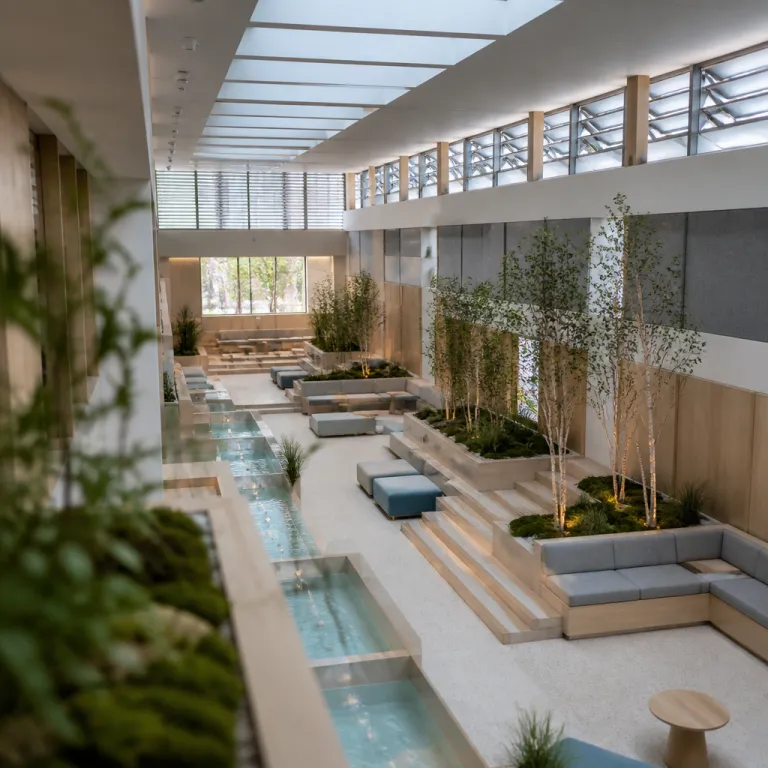
From plant styling to performance: framing biophilic hotel design
Most hotels say they embrace biophilic hotel design, yet many stop at potted plants in the lobby. For hospitality leaders who manage CAPEX cycles and guest satisfaction scores, biophilic design only matters when it measurably shifts guest experience, dwell time, and RevPAR uplift. The sign that a biophilic hotel strategy is working is not the Instagram shot of lush walls, but the architecture, interior and FF&E package that quietly improves sleep, air quality, and emotional regulation for guests.
Biophilic hotel design is best structured into three categories ; direct contact with nature, indirect references to nature, and spatial conditions that echo how humans move through landscapes. Direct nature means real natural elements such as daylight, vegetation, water, fresh air and nature sounds that are physically present in the hotel. Indirect nature covers nature inspired patterns, natural materials, colour palettes and imagery, while spatial conditions translate the logic of a deep rainforest trail or a coastal cliff path into interior design moves that shape circulation, prospect, refuge and connection to nature.
For architects designers and technical directors, this three part framework turns a vague biophilic ambition into a specification matrix. It lets hospitality design teams map each guest journey moment to a specific biophilic intervention, from vertical gardens at arrival to warm natural light scenes that support circadian rhythms in guestrooms. Asset managers and investors then gain a clear report structure that links each line item in hotel design to a wellness or operational KPI, rather than treating biophilic gestures as soft décor.
Direct nature: air, light, water and sound as primary specifications
Direct nature is where biophilic hotel design delivers the strongest evidence based wellness outcomes. Fresh air, calibrated natural light, water features and curated nature sounds all influence heart rate variability, stress hormones and perceived restfulness for guests. For a hotel that wants to compete on wellness rather than only on technology, these natural elements should sit at the top of the interior design brief, not as items to add back if budget allows.
Start with air ; specify high efficiency filtration, low VOC materials, and operable windows wherever façade and climate allow. Guests consistently report higher satisfaction in hotels where they can control both temperature and air movement, even when the mechanical system is technically superior. For directions techniques, this means aligning façade design, HVAC zoning and window hardware early, instead of retrofitting token vents that undermine acoustic performance and energy targets.
Natural light is the second non negotiable, because it anchors circadian rhythms and sets the baseline for every other biophilic design move. A rigorous natural light audit, aligned with tools such as a room design working list for openings and refurbishments, should precede any FF&E selection. For hotel design teams, this is where window placement, ceiling height, reflectance values and shading strategies become as critical to guest experience as mattress choice or bathroom layout.
Indirect nature: materials, patterns and the limits of the green wall
Indirect nature is where many hotels over invest visually and under perform experientially. Living walls and vertical gardens photograph well, yet without the right maintenance regime they quickly become a sign of neglect rather than a sign of life. For asset managers, the maintenance cost of a biophilic hotel feature must be weighed against its actual contribution to guest experience and sustainable design goals.
Material selection is the quiet workhorse of indirect biophilic design. Raw timber, honed stone, natural fibres and low sheen metals provide a tactile connection to nature that printed laminates or faux stone cannot match, even when the patterns look convincing. When specifying natural materials, hospitality design teams should pair them with robust technical data on slip resistance, cleanability and ageing, just as they would when specifying terrazzo for hotel public spaces in a project focused on natural light performance and guest satisfaction.
Nature inspired patterns can be powerful when they echo fractal geometries found in deep rainforest canopies or riverbeds. However, repeating leaf motifs on walls without considering scale, contrast and lighting can feel superficial to guests who are increasingly literate in design trends. Architects designers should instead use biophilic design logic to guide joinery rhythm, ceiling coffers, and even carpet layouts, creating a subtle connection to nature that supports wayfinding and reduces cognitive load.
Spatial conditions and acoustic biophilia: beyond what the camera sees
Spatial conditions are the least understood yet most potent layer of biophilic hotel design. They translate how humans feel in a forest clearing, a mountain ledge or a sheltered cove into interior volumes, thresholds and seating clusters. In hospitality, this means shaping hotel architecture so that guests experience alternating moments of prospect and refuge, rather than a single open plan lobby that tries to be everything at once.
Acoustic design is a critical, often overlooked biophilic intervention. Soft organic forms, sound absorbing walls and ceilings, and carefully tuned reverberation times can mimic the calming effect of nature sounds without resorting to obvious soundtrack loops. Water features in public spaces should be specified not only for visual drama, but for their acoustic spectrum ; a low frequency cascade can mask unwanted noise, while a high frequency trickle may irritate guests during long dwell times.
For hotel technology and innovation leaders, soundscaping is where digital tools and natural elements can work together. Directional speakers, adaptive sound masking and sensor driven control systems can modulate nature sounds and ambient music based on occupancy, time of day and measured noise levels. This approach respects circadian rhythms and supports deep relaxation in spa zones, while keeping arrival halls energetic, and it should be documented in the same level of detail as any report on Wi Fi coverage or building management systems.
Making biophilia stick: briefs, value engineering and low maintenance strategies
The most sophisticated biophilic hotel design fails when it is not protected through procurement and value engineering. A strong design brief translates abstract goals such as connection to nature into measurable specifications ; percentage of guestrooms with operable windows, minimum daylight factor in corridors, number of distinct natural materials per zone, or decibel targets in lounges. When these criteria are embedded in contracts and performance reviews, they are harder to cut than a single feature wall or a decorative planter.
Maintenance reality should be addressed at concept stage, not after the first report of dying plants or clogged water filters. Living walls, vertical gardens and indoor trees demand irrigation, pruning, pest control and specialist lighting, which can strain housekeeping équipes and OPEX budgets in busy hotels. Where that level of care is unrealistic, designers can prioritise robust natural elements such as stone, timber and clay, combined with high quality digital nature content and scent systems that require minimal intervention.
Nature as a sensory experience extends beyond what guests see. Scent, humidity and temperature variation can all be tuned to echo a coastal breeze, a mountain lodge or a deep rainforest retreat, provided that building systems and FF&E are specified accordingly. For example, textile selection, upholstery breathability and even terrazzo or stone thermal mass, as explored in analyses of public space material specifications that age well, all influence how guests perceive warmth, freshness and life in a space.
Biophilic intelligence for hotel tech leaders: data, pilots and cross sector learning
For CTOs and innovation managers, biophilic hotel design is not a mood board ; it is a data rich field for experimentation. Guest experience platforms, room control systems and building management software already collect granular données on occupancy, temperature, light levels and dwell time. When these datasets are correlated with biophilic interventions, hotels can report which combinations of natural light, materials and soundscapes actually move satisfaction scores and ancillary spend.
Technology also enables low risk pilots. A single floor can be fitted with enhanced natural elements, adaptive lighting that respects circadian rhythms, and curated nature sounds, while a matched control floor retains standard specifications. Over a defined durée, asset managers can compare NPS, minibar revenue, sleep quality feedback and even maintenance tickets, building a business case for scaling biophilic design across the property or portfolio.
Cross sector learning is valuable here ; school architecture and workplace design have generated robust evidence on how connection to nature improves concentration, mood and long term health. Hospitality can adapt these findings, but must translate them into metrics that matter for hotels, such as length of stay, loyalty programme rétention and F&B capture. When biophilic design is treated as a strategic lever rather than a styling trend, it becomes a disciplined way to add life, value and resilience to every square metre of a hotel asset.
FAQ
How is biophilic hotel design different from simply adding plants ?
Biophilic hotel design is a structured approach that integrates direct nature, indirect nature and spatial conditions into architecture, interior design and FF&E. Plants are only one element among many, alongside natural light, air quality, acoustic design and material selection. A plant heavy lobby without these other layers rarely delivers measurable wellness or guest experience benefits.
Which biophilic interventions deliver the strongest wellness outcomes in hotels ?
Evidence consistently points to high quality natural light, good air quality and acoustic comfort as the most impactful interventions. Water features and access to real outdoor spaces also support stress reduction and better sleep for guests. Visual greenery and nature inspired patterns are valuable, but they work best when layered on top of these fundamentals.
How can we protect biophilic features from value engineering cuts ?
The most effective strategy is to translate biophilic goals into measurable performance criteria in the design brief and contracts. For example, define daylight factors, acoustic targets, natural material ratios and operable window counts as non negotiable requirements. When these are tied to guest satisfaction KPIs and brand standards, they are less likely to be removed late in the project.
Are living walls and vertical gardens worth the maintenance cost ?
Living walls and vertical gardens can be powerful in high visibility zones, but they demand irrigation, specialist lighting and ongoing horticultural care. Properties with limited maintenance resources may achieve better long term results by focusing on durable natural materials, well designed planting in manageable volumes and strong daylight and air strategies. A lifecycle cost analysis should always precede any major living installation.
How can hotel technology teams support biophilic design goals ?
Technology teams can integrate sensors, control systems and guest facing interfaces that modulate light, temperature, sound and scent in line with biophilic principles. They can also collect and analyse données linking these environmental variables to guest feedback and operational metrics. This turns biophilic design from a static aesthetic into a dynamic, data informed hospitality asset.