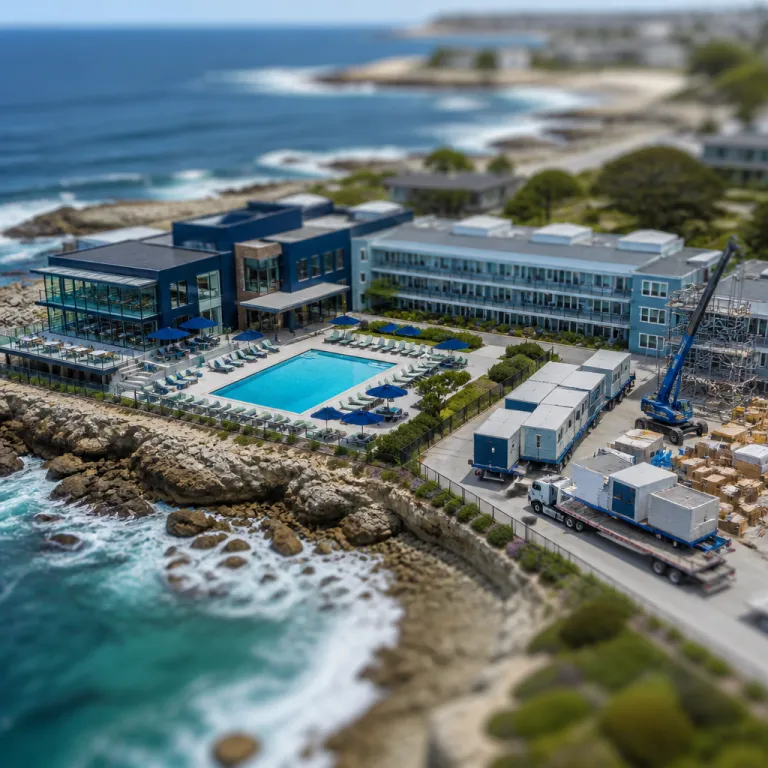
Reading the 2027 hotel design budget: labour, materials and the new cost map
Across every hotel project, the 2027 hotel design budget 2027 planning cycle is being shaped by a sharper split between labour intensive trades and industrially produced FF&E. Skilled labour for joinery, custom millwork and specialist stone installation is tracking well above general construction inflation, while standardised case goods, certain composites and mass produced LED fixtures are seeing a percent decrease in unit costs as factories chase volume. For architects and design specifiers, the question is no longer whether the budget will stretch, but which line items in the hotel budget can carry a percent increase without breaking the financial plan.
In a dense city such as New York City or any fast moving gateway market, the same square metre of lobby can carry radically different costs depending on how much of it is custom built versus specified from catalogues. Custom stone bars, curved timber ceilings and bespoke metalwork railings are now the first items tested against the management budget, while back of house circulation, BOH joinery and staff areas are increasingly resolved with based budgeting templates that repeat across hotels in the same brand family. Revenue management teams in nyc and other primary markets are pushing for design that supports higher ADR, but they are also asking how each design decision will impact long term maintenance costs and the next fiscal year budget.
For owners and asset managers, the headline number is still the total budget per key, yet the internal conversation has shifted toward category allocation rather than pure cost cutting. FF&E typically represents around 10 percent of total development cost for a full service property, and that percent share is holding even as labour costs rise, because the FF&E package is where brand standards, guest perception and revenue growth intersect most directly. In this budget season, the most resilient business plan is the one that treats design as a revenue engine rather than a tax on the project, aligning every euro or dollar of spend with a clear path to incremental revenue.
FF&E, lead times and why ordering late is now a budget problem
For FF&E, the biggest shift in hotel design budget 2027 planning is not only the price of a chair or a luminaire, but the cost of time. Lead times that once sat comfortably inside a single fiscal year now stretch across seasons, and late decisions are quietly adding 5 to 10 percent to the final costs through air freight, rush fabrication and last minute installation premiums. In a city like york or nyc, where site access windows are tight and penalties for delay are real, the property that locks its budget plan early will almost always land closer to the original year budget.
Experienced design specifiers are treating FF&E scheduling as a form of revenue management, because every week of delay pushes opening dates and compresses the first year of revenue. The most effective budget planning processes now integrate procurement milestones into the overall management budget, with clear triggers for when a based budgeting assumption must be converted into a firm purchase order. Hotel technology vendors are also part of this calendar, since smart locks, guest room management systems and back of house automation often sit on the same critical path as case goods and soft seating. "Adoption of AI in hotel operations." and "Focus on operational efficiency." are no longer abstract slogans ; they are direct responses to the pressure that labour and lead times are putting on the hotel budget.
For owners comparing new build and renovation projects, the pattern is clear ; renovation FF&E budgets are more exposed to lead time risk because they often rely on phased closures and short term shutdowns. A renovation in york city that misses its reopening window by even one month can wipe out the perceived savings from a leaner budget plan, especially when tax revenue projections and property tax assessments were based on a specific opening date. For a deeper breakdown of how these dynamics translate into cost per key and realistic budget ranges, many asset managers are now using specialised benchmarks such as the detailed analysis on hotel interior design cost per key, then overlaying their own revenue data and local tax assumptions.
Sustainability, invisible systems and the quiet line items that guests never see
As hotel design budget 2027 planning matures, sustainability and invisible systems are moving from optional extras to non negotiable infrastructure. Certifications such as FSC for timber and Cradle to Cradle for certain finishes still carry a modest percent premium in some markets, yet in others they have become effectively cost neutral as suppliers scale up and property owners bake these requirements into every business plan. The more strategic question for management is how to balance these visible and invisible investments within the overall financial plan so that the property can meet brand standards, regulatory expectations and guest comfort without eroding project ROI.
Invisible systems are where many hotels are under budgeting, particularly in older city properties where acoustic performance, HVAC automation and smart controls lag behind guest expectations. Hotel technology is no longer just about guest facing apps ; it includes building management systems, AI assisted energy optimisation and robotic systems that can reduce operational costs by up to 30 percent when properly integrated into design and operations. The dataset reminder that "How can hotels reduce operational costs?" and "By integrating automation and AI technologies." is playing out in real projects, where automation is treated as a long term asset rather than a short term gadget.
Renovation budgets differ from new build budgets in how they allocate funds to these invisible layers, because retrofitting acoustic insulation, risers and ductwork in an existing hotel can consume a larger share of the management budget than in a ground up property. Asset managers in nyc and other dense markets are now reserving a higher contingency percent for these unknowns, often 8 to 12 percent of the total year budget compared with 5 to 7 percent on recent new builds. For midscale properties where every euro of budget planning is scrutinised, the smartest operators are using value driven design strategies similar to those analysed in this piece on midscale hotel design under tight budget constraints, then layering in targeted investments in HVAC controls and acoustic treatment that protect guest satisfaction scores.
Value engineering with intent: where to cut, where to hold and where to quietly upgrade
The most sophisticated response to hotel design budget 2027 planning pressures is not blanket cost cutting, but precise value engineering that respects both guest experience and long term asset value. Experienced specifiers are quick to trim custom hardware, overly bespoke lighting and one off joinery details that add fabrication complexity without moving the needle on revenue or brand perception. They will, however, fight hard to protect bathroom finishes, acoustic insulation and mattress quality, because these are the categories where short term savings translate directly into long term complaints, lower ADR and weaker revenue growth.
In practice, this means that a property in york city might accept a more standardised corridor sconce or wardrobe handle, while quietly upgrading to better underlay, thicker doors and higher performing glazing that reduce noise complaints and improve sleep scores. Based budgeting tools are being used to model these trade offs, allowing management to see how a 3 percent increase in bathroom capex can reduce maintenance calls and extend replacement cycles over a ten year term. For owners planning to start a hotel or reposition an existing asset, the most resilient budget plan is the one that treats these upgrades as part of a long term business plan rather than a discretionary spend in a single fiscal year.
Across portfolios, we see a clear pattern in how hotels are handling the current budget season ; contingency lines are edging up, but so are targeted investments in materials that age well and in systems that reduce labour dependency. Property tax and local tax revenue dynamics still shape the overall envelope, especially in high tax city jurisdictions, yet within that envelope there is more sophistication about where each euro will work hardest. For a granular look at how premium finishes such as hand tufted carpets and custom rugs can reshape both guest perception and FF&E strategy, many design teams are turning to analyses like this deep dive on how luxury rugs influence FF&E strategy, then calibrating their own management budget to balance statement pieces with durable, quietly efficient background specifications.
FAQ: hotel design budget 2027 planning for architects, owners and revenue leaders
How much of a hotel development budget should be allocated to FF&E ?
For most full service hotels, FF&E typically represents around 10 percent of the total development budget, though luxury properties and complex renovations can run higher. That 10 percent share usually includes case goods, soft seating, lighting, artwork and loose items, but excludes major building systems and structural work. When planning the year budget, owners should confirm whether the FF&E line also covers technology hardware such as televisions and in room controls, because these items can materially affect the management budget.
How can hotels use automation and AI to reduce operational costs without compromising design quality ?
Automation and AI are most effective when integrated early into hotel design budget 2027 planning, so that back of house layouts, risers and service routes support robotic systems and smart building controls. The dataset statement that "Operational cost reduction with automation" can reach 30 percent is realistic only when technology, staffing models and spatial planning are aligned from the concept stage. Design teams should work with technology vendors to ensure that hotel technology infrastructure is treated as a core part of the financial plan, not as a late stage add on that strains the budget plan.
What contingency percent are experienced developers using for 2027 hotel projects ?
For new build hotels in stable markets, many developers are holding contingencies in the range of 5 to 8 percent of total project costs, with the lower end reserved for less complex properties. Renovations, especially in older city buildings with unknown conditions, are often carrying 8 to 12 percent contingencies, reflecting higher risk in structure, services and code compliance. Within hotel design budget 2027 planning, it is common to assign a slightly higher contingency percent to MEP systems and structural work than to FF&E, because surprises in those categories can quickly cascade into programme delays and tax revenue impacts.
How do renovation budgets differ from new build budgets in category allocation ?
Renovation budgets typically allocate a larger share to demolition, structural reinforcement, services upgrades and code compliance, leaving a tighter envelope for visible FF&E and finishes. New build budgets, by contrast, can often achieve better cost efficiency in structure and services, allowing a more generous allocation to public area design, guest room finishes and brand standards. For both scenarios, careful budget planning and based budgeting models help management understand how each euro of spend will influence long term revenue, property value and the next fiscal year.
Why is early budget planning so critical for projects targeting an opening in 2027 ?
Early hotel design budget 2027 planning allows owners and design teams to lock in prices, secure production slots and align procurement with construction milestones, reducing the risk of costly rush orders and delays. Because many suppliers now operate on extended lead times, especially for custom millwork, stone and specialised lighting, late decisions can trigger a percent increase in both material and installation costs. Starting the budget season with a clear management budget, realistic lead time assumptions and an integrated business plan gives hotels a stronger position in negotiations and a more reliable path to revenue growth once the property opens.